


Get Indexology® Blog updates via email.

In This List

Equity Exuberance and Fixed Income Foreshadowing

Seeing Green: The Next Infrastructure Wave

A Review of the Recent Strong Performance of the S&P 500 Quality, Value & Momentum Multi-Factor Index

A Measure of Success – The Evolution of ESG Scores in the S&P 500 ESG Index

Under the Hood of U.S. Equities: Perspectives on Size, Sectors and Style

Equity Exuberance and Fixed Income Foreshadowing

Contributor Image
Anu Ganti

Head of U.S. Index Investment Strategy

S&P Dow Jones Indices

In the immediate aftermath of the 2024 presidential election, U.S. equities soared on Wednesday, November 6, with the S&P 500® up 3%, while small caps surged even higher, with the S&P SmallCap 600® up a substantial 6%. Subsequently, on Thursday, November 7, the much-anticipated Fed rate cut of 25 bps came to fruition. With two previously uncertain macro events in the rearview mirror, the equity market sighed in relief, as VIX® plunged to below the 15 handle, and the S&P 500 marked its 51th record closing high of the year on Monday, November 11.

As we look ahead to the rest of Q4 2024, we can look to history to understand how equity markets typically reacted post-presidential elections. Looking back over 60 years, the S&P 500 rose in 13 out of the past 16 fourth quarters following a presidential election, or 81% of the time.

Turning our attention to smaller caps, albeit with a shorter history, Exhibit 1 illustrates that the S&P 600 rose in 6 out of the 7 fourth quarters following a presidential election since 1996, and it outperformed the S&P 500 in 5 of those quarters. Q4 2020 was a notable example, with a gain of 31% for the S&P 600. As of Nov. 11, 2024, the S&P 500 was up 4% and the S&P 600 was up 8% QTD.

While U.S. equity markets have typically rallied following a presidential election, the bond market’s movements have historically shown less of a directional trend, as shown in Exhibit 2. Looking back 60 years, 10-year U.S. Treasury yields increased in 9 out of the past 15 fourth quarters in presidential election years, or 60% of the time. A noteworthy decrease was in Q4 2008, when the market witnessed an extraordinary decline in yields as investors sought the safety of bonds amid the depths of the Global Financial Crisis. However, yields consistently increased following the last three elections, especially in 2016, upon rising inflation expectations and anticipated Fed rate hikes.

This year is no ordinary election year for bond market participants, as even though the Fed has cut rates twice, 10-year U.S. Treasury yields have increased and are up 50 bps QTD, perhaps due to lingering inflationary concerns that have been exacerbated by anticipated Trump policies, including tax cuts and tariffs.

Another oddity of this election year for the bond market is a yield curve that has begun to disinvert, as measured by the spread between 10- and 2-year U.S. Treasury yields in Exhibit 3. Since 1976, there have been only two presidential election years with inverted yield curves that subsequently disinverted. The first occurred in 1980, when the Fed was hiking rates to battle rampant inflation, and the second was in 2000, when the Fed was also raising rates to fight inflation during the dot-com boom.

The disinversion of the yield curve has been a traditional harbinger of a recession, as seen in 1980 and following the bursting of the tech bubble in 2001. This election year was also the first time a Republican contender beat a one-term Democratic president since 1980. Whether 2024 will follow in the footsteps of history remains to be seen.

The posts on this blog are opinions, not advice. Please read our Disclaimers.

Seeing Green: The Next Infrastructure Wave

Contributor Image
Vidushan Ragukaran

Global Equities & Thematic Indices

S&P Dow Jones Indices

Investment in infrastructure has long been a cornerstone of economic development. It has also been an interesting choice for investors, historically offering stable, predictable cash flows through long-term, inflation-linked contracts, as well as essential services that maintain demand even during economic downturns.

At the Crossroads of Multiple Driving Forces

In the wake of aging assets worldwide, ongoing climate challenges and an artificial intelligence-led digital revolution, the case for infrastructure investment today is more critical than ever. The current interest rate environment also provides useful context, as lower financing costs facilitate larger-scale projects. The U.S. Federal Reserve cut interest rates by 50 bps in September 2024, representing the first cut in four years, with more cuts anticipated throughout the remainder of 2024.1

Global Infrastructure Assets: Updates Available

Many infrastructure assets around the world such as roads, bridges and water systems are reaching the end of their useful lives. In the U.S., for example, the average age of a bridge is 44 years, while the average lifespan for significant pipes and dams is 45 and 57 years, respectively.2

The same applies to Europe’s infrastructure, much of which was built during post-war periods. Aging water infrastructure in the U.K. is responsible for approximately 3 billion liters of daily water loss due to leaky pipes.3 Most of the continent’s nuclear reactors—a key source of energy in countries like France—were built in the 1970s and 1980s and were commissioned to last about 30 years.4 There is renewed interest in nuclear energy and other energy infrastructure to power the rising demand for artificial intelligence.

Governments worldwide face pressure to act by replacing worn-out assets and adopting advanced technology to extend asset life and improve efficiency. In the U.S., the Bipartisan Infrastructure Law, which was signed in 2021 and authorized USD1.2 trillion for transportation and infrastructure spending, has helped fund improvements on over 165,000 miles of roads, while also financing over 1,400 drinking water and wastewater projects across the country to ensure access to clean water.5, 6

The Multi-Trillion-Dollar Gap

Global infrastructure is currently facing a considerable investment shortfall, with previous estimates suggesting a USD15 trillion gap by 2040 to meet worldwide infrastructure needs and achieve the UN Sustainable Development Goals (SDGs) for universal water and electricity access.7 A joint effort between public and private sectors is essential, harnessing the strengths of both channels to build resilient infrastructure—a basic tenet for a well-functioning and modern society.

Tracking Global Infrastructure with S&P DJI Indices

Typically, market participants invest directly in infrastructure assets or through the listed route in the form of publicly traded infrastructure companies.

The S&P Global Infrastructure Index measures the performance of publicly traded companies from around the world that are chosen to represent the listed infrastructure industry. The Dow Jones Brookfield Global Infrastructure Index measures the performance of pure-play infrastructure companies domiciled globally. To be eligible for inclusion, a company must derive more than 70% of its estimated cash flows (based on publicly available information) from infrastructure assets (see Exhibit 1).

Both indices have a global focus, measuring companies from around the world that are listed in developed markets to enhance tradability. While developed markets contend with aging infrastructure and modernization needs, emerging markets face added challenges related to population growth and urbanization.

The infrastructure theme encompasses multiple sectors of the global economy, providing a diversified view of activities related to this topic (see Exhibit 2).

Feeling the Heat: the Climate-Infrastructure Nexus

Climate change is another challenge, harming infrastructure through severe weather and rising sea levels, and leading to damage and higher repair costs. To address this, infrastructure must be purpose-built, in order to better handle climate challenges and reduce environmental harm.

The Dow Jones Brookfield Global Green Infrastructure Index measures the performance of selected securities from the Dow Jones Brookfield Infrastructure Plus Index, a curated universe designed to focus on thematic purity, while considering tradability.8 The former gives due consideration to measures of physical risk, total impact and reduced greenhouse gas (GHG) emissions. The index also features exclusions for companies involved in specific controversial business activities, for example, fossil fuel operations and power generation. Overall, it seeks to track the underlying index while aiming to improve selected index-level ESG characteristics; for example, targeting at least a 30% reduction in GHG emissions and an improved S&P Global ESG Score by excluding the lowest 25% of performers. As of Oct. 31, 2024, it included 73 of the 129 constituents from the underlying index.

The critical need for infrastructure investment presents a unique opportunity sitting at the intersection of several fundamental global issues. The Dow Jones Brookfield Global Green Infrastructure Index tracks pure-play infrastructure companies worldwide, while adhering to strict tradability rules and criteria that highlight selected companies and targets an improved ESG profile at the index level.


1 Reuters (2024). “Federal Reserve to cut rates by 25 basis points at next two meetings: Reuters poll.” Available at: https://www.reuters.com/markets/rates-bonds/federal-reserve-cut-rates-by-25-basis-points-next-two-meetings-2024-10-29/

2 Madden, J. (2024). “America’s Aging Infrastructure.” Blueprint. Available at: https://wp.nyu.edu/blueprint/2024/05/15/americas-aging-infrastructure/

3 Muggleton, J. (2023). “The UK’s water pipe upgrade has made it harder to detect leaks – now the race is on to discover new ways to find them.” The Conversation. Available at: https://theconversation.com/the-uks-water-pipe-upgrade-has-made-it-harder-to-detect-leaks-now-the-race-is-on-to-discover-new-ways-to-find-them-209537

4 Ferreira, V. G. (2024). “Strategic autonomy and the future of nuclear energy in the EU.” European Parliamentary Research Service (EPRS), February. Available at: https://www.europarl.europa.eu/RegData/etudes/BRIE/2024/757796/EPRS_BRI(2024)757796_EN.pdf

5 Pipeline and Hazardous Materials Safety Administration. (2023). “Bipartisan Infrastructure Law (BIL) / Infrastructure Investment and Jobs Act (IIJA).” United States Department of Transportation. Available at: https://www.phmsa.dot.gov/legislative-mandates/bipartisan-infrastructure-law-bil-infrastructure-investment-and-jobs-act-iija

6 The White House. (2024). “FACT SHEET: Biden-Harris Administration Kicks Off Infrastructure Week by Highlighting Historic Results Spurred by President Biden’s Investing in America Agenda.” The White House. Available at: https://www.whitehouse.gov/briefing-room/statements-releases/2024/05/13/fact-sheet-biden-harris-administration-kicks-off-infrastructure-week-by-highlighting-historic-results-spurred-by-president-bidens-investing-in-america-agenda/

7 George, A., Kaldany, R.-R., & Losavio, J. (2019). “The world is facing a $15 trillion infrastructure gap by 2040. Here’s how to bridge it.” World Economic Forum. Available at: https://www.weforum.org/stories/2019/04/infrastructure-gap-heres-how-to-solve-it/

8 The Dow Jones Brookfield Global Infrastructure Plus Index is designed to measure the performance of companies from the Dow Jones Brookfield Global Infrastructure Index and the S&P Global Infrastructure Index. The index is subject to a 75% floor on the weight of all constituents selected from the Dow Jones Brookfield Global Infrastructure Index to focus on thematic purity whilst considering tradability. For more information, please see the index web page.

The posts on this blog are opinions, not advice. Please read our Disclaimers.

A Review of the Recent Strong Performance of the S&P 500 Quality, Value & Momentum Multi-Factor Index

Contributor Image
Hugo Barrera

Senior Analyst, Product Management

S&P Dow Jones Indices

S&P 500 Quality, Value & Momentum Multi-Factor Index

Multi-factor strategies offer a comprehensive approach to index-based investing by combining diverse factors that exhibit low correlations across different market environments. By integrating these factors, multi-factor indices have historically shown lower volatility and better performance, while avoiding the need to time individual factors to align with specific economic trends or market phases.

A notable example is the S&P 500® Quality, Value & Momentum (QVM) Multi-Factor Index, launched on Jan. 30, 2017, which has demonstrated notable performance. In this blog, we will explore the index’s methodology and examine its characteristics, risk/return profile and performance attribution.

Methodology Overview

The S&P 500 QVM Multi-Factor Index tracks 100 stocks from the S&P 500 that exhibit the strongest combination of quality, value and momentum. Utilizing a bottom-up approach, the index selects “all-rounders” that have the highest scores, on average, across all three factors. The S&P 500 QVM Multi-Factor Index aims to provide a richer multi-factor exposure and help address the factor dilution often seen in top-down approaches.1

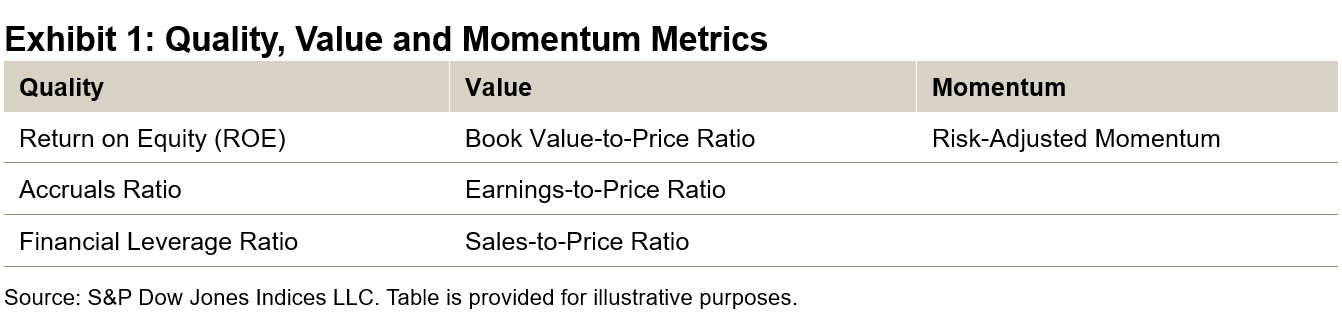
Selected constituents are weighted by the product of their market capitalization and multi-factor score. Exhibit 1 summarizes the metrics used to construct the S&P 500 QVM Multi-Factor Index.

Live Performance of the S&P 500 QVM Multi-Factor Index

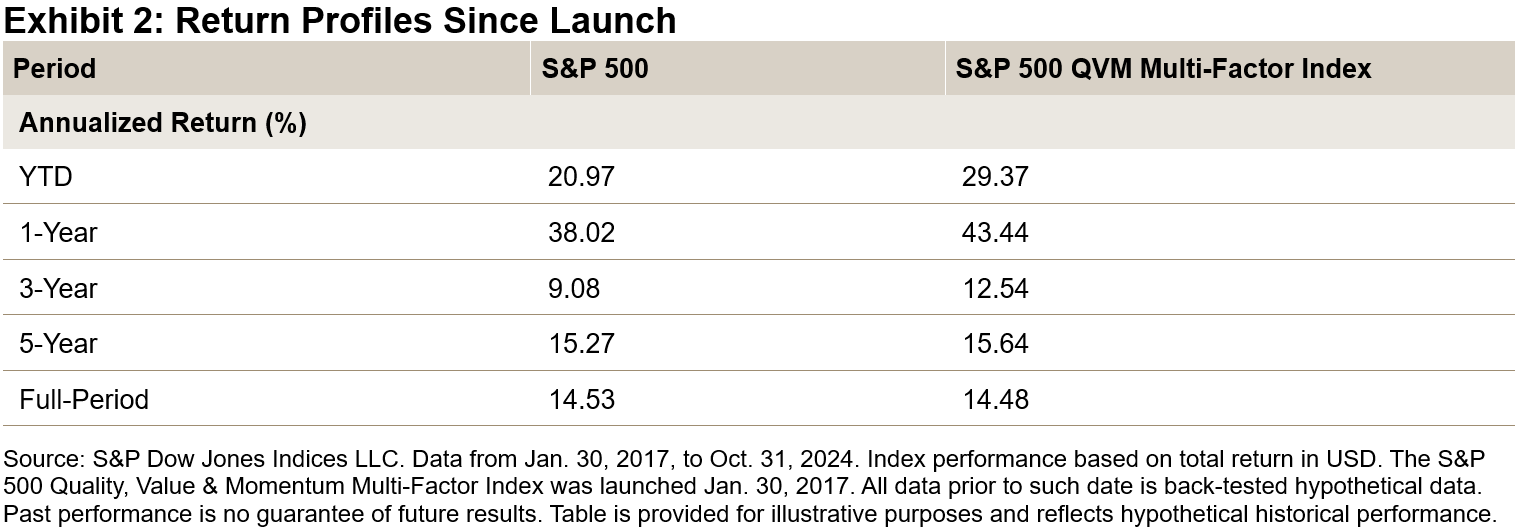
Since its launch date, the S&P 500 QVM Multi-Factor Index has shown strong performance, in line with its benchmark. Notably, its three-year return has exceeded that of the S&P 500 by 3.45% annualized, which is quite remarkable given the recent performance of this large-cap benchmark.

Back-Tested Performance of the S&P 500 QVM Multi-Factor Index

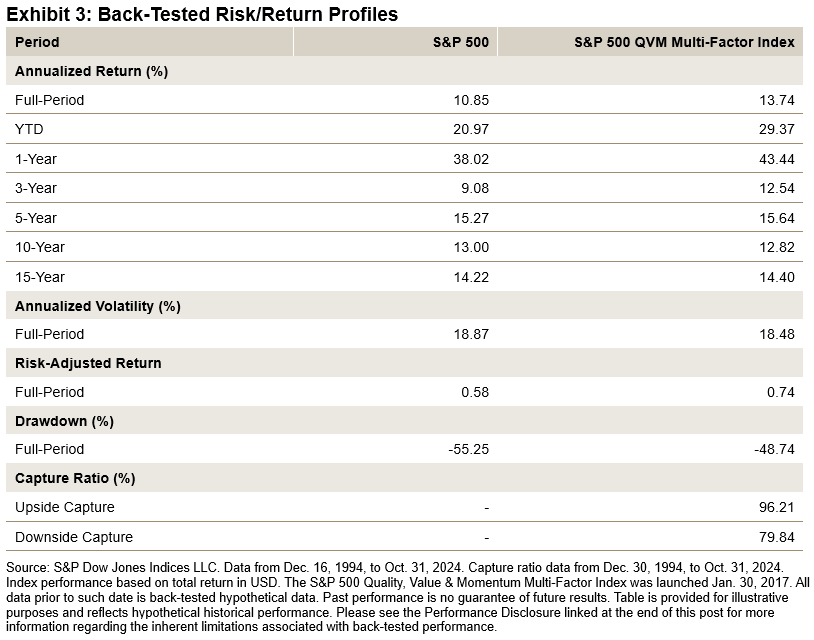
Over the longer term, including back-tested performance, the S&P 500 QVM Multi-Factor Index has outperformed its benchmark both in absolute and risk-adjusted terms. Additionally, the index has exhibited reduced volatility, lower drawdowns and lower downside capture.

Live Sector Weights of the S&P 500 QVM Multi-Factor Index

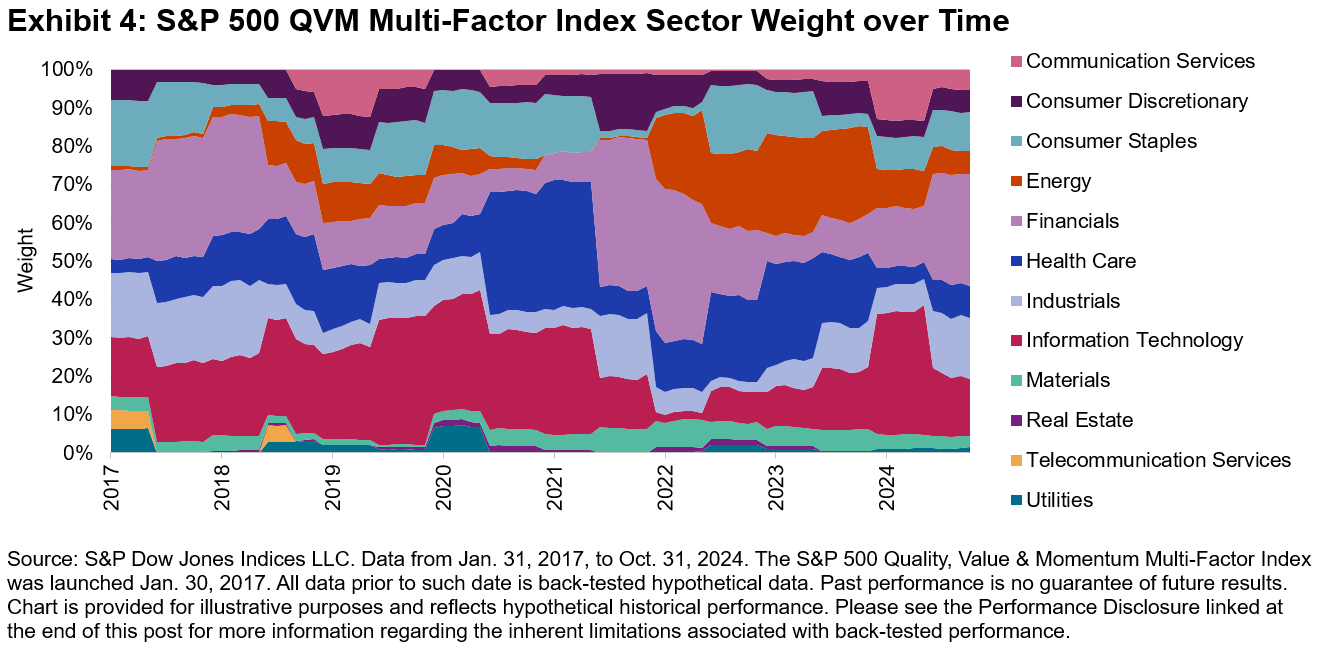
Exhibit 4 shows how the sector weights of the S&P 500 QVM Multi-Factor Index have changed over time. On average, the largest sector weights in the index have been Information Technology, Financials and Health Care.

Fundamental Metrics of the S&P 500 QVM Multi-Factor Index

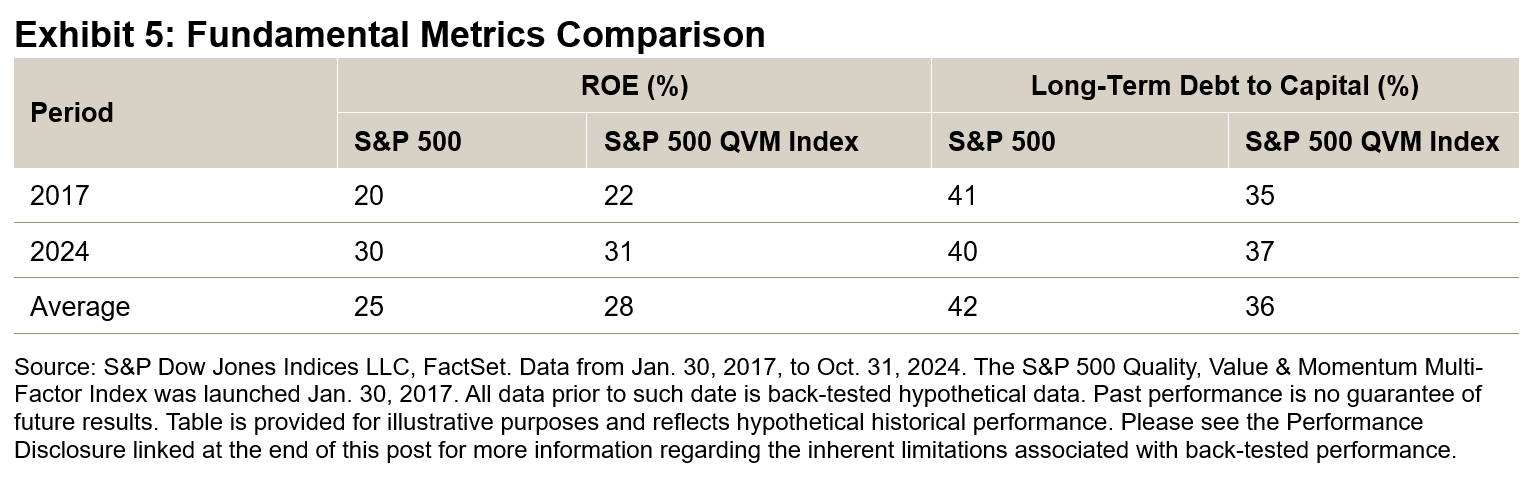
Exhibit 5 shows the ROE and long-term debt to capital metrics of the S&P 500 QVM Multi-Factor Index since its launch. On average, the index has shown a higher ROE and a lower long-term debt to capital ratio compared to its benchmark.

YTD Performance Attribution of the S&P 500 QVM Multi-Factor Index

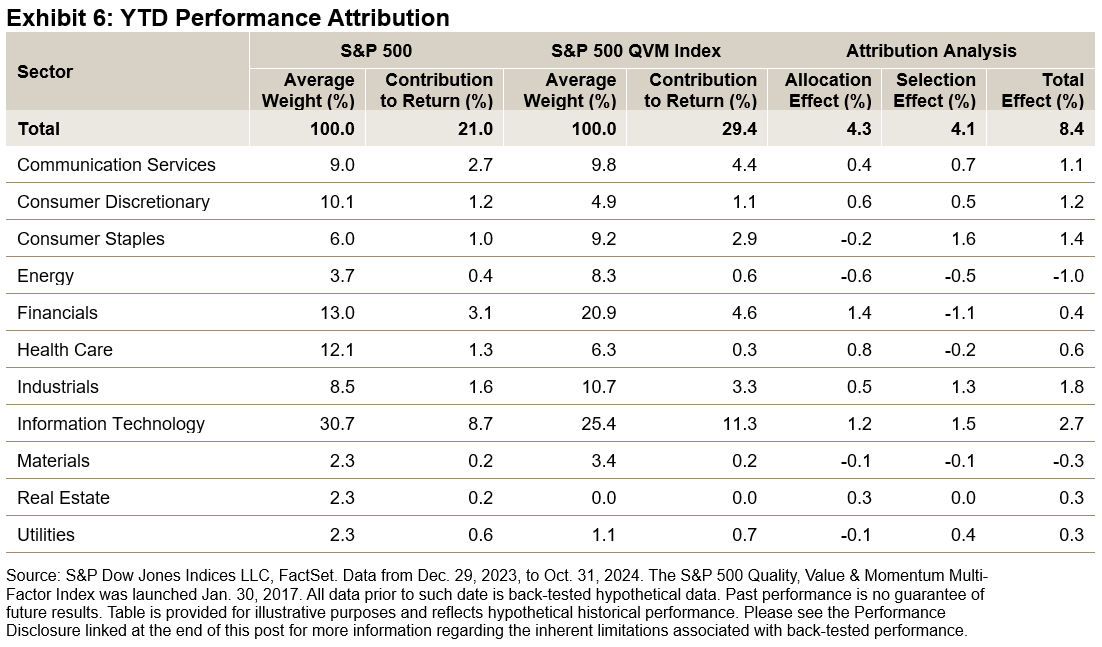
Exhibit 6 evaluates the YTD performance of the S&P 500 QVM Multi-Factor Index using the Brinson attribution method. It reveals that the recent outperformance can be attributed to both allocation and selection effects, which contributed 4.3% and 4.1%, respectively. Notably, the selection effect played a significant role, showcasing the effect of a bottom-up multi-factor strategy based on a composite of quality, value and momentum factors.

Conclusion

Multi-factor strategies offer an approach to navigating the complexities of selecting and timing individual factors. These strategies have historically led to improved risk-adjusted returns and more stable excess return outcomes, thanks to their diverse factor makeup.

The S&P 500 QVM Multi-Factor Index employs a bottom-up methodology that selects stocks with high average multi-factor scores across quality, value and momentum. Over the long term, the index has beaten the S&P 500, demonstrating significant outperformance over the recent three-year period. With historical benefits such as long-term return outperformance, reduced volatility and enhanced multi-factor exposure, the S&P 500 QVM Multi-Factor Index is a unique index with a diversified factor makeup.


1Innes, Andrew, The Merits and Methods of Multi-Factor Investing,” S&P Dow Jones Indices, April 2018.

The posts on this blog are opinions, not advice. Please read our Disclaimers.

A Measure of Success – The Evolution of ESG Scores in the S&P 500 ESG Index

Contributor Image
Maria Sanchez

Director, Sustainability Index Product Management, U.S. Equity Indices

S&P Dow Jones Indices

When considering the success of an index, many often think in terms of performance metrics. However, the true measure of an index’s success lies in how well it meets its objectives. The S&P 500® ESG Index focuses on selecting and ranking index constituents using ESG scores compared to the underlying S&P 500.  The index achieves this by selecting the top 75% of companies by float-adjusted market capitalization (FMC) within each GICS® industry group based on their ESG score rankings. This blog examines the evolution of ESG scores within the index since its launch in January 2019.

In early 2024,1 a significant transition occurred from the S&P DJI ESG Scores to the S&P Global ESG Scores. This change of ESG scores was made due to the enhanced modeling approach used by the S&P Global ESG Scores and a desire to standardize the scoring framework across S&P Global.

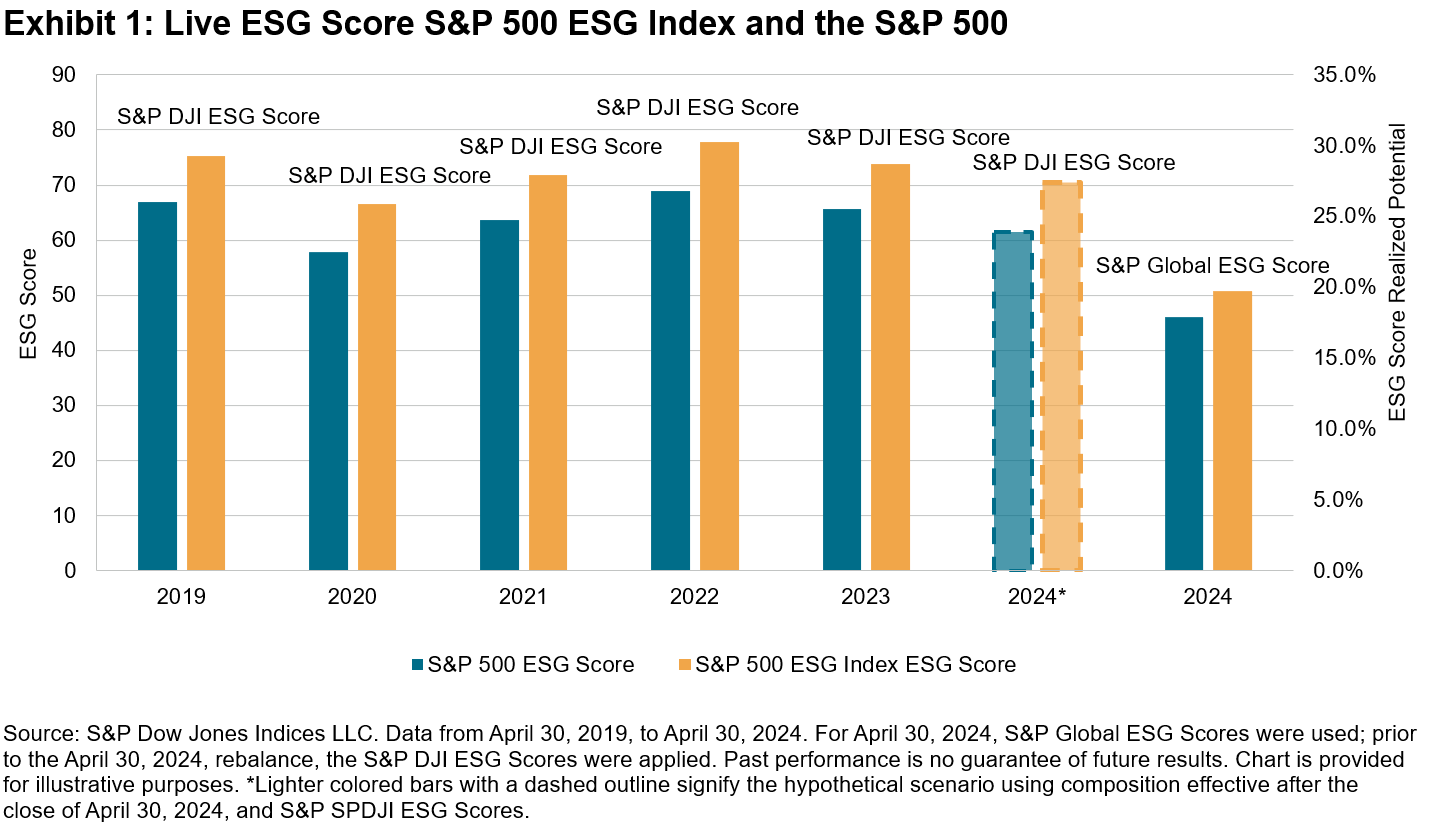
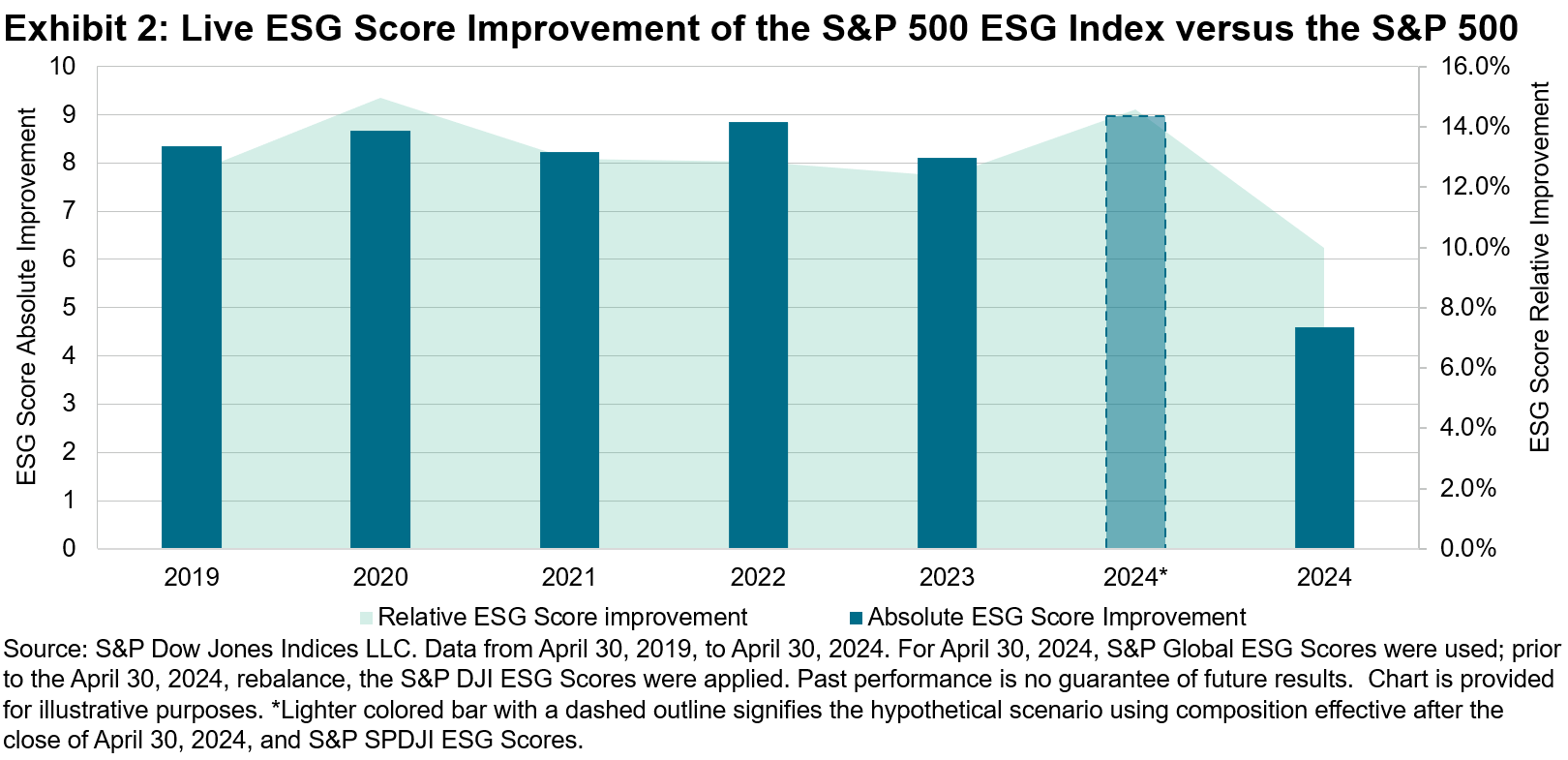
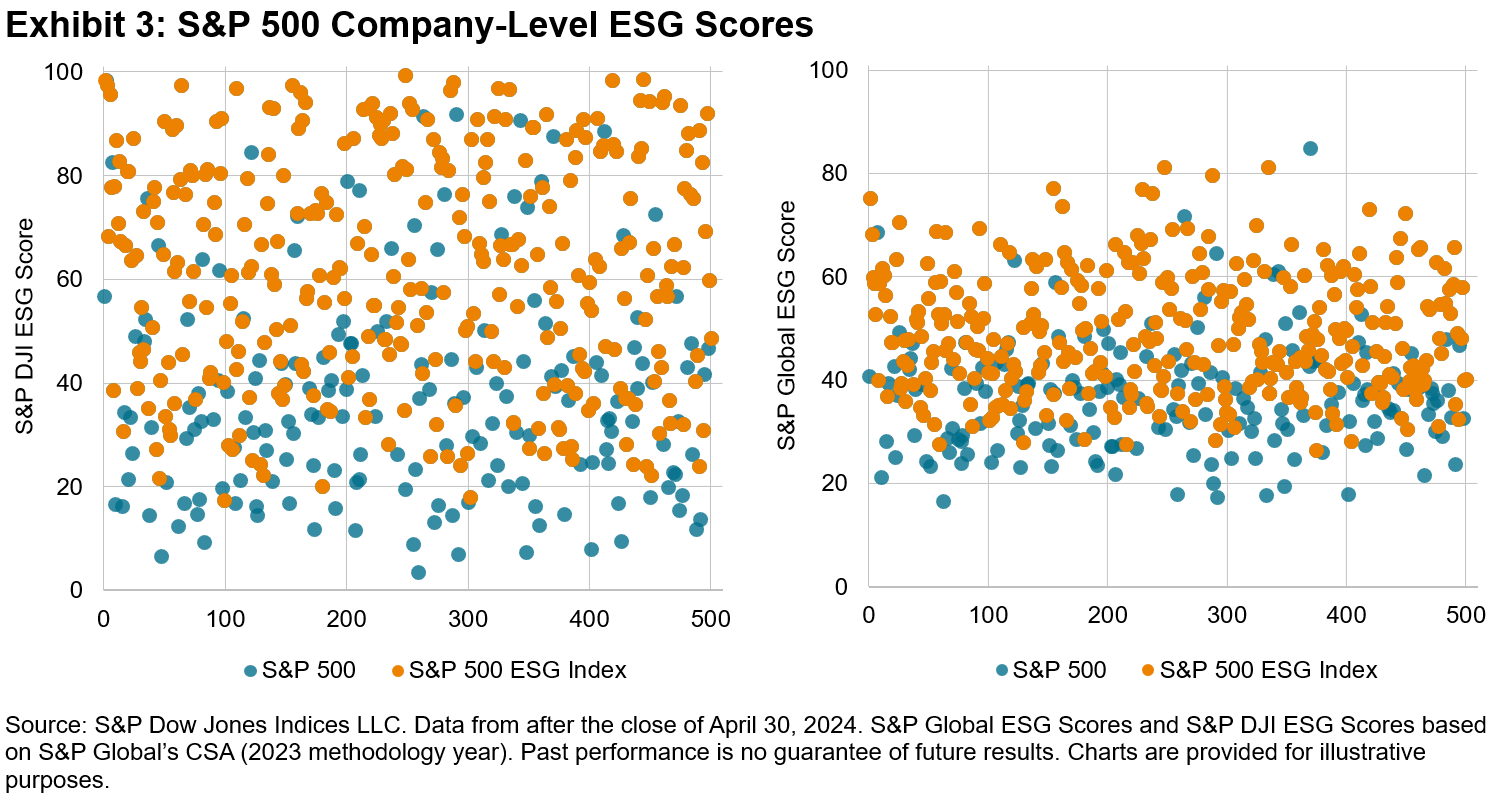
For comparison purposes, we consider a hypothetical scenario using the composition effective after April 30, 2024, using S&P DJI ESG Scores, enabling an “apples-to-apples” comparison. By analyzing these hypothetical outcomes, stakeholders can gain insights into what the index ESG score would be with the former set (S&P DJI ESG Scores) and the current composition of the S&P 500 ESG Index. Over the past five years, the ESG score of the S&P 500 ESG Index has consistently improved relative to the S&P 500 (see Exhibit 1). On average, the index has historically achieved an absolute improvement of 8.5 points and a relative improvement of 13.4%.2 Considering the new S&P Global ESG Scores, the percentage improvement seems to have dropped; however, we still see an absolute improvement of 4.6 points, which corresponds to approximately a 10% relative improvement (see Exhibit 2).

As mentioned in the paper The S&P 500 ESG Index: 5 Years of Defining Core through an ESG Lens, the S&P Global ESG Scores3 have a more normalized distribution of scores compared to the S&P DJI ESG Scores, thanks to enhanced modeling approaches that minimize size and disclosure biases. Note the S&P DJI ESG Scores4 used S&P Global Corporate Sustainability Assessment (CSA) Scores that assigned a score of zero where relevant company data was undisclosed, skewing results. The methodology5 for the S&P Global ESG scores assigns modeled scores based on industry correlations, which is likely to be more representative of companies’ sustainability performance across industries, various sizes and regions. Consequently, fewer companies achieve high scores as the scoring system now reflects an assessment of ESG risks, opportunities and impacts informed by a combination of company disclosures, media and stakeholder analysis, modeling approaches, and in-depth company engagement via the S&P Global CSA. This shift effectively raises the bar for what constitutes a high score, resulting in a more competitive landscape (see Exhibit 3).

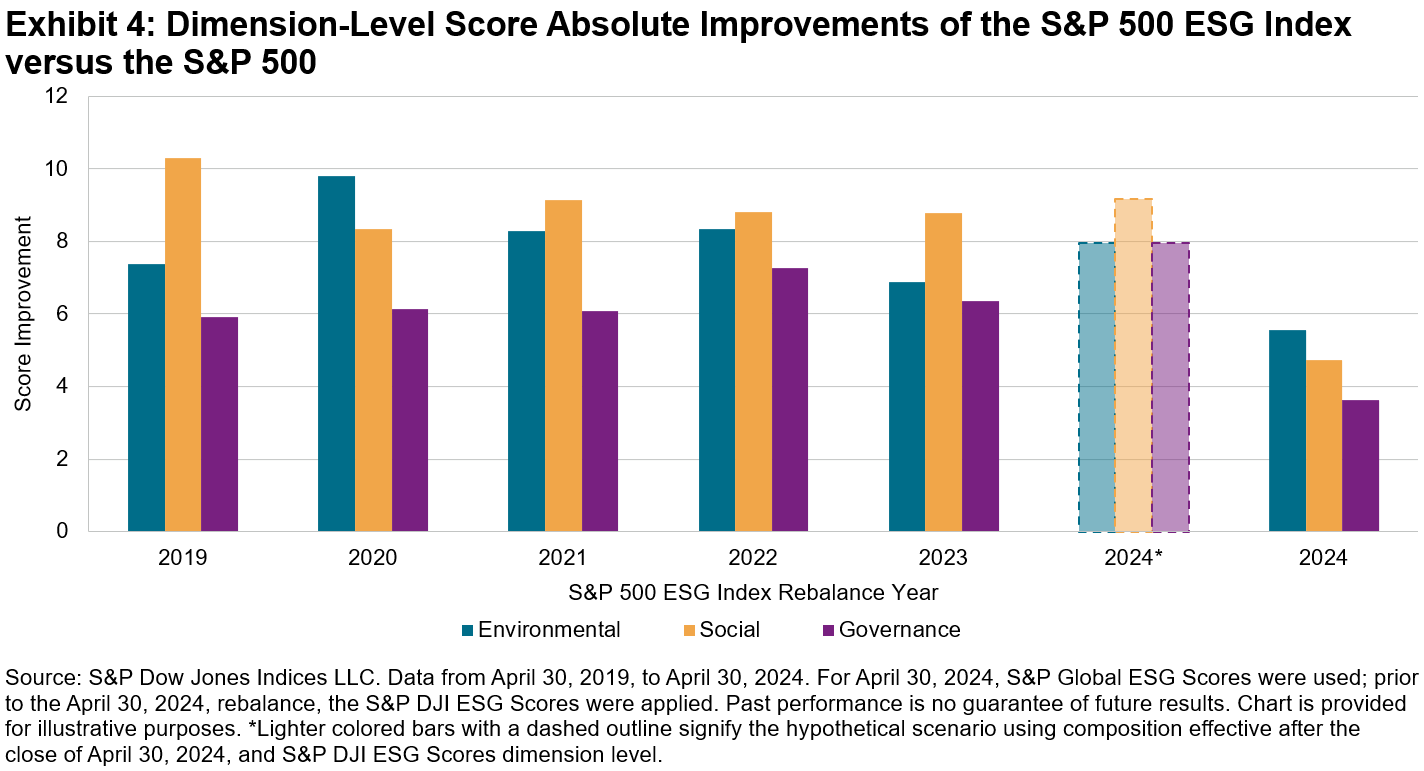
Additionally, the historical improvement of index-level ESG scores of the S&P 500 ESG Index compared to the S&P 500 is evident across various dimensions—environmental, social and governance—as illustrated in Exhibit 4.

Conclusion

Despite the scores transition, the S&P 500 ESG Index has still been able to improve index-level ESG scores compared to the S&P 500 by incorporating ESG factors into its construction process. This is also evident at the dimension level across environmental, social and governance criteria.

For more information on how the S&P 500 ESG Index measures the S&P 500 through an ESG lens, please refer to The S&P 500 ESG Index: 5 Years of Defining Core through an ESG Lens.

It should be noted that the S&P 500 ESG Index is a broad-based index that measures the performance of securities from the S&P 500 that meet specified sustainability criteria, while maintaining similar overall industry group weights as the S&P 500; consequently, securities that some may consider are not sustainable will be constituents of the S&P 500 ESG Index.

1https://www.spglobal.com/spdji/en/documents/indexnews/announcements/20240123-1470259/1470259_sp-glb-bis-glb-esg-scores-consult-results-1-23-2024.pdf

2 Using the S&P DJI ESG Scores

3 Transitioning S&P Sustainability Indices to S&P Global ESG Scores and Business Involvement Screens

4 S&P DJI ESG Score Methodology

5 S&P Global ESG Scores Methodology

The posts on this blog are opinions, not advice. Please read our Disclaimers.

Under the Hood of U.S. Equities: Perspectives on Size, Sectors and Style

Contributor Image
Sherifa Issifu

Associate Director, Global Exchanges

S&P Dow Jones Indices

Large-cap, growth and tech-oriented companies have led U.S. equity market performance so far in 2024. Investors’ optimism for the application of artificial intelligence on these companies’ growth prospects propelled the S&P 500® Top 50, S&P 500 Information Technology, S&P 500 Communication Services and S&P 500 Growth to more than 20% year-to-date gains through the end of August.

However, the year-to-date performance masks the fact that there has been a notable shift in leadership since the end of June. Indeed, market participants re-evaluated AI opportunities at the start of H2 2024, focusing on capacity demand for chips, potential opportunities for business use and whether the expectation from AI will translate into general economic growth in the short and medium term. This provided headwinds for H1’s performance leaders.

Instead, more domestically focused U.S. segments such as Real Estate, value and small size have led the way in Q3. The S&P SmallCap 600® is outperforming the S&P 500 by about 6%, with the S&P MidCap 400® and S&P 500 Equal Weight Index leading by 2% and 3%, respectively.

It’s difficult to know whether these trends will continue, but what we have seen historically is that rotations in market leadership across U.S. market cap indices, sectors and style segments are common. The differences in performance in the two parts of the year also show that segments of the U.S. equity market can perform distinctly from the S&P 500, creating opportunities for diversification within the U.S. equity universe.

Recent years have been marked by higher dispersion among sector, style and size, with sectors being the most elevated in comparison to history. In 2022, S&P 500 Sectors exhibited their highest calendar year dispersion on record, with a spread of 106% between the best-performing sector (Energy, 86%) and worst-performing sector (Communication Services, -40%), compared with the previous record of 98% from 2000. Sectors remain a useful tool regardless of whether market participants choose to be active or passive.1

Elevated sector dispersion has also been seen historically in U.S. presidential elections, with November election months exhibiting significantly higher dispersion than other months and non-election periods.2 Exhibit 4 shows dispersion at the sector level despite limited benchmark volatility. In 2016, sector effects accounted for over 40% of the S&P 500’s monthly dispersion; at the time markets priced in the anticipated impact of the then-incoming administration’s policies on different market segments. It will be interesting to see whether a similar trend emerges in the 2024 U.S. presidential election, but history points to sector effects playing an important role, amplifying the importance of sector choices.3

Recent changes to market leadership remind us that change is a constant of the markets. However, being equipped with a full range of index-based tools can help market participants manage and potentially mitigate risks across different market regimes.

1 Nelesen, Joseph and Edwards, Tim, “Natural Selection: Tactics and Strategy with Equity Sectors,” S&P Dow Jones Indices, July 2024.

2 Ganti, Anu and Lazzara, Craig, “Sector Effects During Elections,” S&P Dow Jones Indices, September 2020.

3 Preston, Hamish, “U.S. Equities and Sectors in Election Years,” S&P Dow Jones Indices, July 2024.

This post was originally published by Calcalist on Oct. 6, 2024.

The posts on this blog are opinions, not advice. Please read our Disclaimers.