





The S&P High Yield Dividend Aristocrats® (S&P HYDA) includes large-, mid- and small-cap U.S. companies that have consistently raised their dividends for at least 20 consecutive years. This blog will examine the recent rebalance of the S&P HYDA, detailing the changes in its constituents and their distribution by size and sector. Additionally, we will highlight the dividend increase history of these constituents.
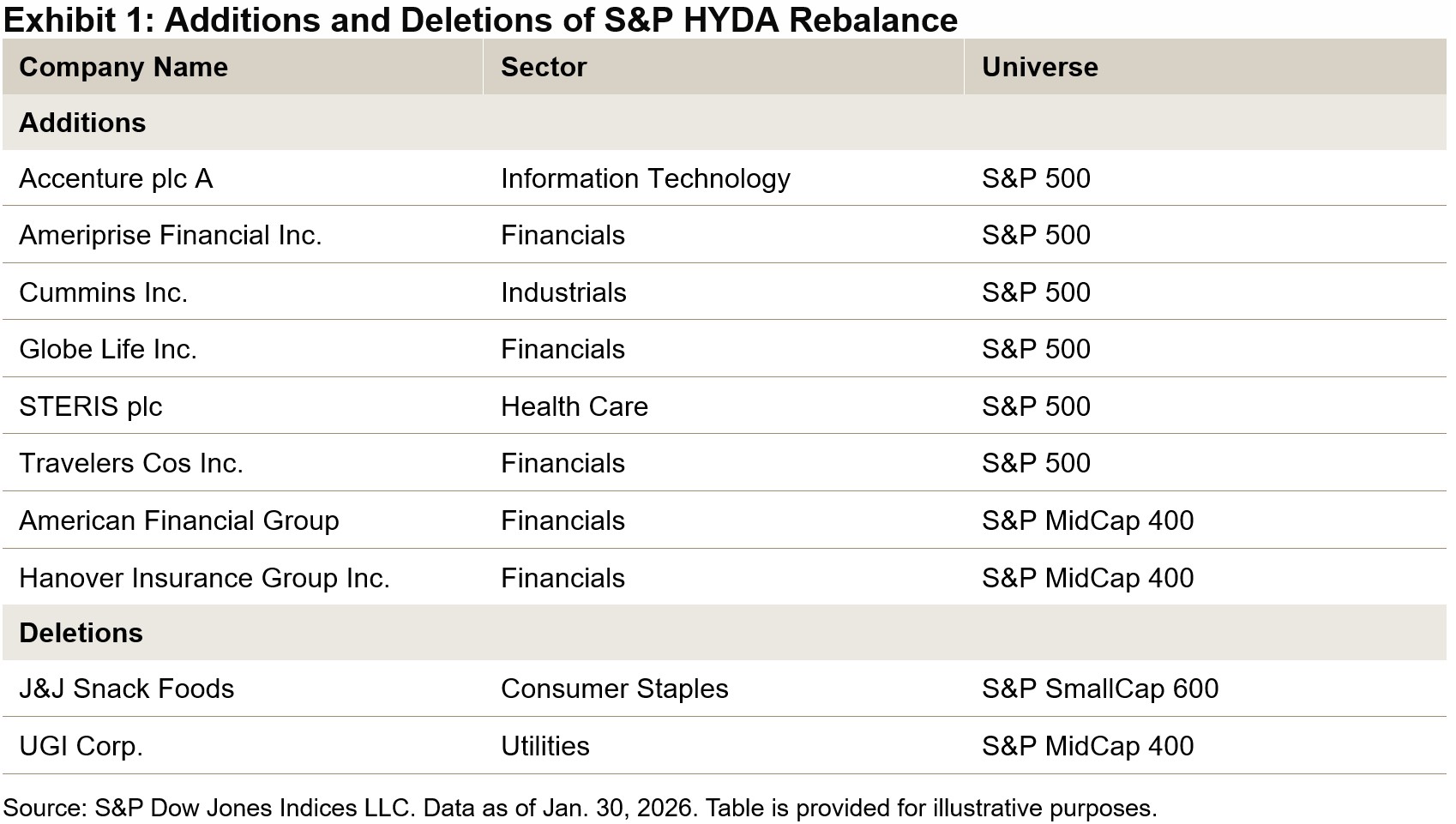
The index completed its annual reconstitution on Jan. 30, 2026, adding eight new members into this distinguished group (see Exhibit 1). With these additions and the removal of two constituents, the total number of index constituents increased from 149 to 155, further enhancing its diversification and liquidity.
Market-Cap Breakdown
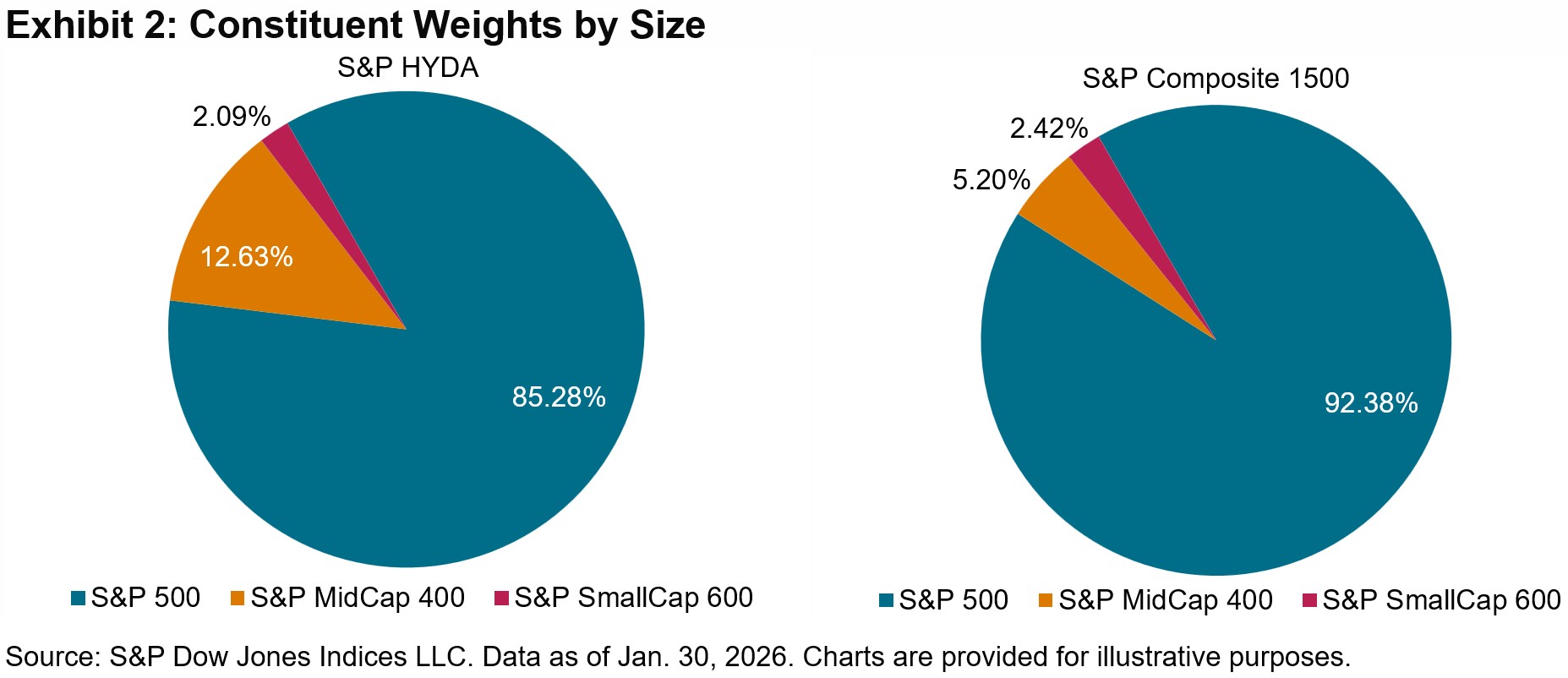
As of the latest rebalance, the S&P HYDA comprises 155 constituents: 102 stocks from the S&P 500®, 38 from the S&P MidCap 400® and 15 from the S&P SmallCap 600®. Notably, the S&P HYDA has a greater weight in the mid- and small-cap segments compared to the S&P Composite 1500®, as illustrated in Exhibit 2.
Sector Breakdown
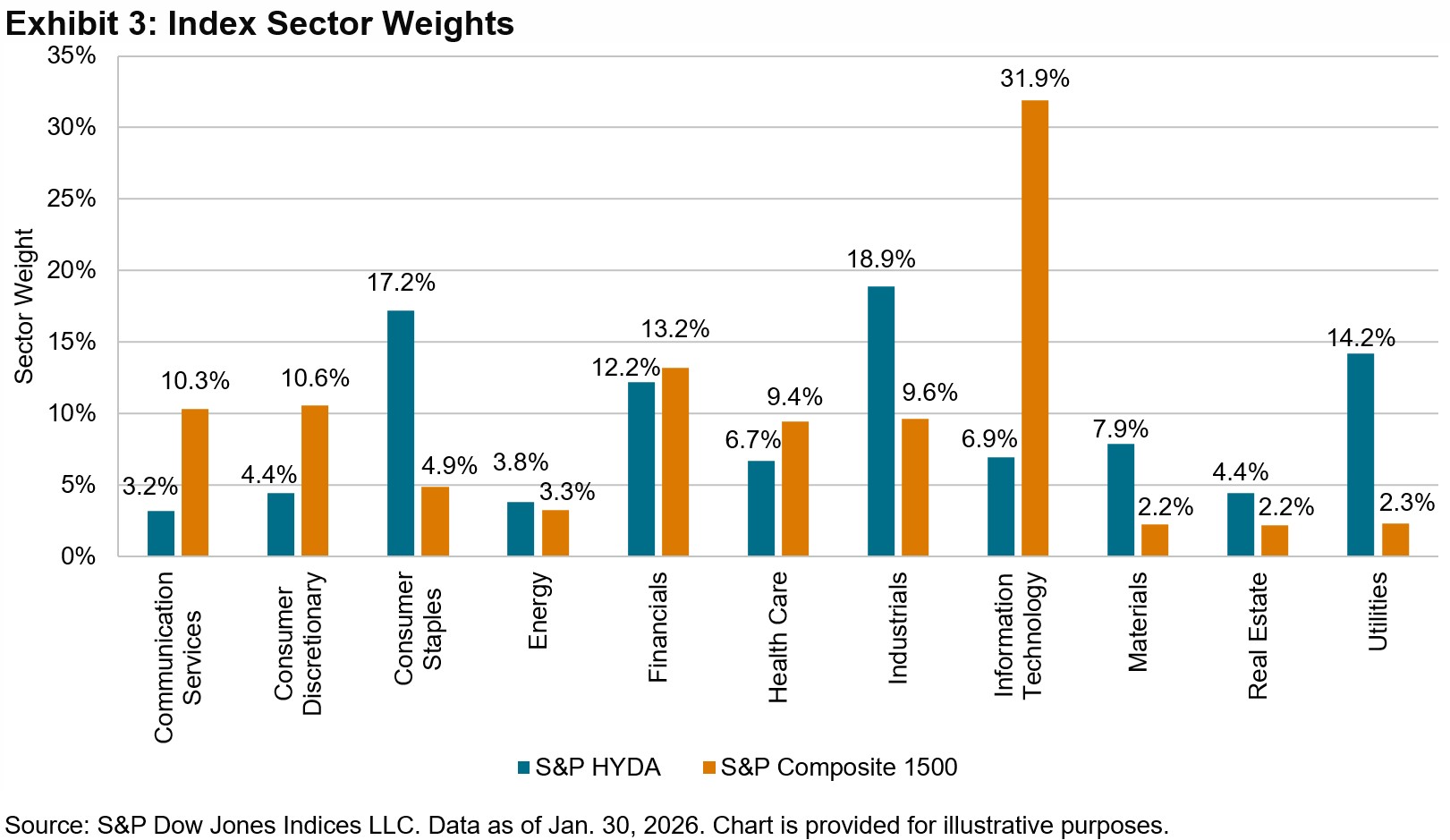
With 155 constituents, the S&P HYDA features representation from all 11 GICS® sectors: 35 constituents from Industrials, 29 from Financials, 21 from Utilities, 20 from Consumer Staples, 16 from Materials and 34 from the remaining 6 sectors.
As shown in Exhibit 3, the S&P HYDA is notably underweight in the Information Technology (-25.0%), Communications Services (-7.1%) and Consumer Discretionary (-6.1%) sectors. In contrast, the index is substantially overweight in Consumer Staples (12.3%), Utilities (11.9%) and Industrials (9.2%).
A Long History of Dividend Growth
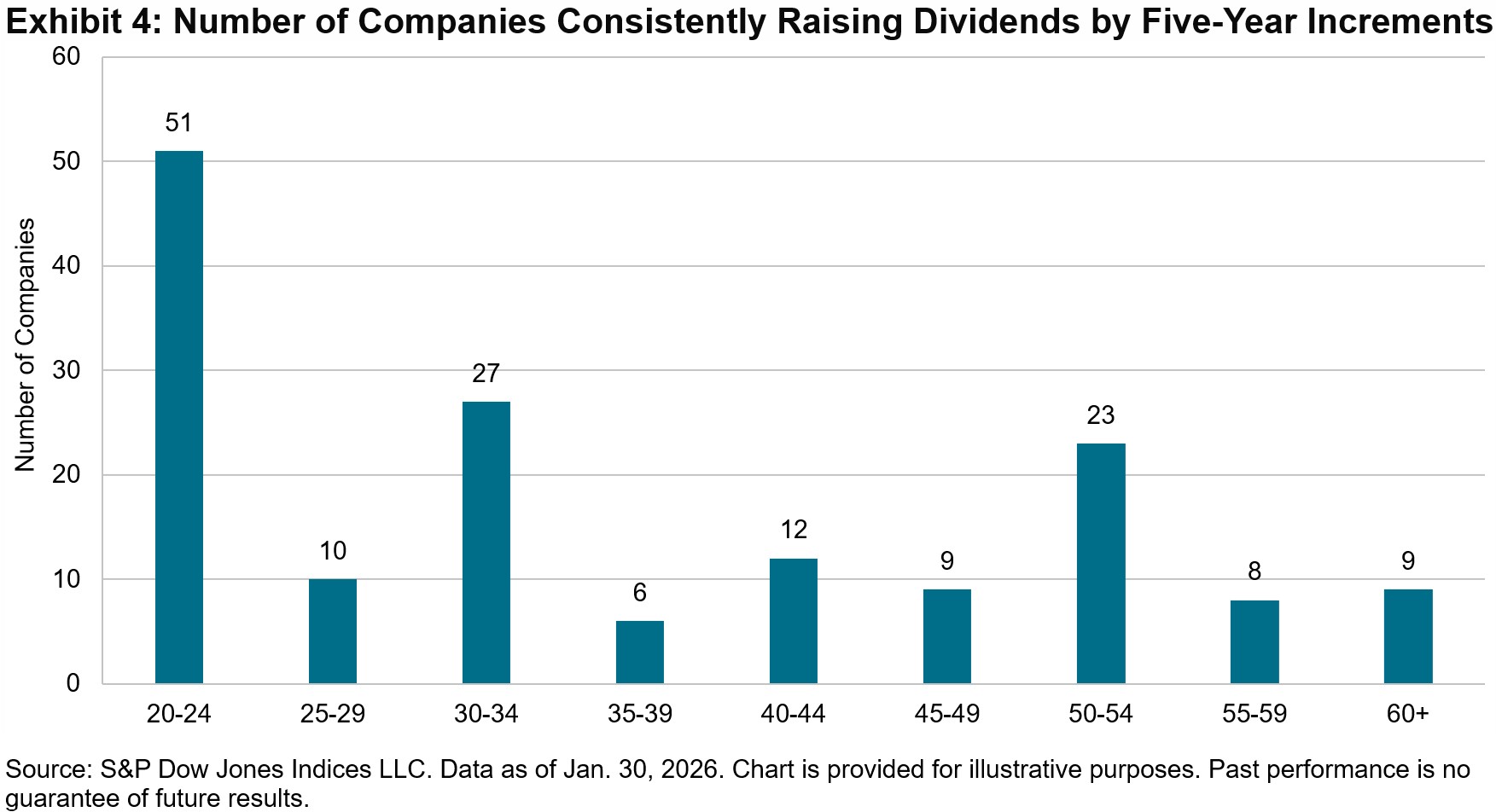
Exhibit 4 presents the number of constituents that have increased their dividends in five-year increments. Roughly 33% of constituents have raised their dividends for 20 to 24 years, while 35% have done so for 25 to 44 years. Additionally, 32% of constituents have achieved this for 45 years or more. These track records highlight these companies’ longstanding ability and commitment to consistently increase dividends over multiple decades.