











Every election season brings a familiar ritual: wall-to-wall media coverage, confident predictions and no shortage of opinions about what a given outcome will mean for markets. But does the noise translate into measurably significant market movement? And if it does, does it matter equally everywhere?
To find out, we examined equity index performance around election dates across seven countries, spanning a selection of developed and emerging markets—and what we found challenges some common assumptions. Market reactions to elections are far from uniform, and not always as extreme as pundits predict.
How We Measured Election Effects
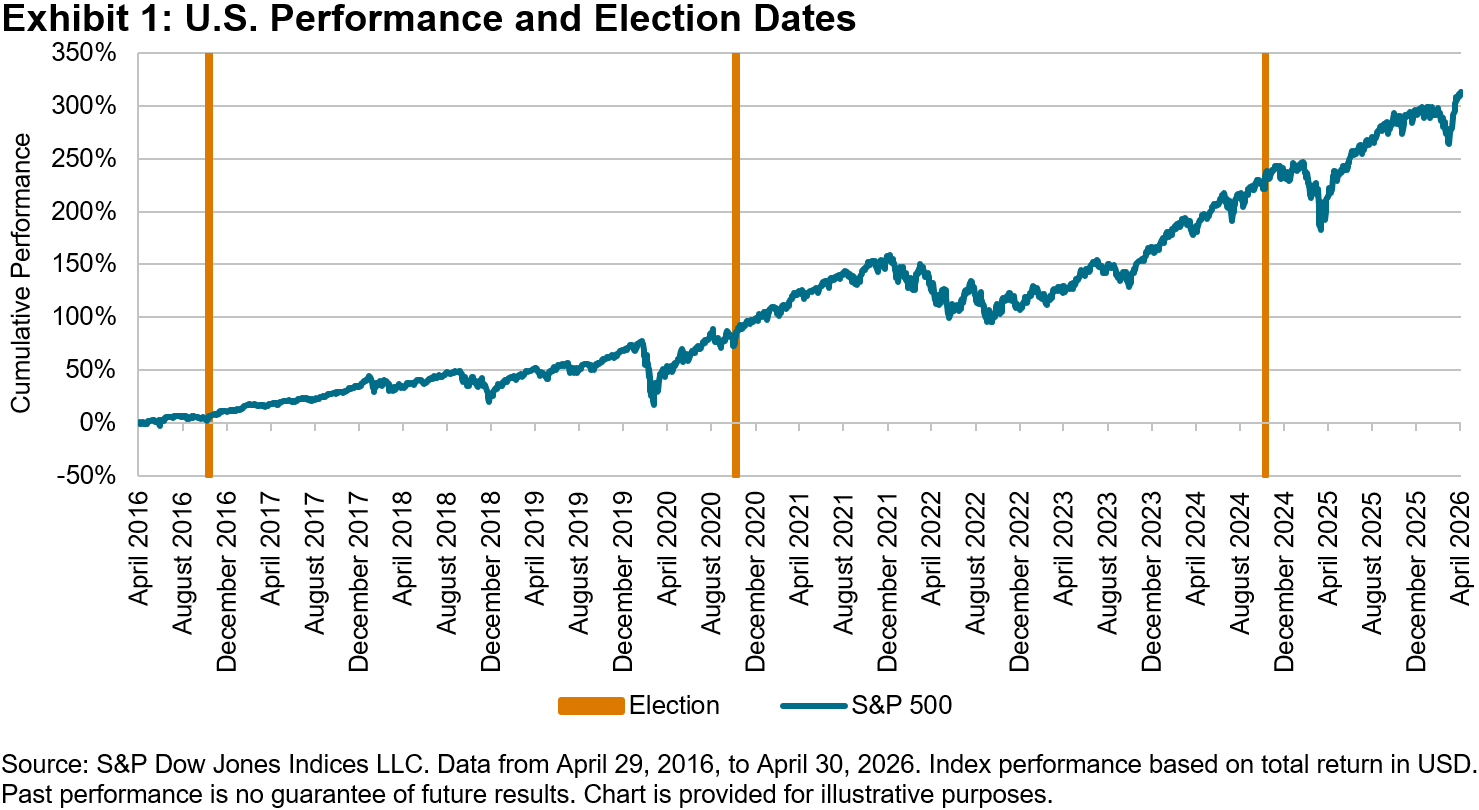
We analyzed performance of local benchmarks in the U.S. (S&P 500®), Mexico, Brazil, Chile, Japan, the U.K. and Germany (single-country indices from the S&P Global BMI) from April 2016 to April 2026. All indices are expressed in their local currencies.
Performance of local indices indicate some seemingly significant fluctuations in performance around election dates, as shown in a sample of our observed countries in Exhibits 1-4, but similar bouts of volatility outside of election cycles suggest other factors may drive market changes even more.
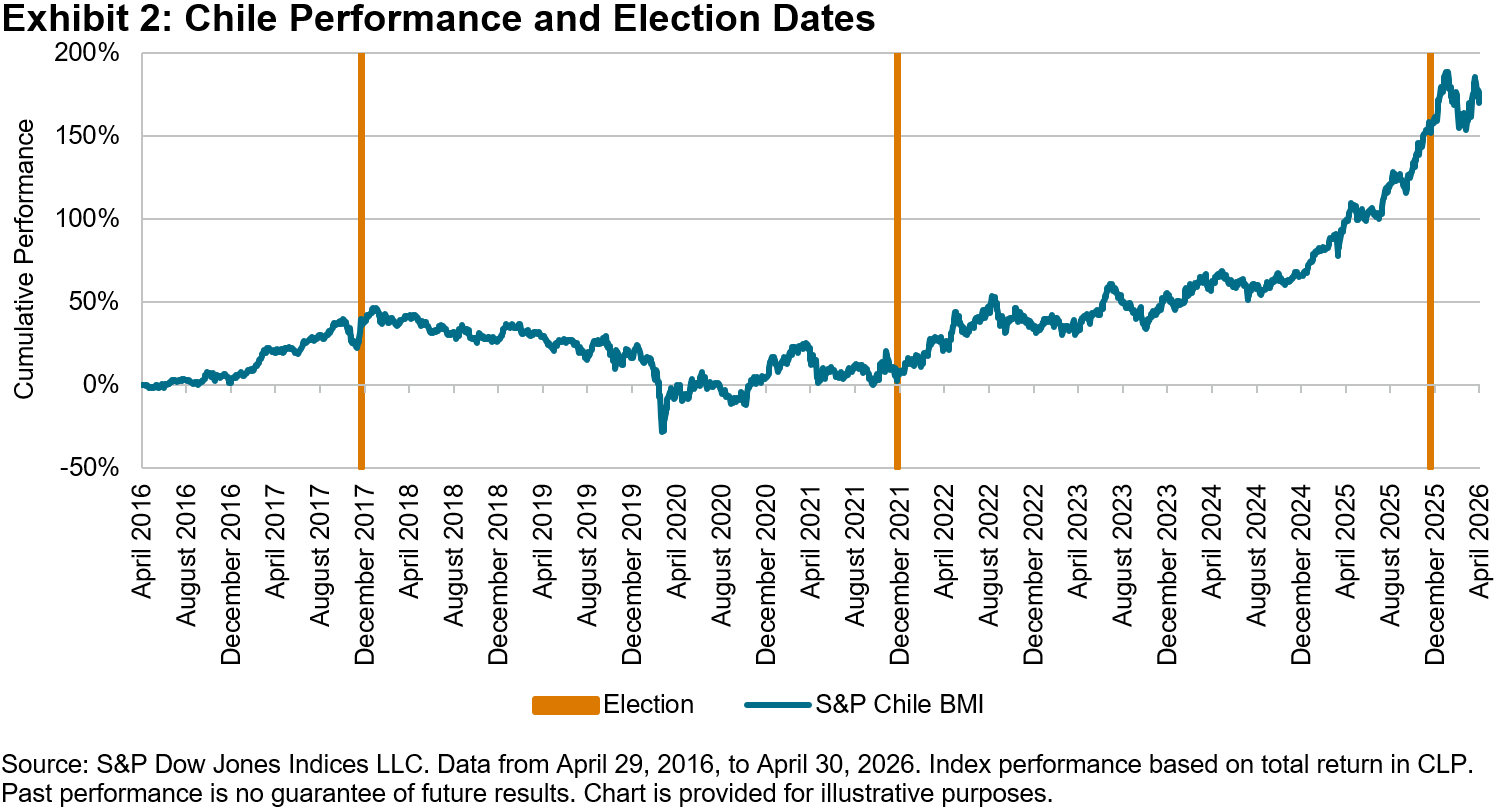
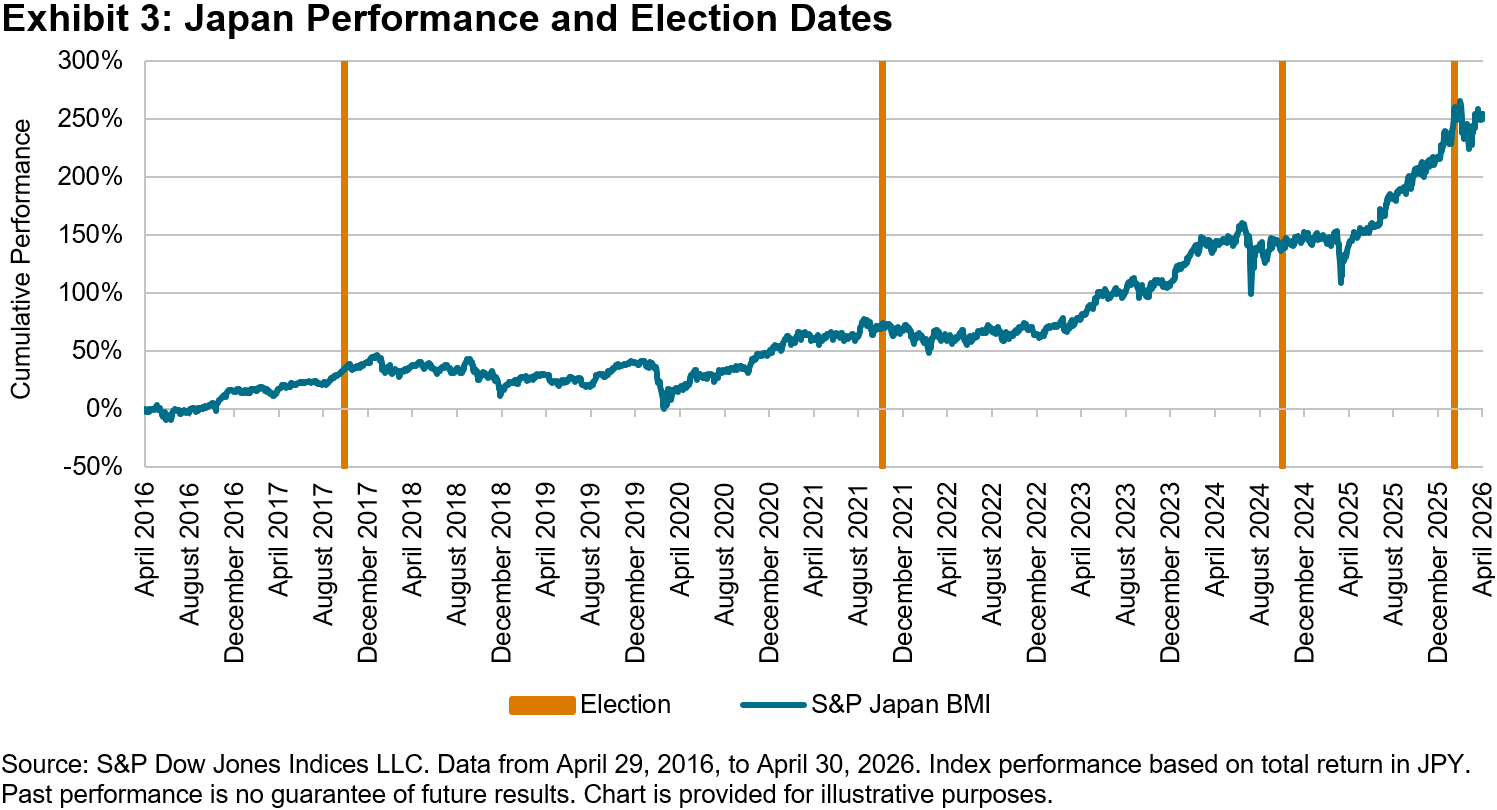
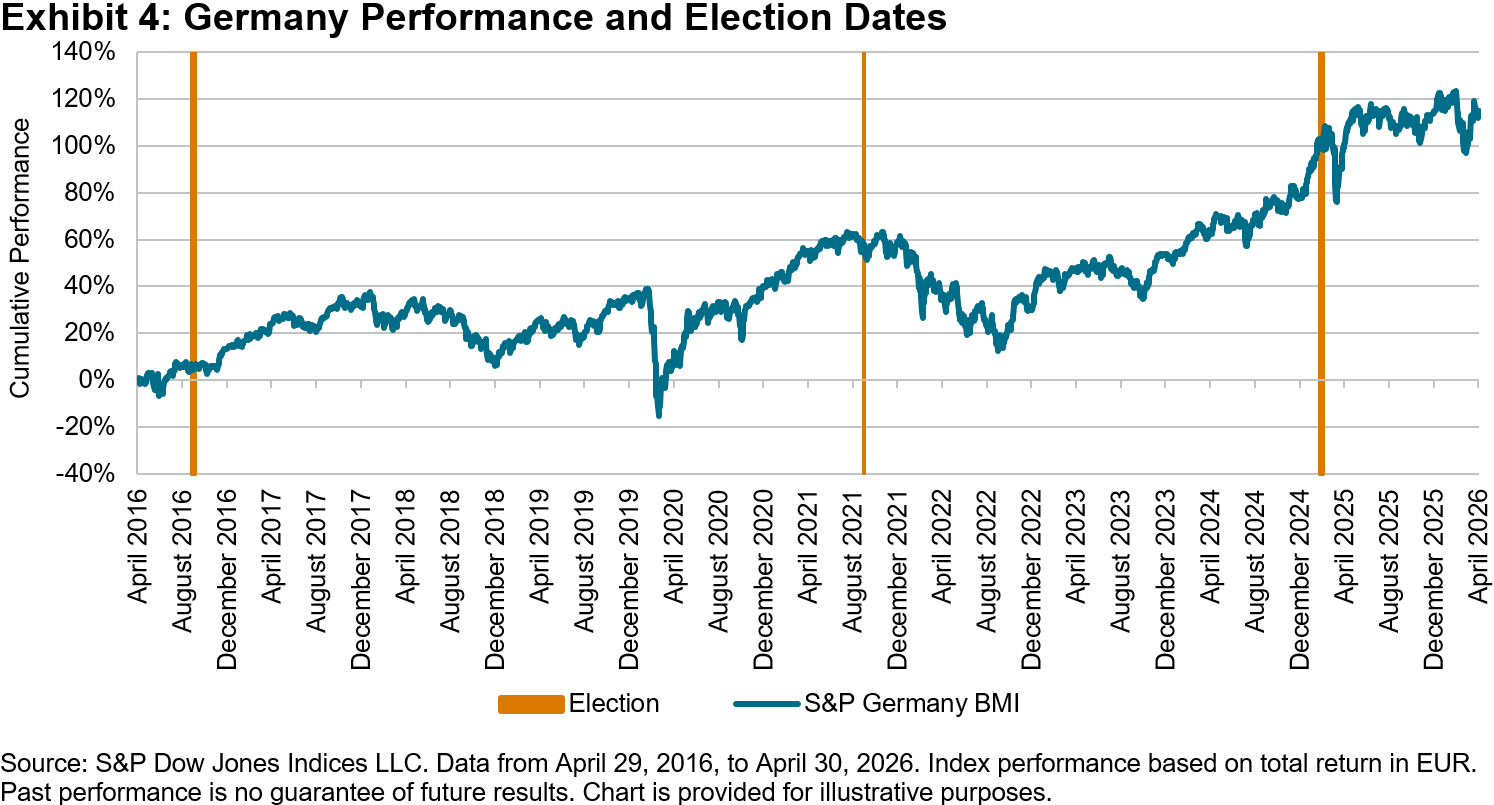
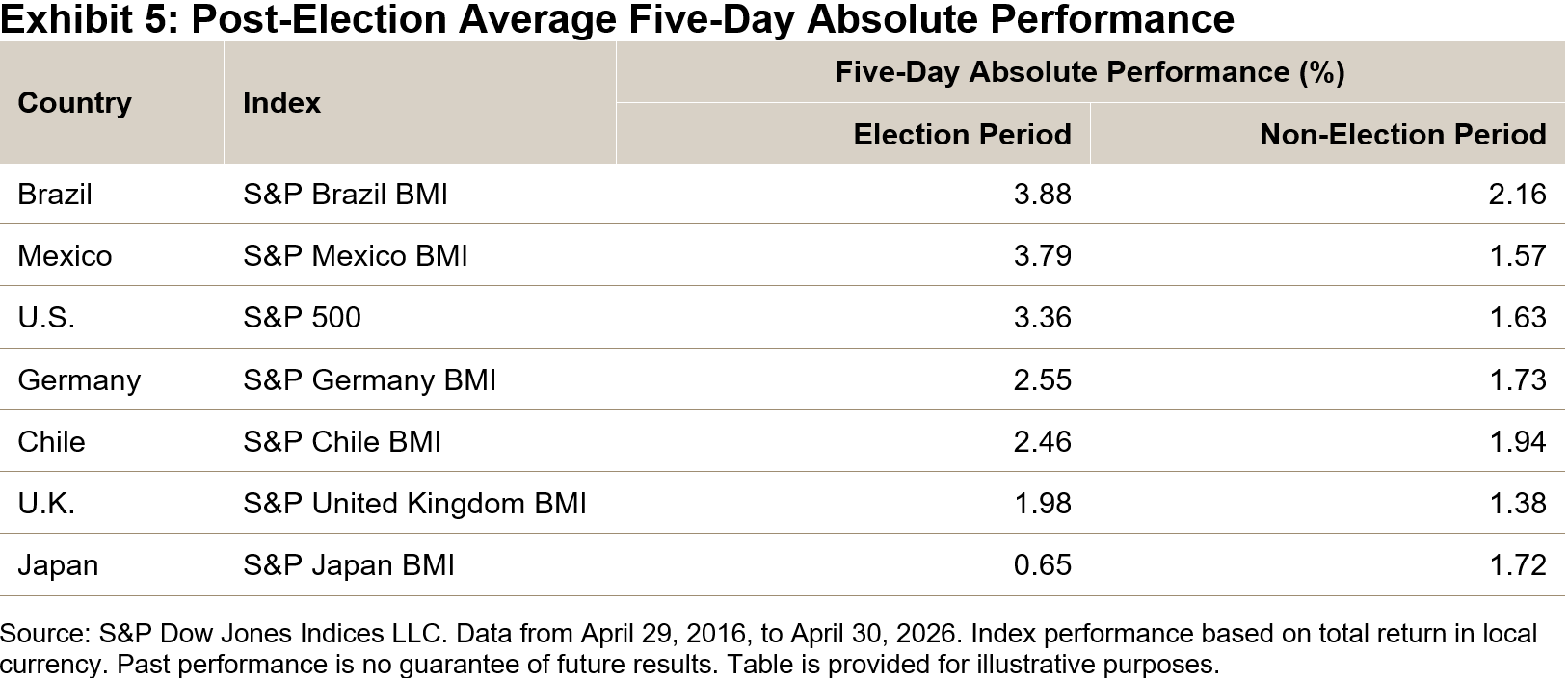
To standardize analyses of short-term election effects, we measured the absolute value of performance over the five-day period following federal election dates for new leaders in each selected country and compared them to a baseline of non-election periods across the same time frame.
The clearest pattern in the data indicated that short-term election effects varied significantly, as shown in Exhibit 5.
Looking beyond the averages and examining periods with the highest absolute index movement, we find that many election periods rank highly, but they are far from the most volatile periods encountered in these markets, as shown through the top 500 ranked five-day periods in the U.S. as shown in Exhibit 6.
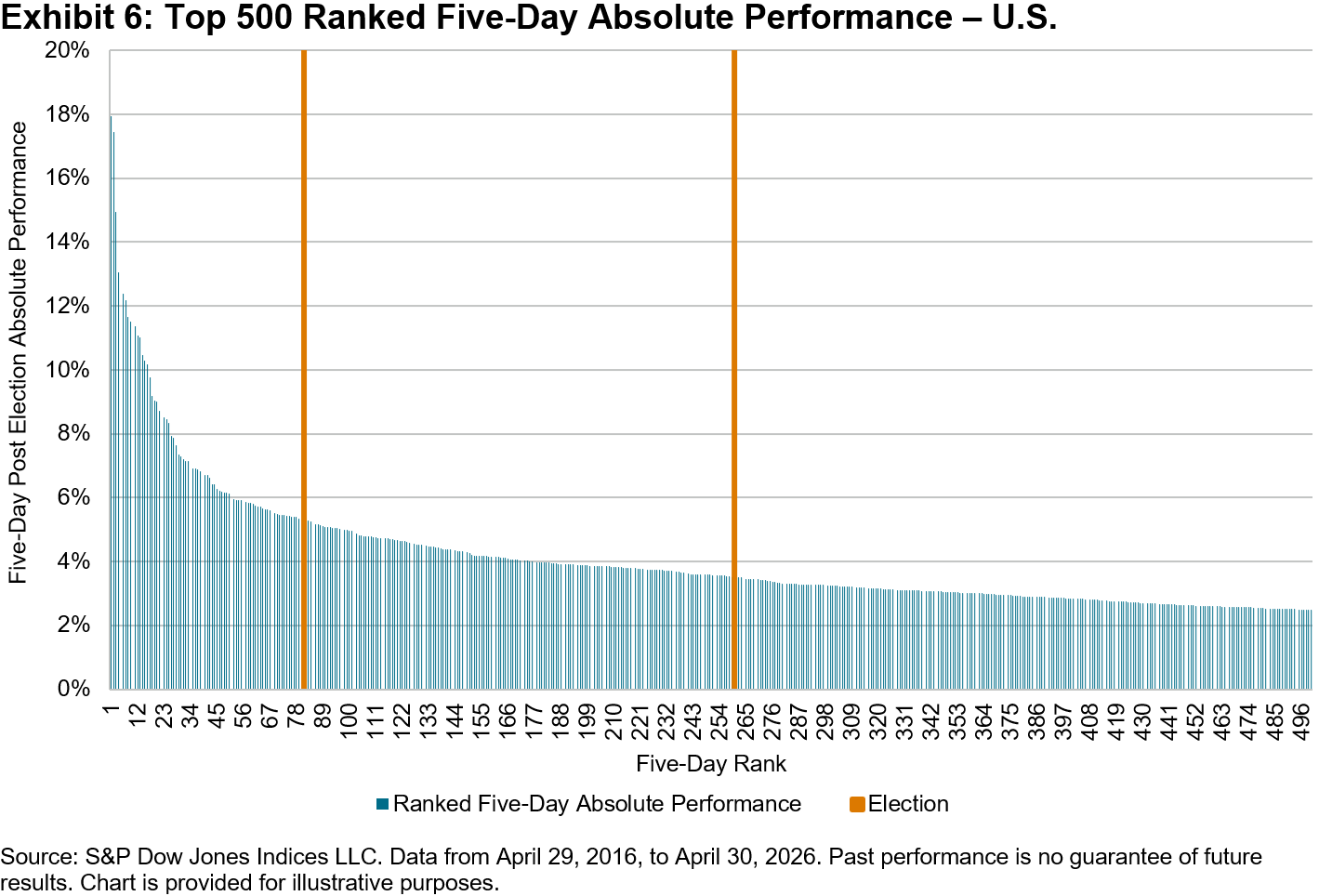
Among our seven observed countries, five-day post-election market performance ranked in the top half of observed periods slightly more than half the time, suggesting national elections indeed are associated with above-average short-term volatility. However, there are plenty of volatile periods of more extreme market performance that underscore the impact of unexpected non-election events as well.
The implication is clear; election effects are real, but difficult to predict in direction, magnitude and timing. Investor reactions to expected election outcomes may occur well before or even well after election days, as polling and other news is taken into account. Markets may move for a variety of reasons, including elections, but drivers may be more nuanced. Analyzing which stocks, industries and sectors are most affected by local market events can paint a clearer picture of how investors are responding to all types of news, whether it’s related to the ballot box or not.
This content may be AI-assisted and is composed, reviewed, edited, and approved by S&P Global.
The posts on this blog are opinions, not advice. Please read our Disclaimers.