











With broad market benchmarks trading at historically low yields and elevated valuations, it’s timely to examine the performance of the S&P Dividend Aristocrats® Index Series in today’s market environment. These indices track companies with a consistent record of dividend growth and currently offer a combination of strong yields and reasonable valuations. Historically, they have also exhibited defensive qualities, which is relevant in an environment characterized by market volatility and a risk of pullbacks. Furthermore, as benchmark concentration has risen and technology stocks have come to dominate broad market indices, dividend-focused strategies show diversification characteristics owing to their broad sector profiles and sources of performance.
Methodology Review
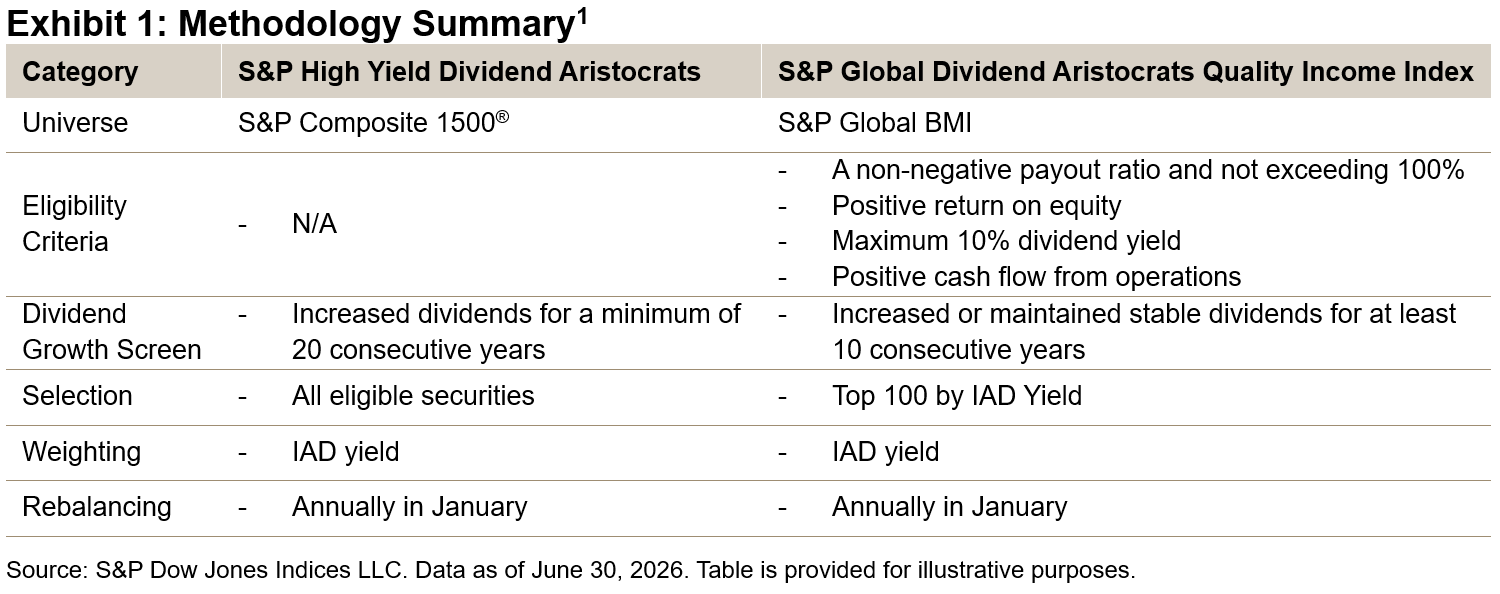
The S&P Dividend Aristocrats Indices track companies that have followed a managed-dividends policy of consistently increasing dividends every year for several years. The S&P High Yield Dividend Aristocrats considers 20 consecutive years of increasing dividends, whereas the S&P Global Dividend Aristocrats Quality Income Index requires 10 consecutive years of increasing or stable dividends, alongside fundamentals-based quality metrics focused on assessing the sustainability of companies’ dividend payout policies. Both indices are weighted by indicated annual dividend yield (IAD yield), helping maintain a strong focus on income while prioritizing inclusion of companies with demonstrated dividend growth characteristics.
Dividend Yields Significantly Exceed Benchmark Universes
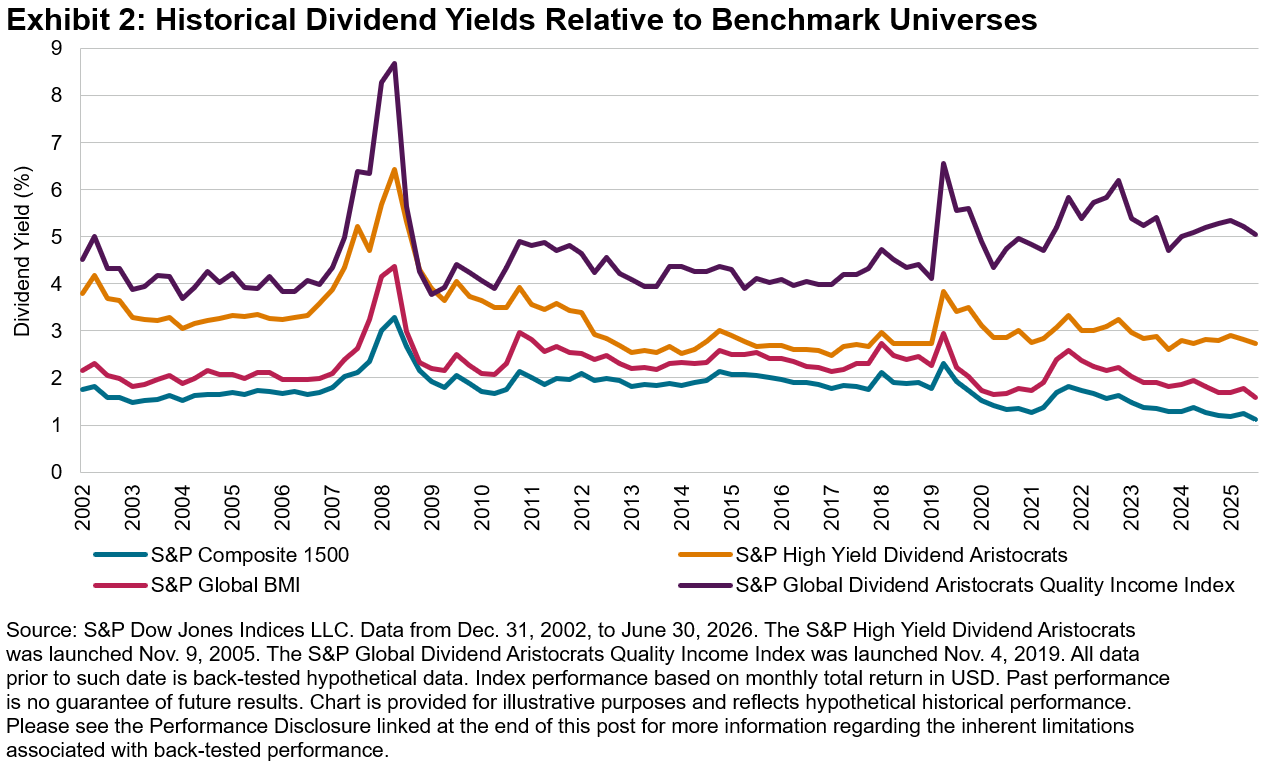
Dividend yield is a core metric for any income-focused strategy. Both the S&P High Yield Dividend Aristocrats and the S&P Global Dividend Aristocrats Quality Income Index have historically posted yields over twice those of their respective benchmarks (see Exhibit 2).
Valuations Remain Strong Relative to Benchmarks
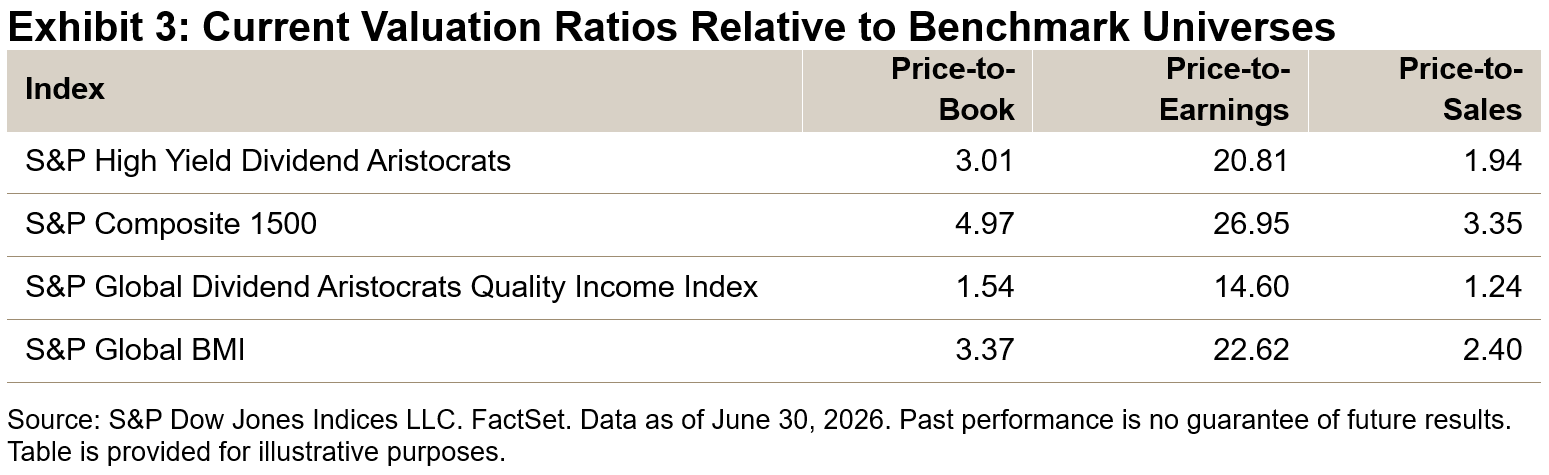
Following an extended bull market and historically elevated valuations—particularly within the Information Technology sector—Exhibit 3 highlights that both indices continue to trade at meaningful valuation discounts relative to their respective benchmark universes.
Sector Diversification
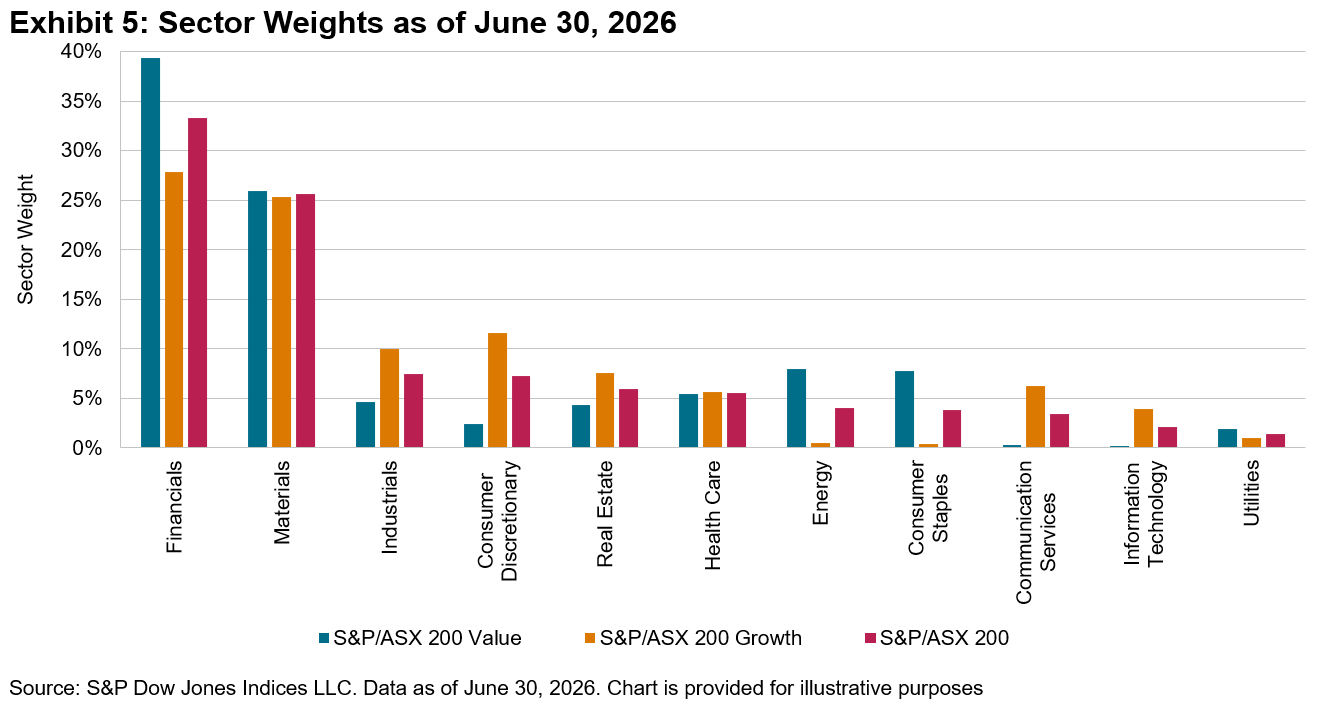
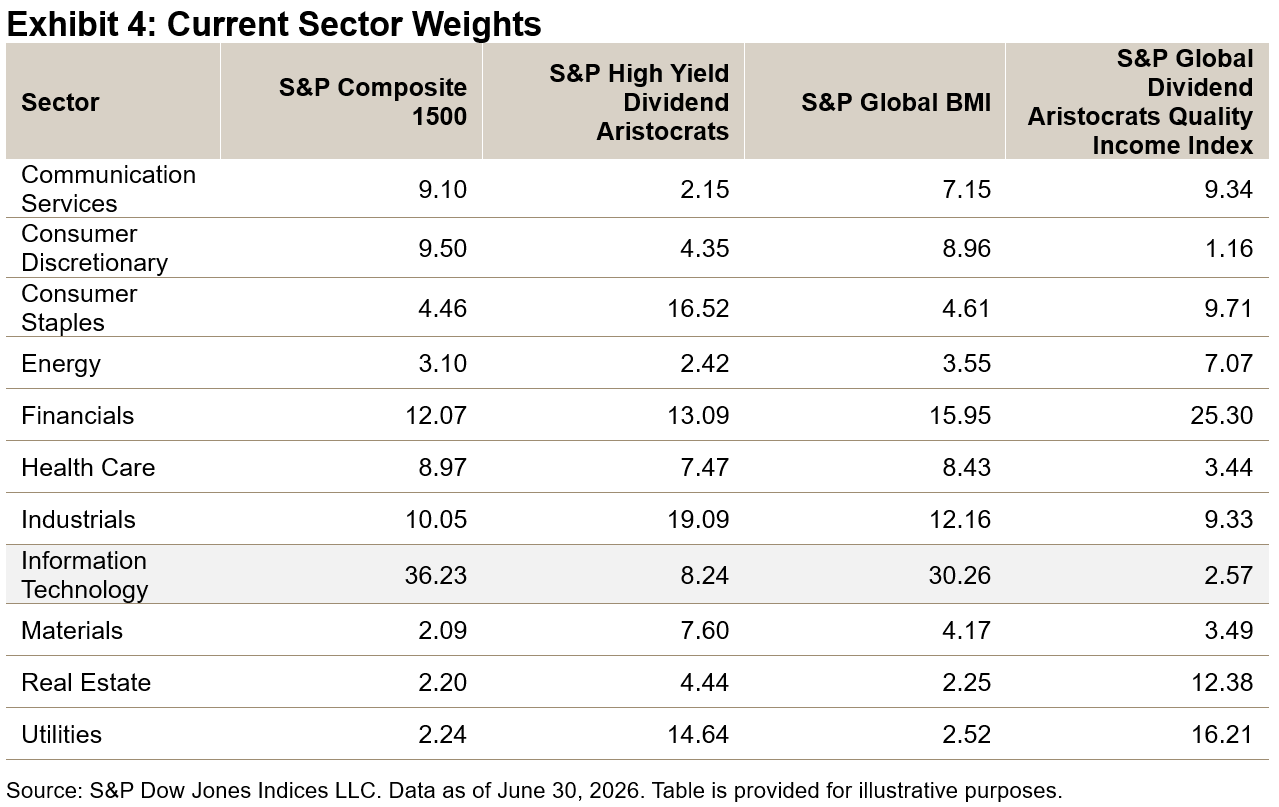
Exhibit 4 shows the diversification characteristics of these indices, demonstrating a significant underweight in Information Technology while increasing weight in traditionally defensive sectors such Consumer Staples and Utilities.
Assessing Historical Defensive Characteristics
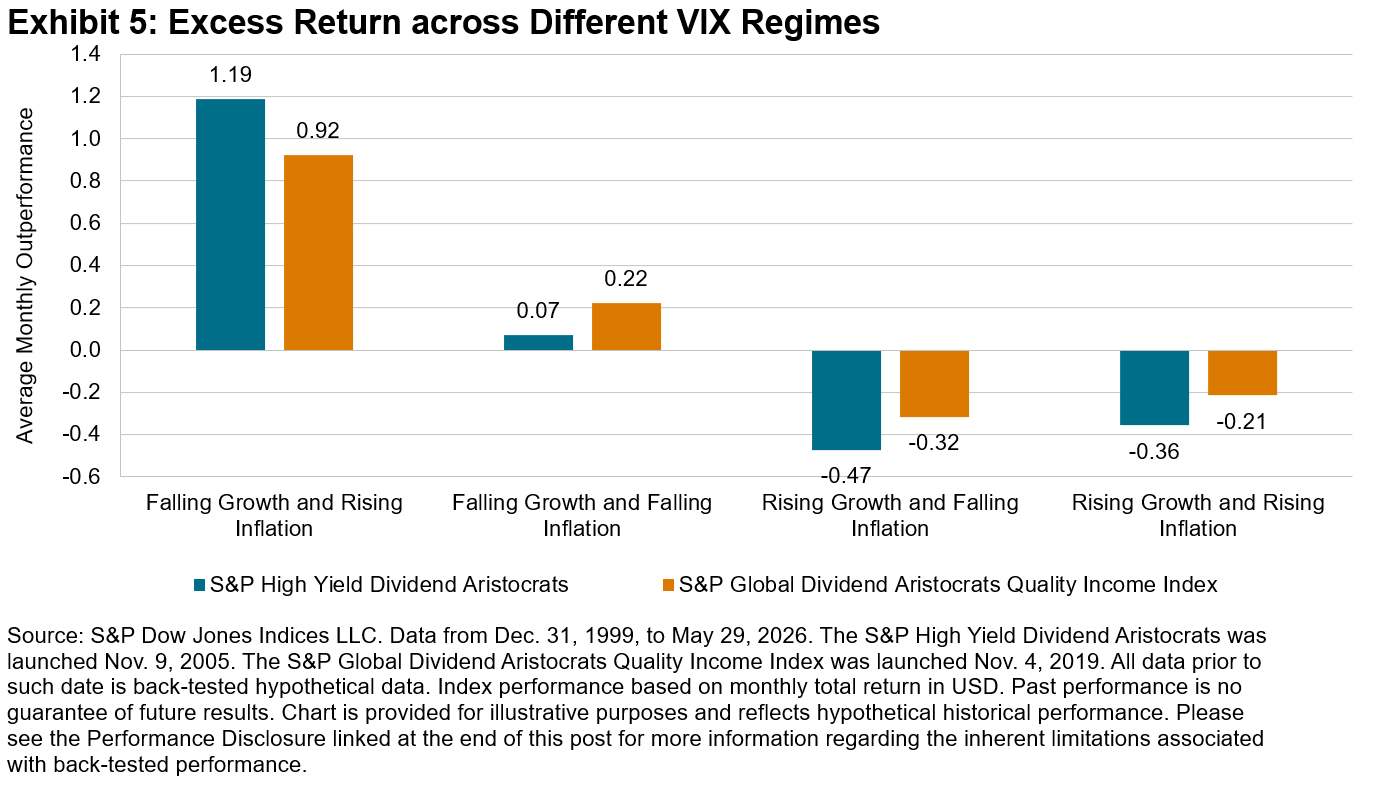
The S&P Dividend Aristocrats Indices have historically demonstrated stronger performance in weaker markets. Both indices have often delivered better relative performance during periods of higher volatility—especially when VIX® rises above 20, a level often linked to increased market stress (see Exhibit 5).
Examining Performance over the Long Term
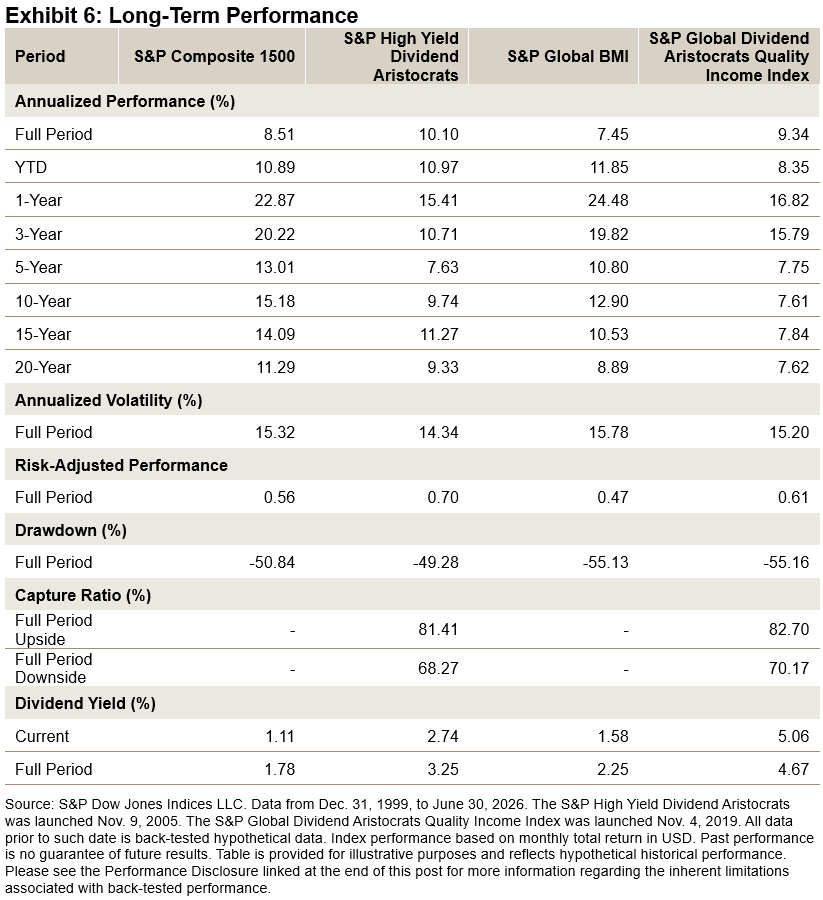
Over the long term, both the S&P High Yield Dividend Aristocrats and S&P Global Dividend Aristocrats Quality Income Index have outperformed their respective benchmarks on an absolute and risk-adjusted basis (see Exhibit 6).
Conclusion
Strong Q1 2026 inflows into dividend strategies suggest renewed demand for income and defensiveness amid heightened volatility and evolving macroeconomic conditions. The S&P Dividend Aristocrats Indices methodology focuses on companies with durable dividend growth and consistent income—traits often associated with mature, stable companies—which tend to have more robust operating models and have historically shown resilience in difficult markets while providing a measure of consistent dividend yield and diversification.
1 Please see the S&P Dividend Aristocrats Indices Methodology for more information.
The posts on this blog are opinions, not advice. Please read our Disclaimers.