


Get Indexology® Blog updates via email.

In This List

What Do the SPIVA Australia Results Imply for Active Portfolio Construction?

Return of the Macro: Declining Dispersion and Climbing Correlations

Opening the Curtains on S&P/ASX Index Rebalances

The Takaichi Trade: How Dispersion Shaped Japanese Active Funds’ Fortunes

Unicorns at the Gate: How Mega IPOs Could Reshape Global and Thematic Indices

What Do the SPIVA Australia Results Imply for Active Portfolio Construction?

Contributor Image
Sue Lee

Director and APAC Head of Index Investment Strategy

S&P Dow Jones Indices

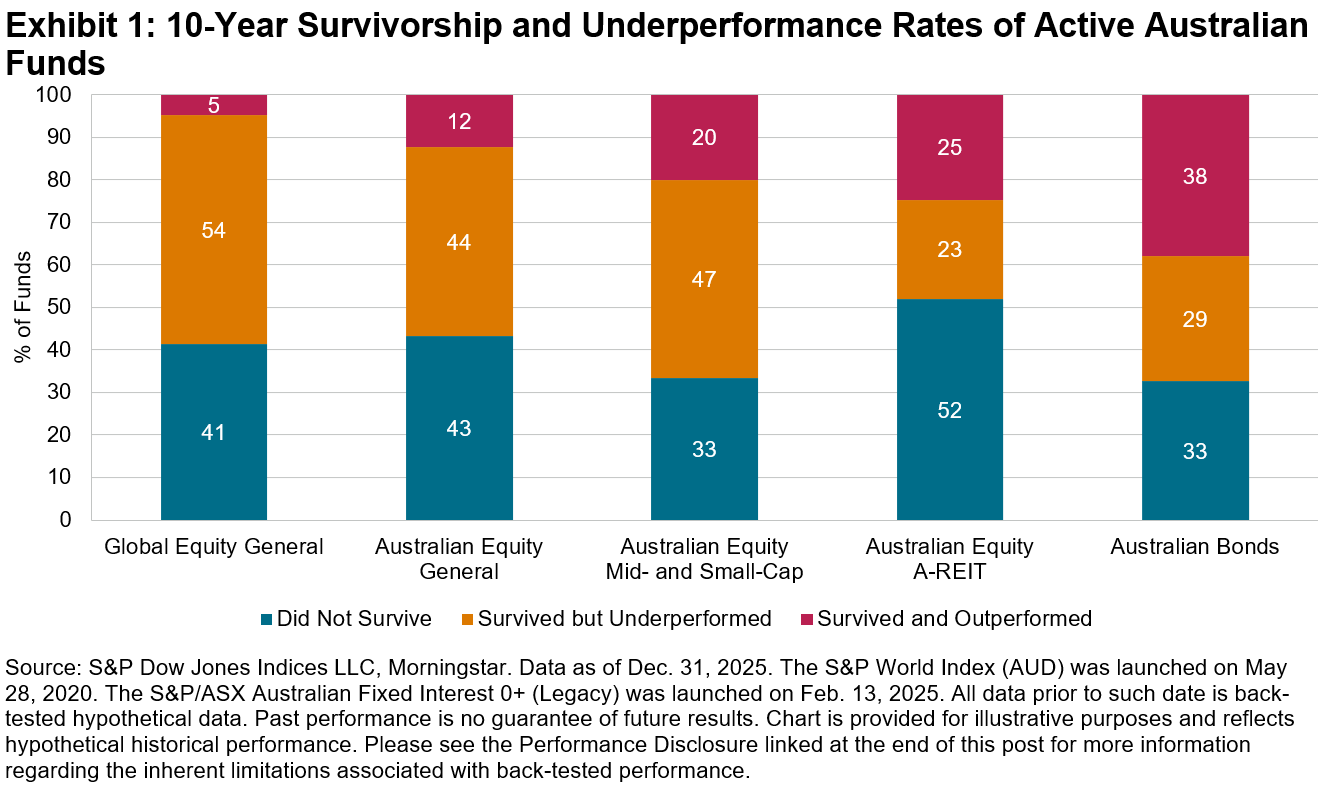
Our latest SPIVA® Australia Scorecard underscored the challenges that Australian active funds faced in converting a favorable stock-picking environment into meaningful results in 2025. Among the 831 active equity funds domiciled in Australia that we examined—spanning global equity, domestic equity and REITs—over two-thirds (570 funds) underperformed their category benchmarks. In contrast, active Australian bond funds extended their strong performance, with a majority outperforming for the third consecutive year. While the performance of active funds may fluctuate in the short term, longer-term results have remained disappointing across all categories, with many funds either underperforming or failing to survive (see Exhibit 1).
In practice, investors and advisors construct portfolios by selecting and allocating across multiple funds, and strong performance from just one active fund could more than compensate for lagging performance by others. Our latest research1 examines how portfolios of active funds stacked up against similarly weighted blends of indices. An analysis of hypothetical multi-asset portfolios of active funds domiciled in the U.S. revealed similar challenges: 96.9% of 60/40 equity/bond portfolios of U.S. active funds would have underperformed the equivalent index blend over 10 years.

How would Australian investors have fared if they selected active Australian funds to build a multi-asset portfolio? To answer this question, we simulate portfolio construction by randomly selecting funds from the four major fund categories2 included in the SPIVA Australia Scorecard (see Exhibit 2). We then assign fixed weights to the four chosen active funds—specifically 30% in the Global Equity General fund, 24% in the Australian Equity General fund, 6% in the Australian Equity Mid- and Small-Cap fund, and 40% in the Australian Bonds fund—to build a hypothetical 60/40 equity/bond portfolio. These weightings were heuristically chosen to reflect the typical home bias among Australian investors, with equal weightings in global equity and domestic equity, while the allocation between domestic general equity and mid- and small-cap equity (at a 4:1 ratio) is based on their benchmark market capitalizations. The same weights are applied to the hypothetical blend of comparison indices, and both the active portfolio and index blend are rebalanced every 12 months.3
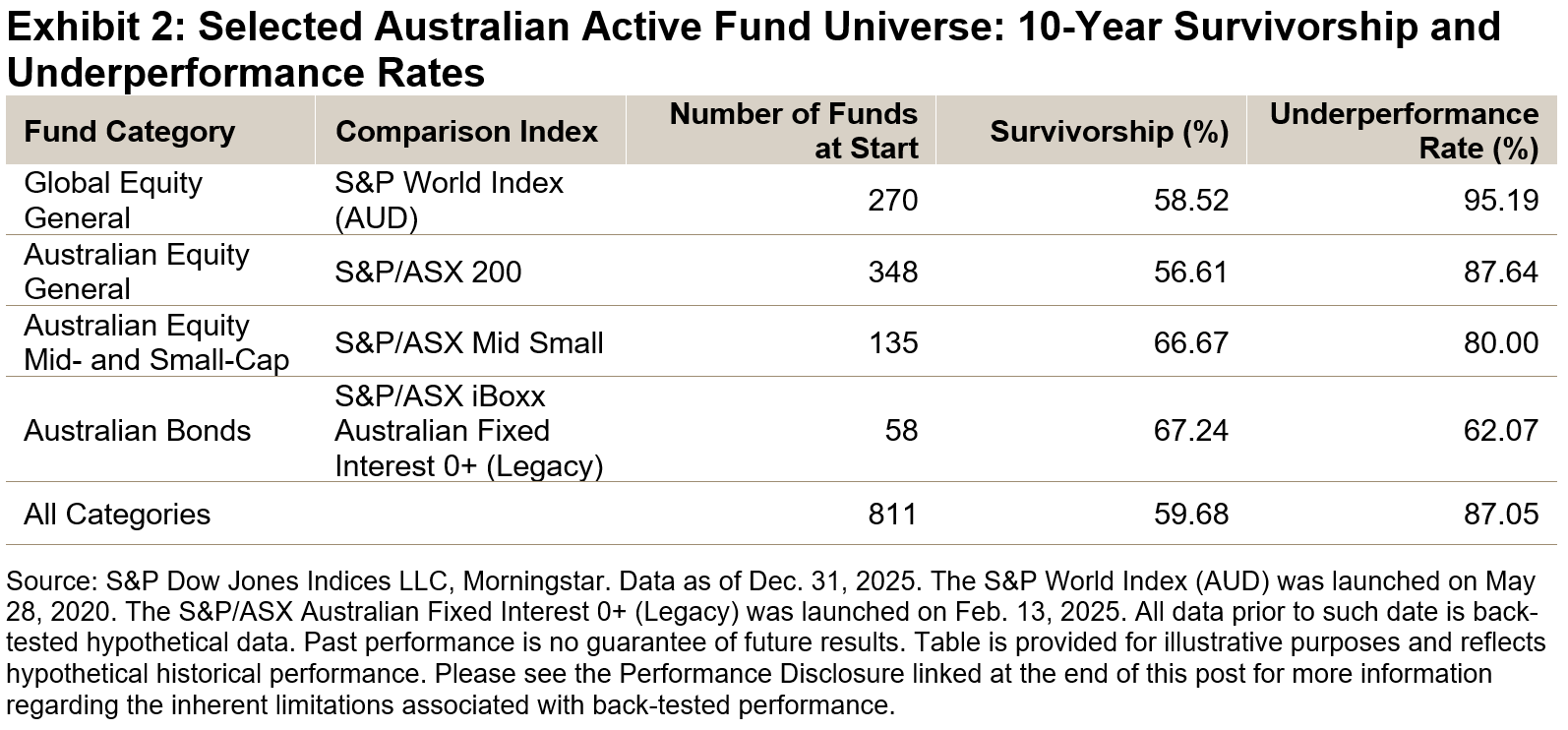
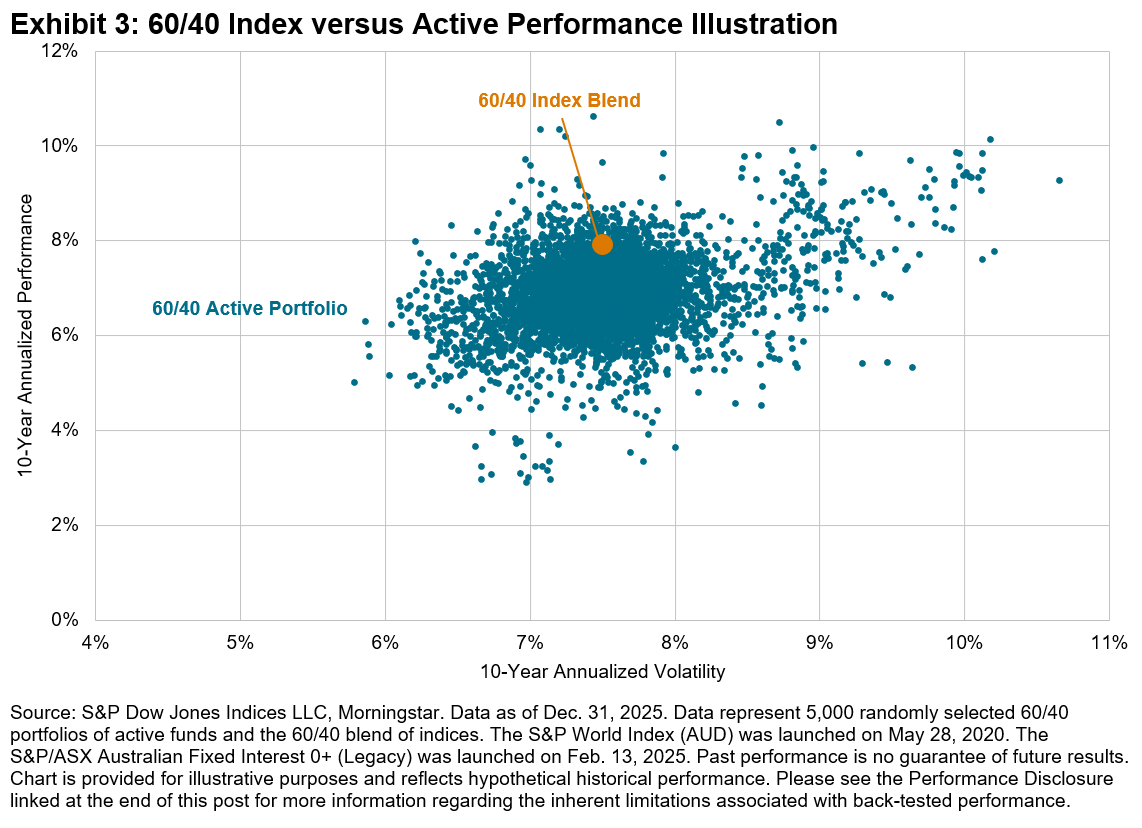
In cases where the selected active fund ceased to exist within the span of 10 years—which happened quite often as evidenced by the survivorship rates in Exhibit 2—the benchmark performance was assigned to that fund category from that month forward to the end of the 10-year period.4 We performed 5,000 simulations and their 10-year performance and volatility are shown in Exhibit 3, in comparison to the equivalent index blend.
The key observations from this analysis:

  • Over the 10-year period, 91.4% of 60/40 portfolios of Australian active funds would have underperformed the equivalent index blend on an absolute return basis. This underperformance rate is lower than that of the Global Equity General category but higher than that of the other three fund categories (see Exhibit 4).
  • The average performance (annualized) of active portfolios was 6.94%, well below 7.91% for the index blend.
  • The average volatility of active portfolios was 7.51%, similar to 7.50% for the index blend.
  • On a risk-adjusted return basis, 98.0% of 60/40 active portfolios would have underperformed the equivalent index blend.
  • 8% of active portfolios contained at least one fund that merged or liquidated within the 10-year span.
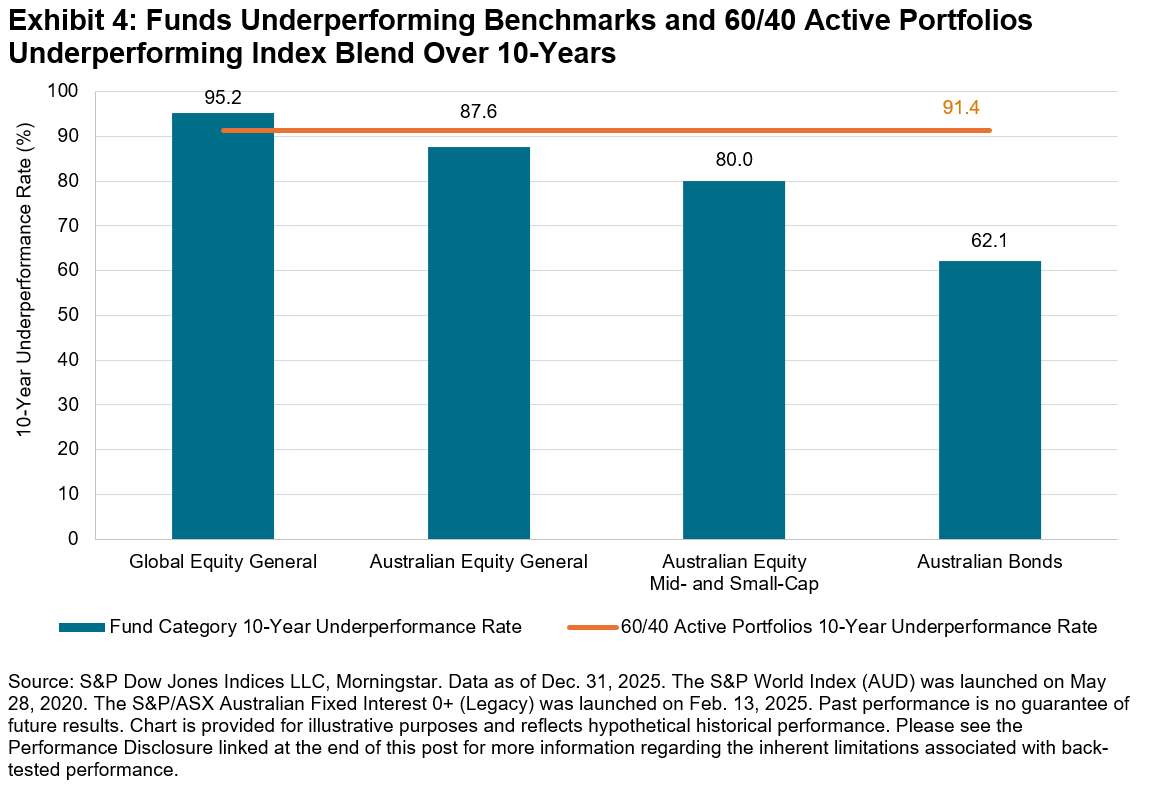
S&P DJI’s SPIVA Scorecards have provided the Australian community with a data-driven perspective on the prospects for selecting active funds that outperform benchmark performance. This new analysis highlights equally significant challenges for Australian portfolio building. When a majority of active funds underperformed their benchmarks across different asset classes and segments, portfolios comprising these funds also tended to underperform blends of indices, with an even higher probability.

1   Edwards, Tim and Nelesen, Joseph. “Heroes in Haystacks: Index Comparisons for Active Portfolio Performance” S&P Dow Jones Indices. December 2025.

2   Note that the Australian Equity A-REIT category is excluded due to the relatively smaller size of this segment. As of Dec. 31, 2025, index market capitalization was AUD 120,910 billion for the S&P World Index, AUD 2,648 billion for the S&P/ASX 200, AUD 665 billion for the S&P/ASX Mid Small, AUD 1,711 billion for the S&P/ASX iBoxx Australian Fixed Interest 0+ (Legacy) and AUD 173 billion for the S&P/ASX 200 A-REIT.

3    S&P Dow Jones Indices is not a registered investment advisor and does not provide investment or other advice. In this analysis, fund category selection, fund combinations and weightings, are intended to represent broad allocations—not as a suggestion or endorsement of any fund recommendation. Instead, we employ a heuristic approach to approximate the fund allocation process and to estimate the hypothetical performance of a portfolio of Australian active funds compared to similarly weighted blends of indices over the long term.

4    Replacing a liquidated fund with the benchmark performance in the months subsequent to its demise has a positive impact on average active portfolio performance, relative to leaving the subsequent months empty with no return during the examined period.

The posts on this blog are opinions, not advice. Please read our Disclaimers.

Return of the Macro: Declining Dispersion and Climbing Correlations

Contributor Image
Anu Ganti

Head of U.S. Index Investment Strategy

S&P Dow Jones Indices

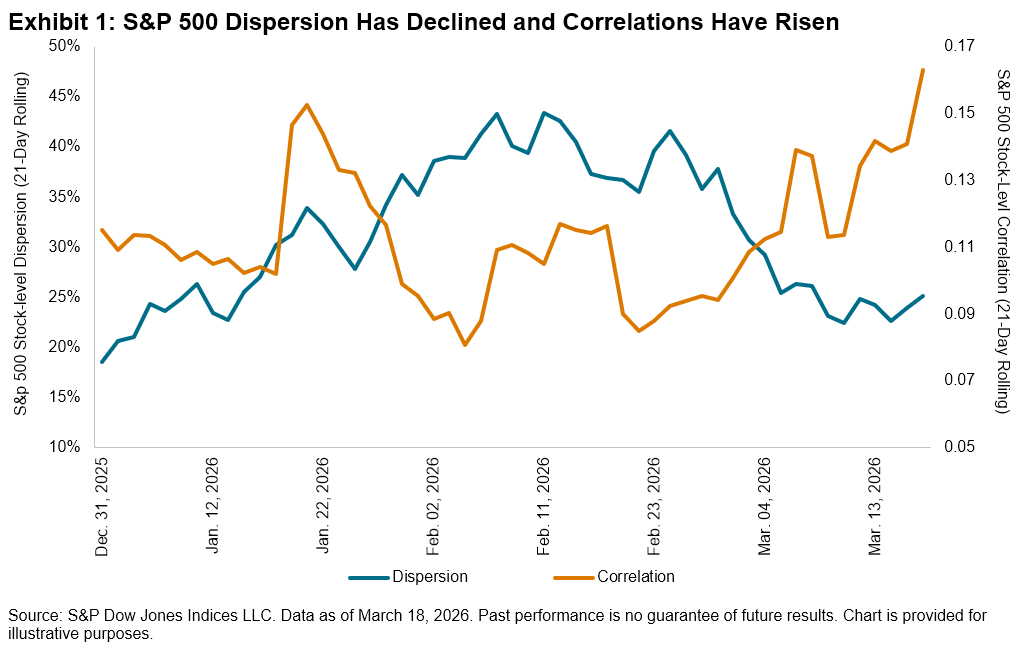
As we approach the end of the first quarter, the S&P 500® is down 3% QTD, and underneath the surface, there have been significant crosscurrents at play. Concerns about the impact of AI on software companies have been prevalent, with the S&P Software & Services Select Industry Index down 20% QTD, while chipmakers have remained relatively resilient, with the S&P Semiconductors Select Industry Index up 2%. As investors have grappled with the winners and losers of these technology changes, S&P 500 stock-level dispersion, which is a measure of cross-sectional volatility, rose through the first two months of the year,1 peaking at 38% on Feb. 27, 2026.

However, the tide has turned since the beginning of March. Investors globally have shifted their focus toward the war with Iran, and the impact of rising oil prices and corresponding inflation concerns across sectors have permeated the market. In other words, it seems that idiosyncratic risks have taken a back seat to macro risks. This shift has been reflected across the market’s volatility landscape, with S&P 500 stock-level dispersion declining to 25% as of March 18, 2025. Meanwhile, stock-level correlations, while still low by historical standards, have risen accordingly.

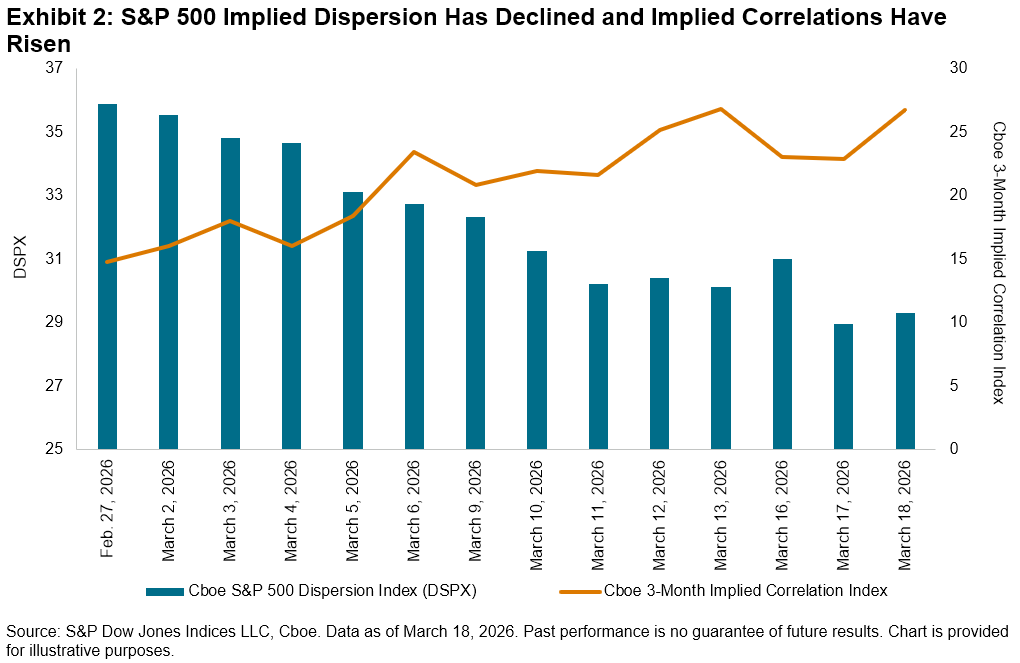
In addition to assessing observed large-cap dispersion and correlation, we can also analyze the market’s expectations of dispersion and correlation in the months ahead. The Cboe S&P 500 Dispersion Index (DSPX), which measures expected dispersion using listed options, has declined steadily from a high of 35.9 on Feb. 27 to 29.3 on March 18. Implied correlations, on the other hand, have generally risen during the same timeframe. Therefore, it appears that the market may continue to expect broader market concerns to be heightened compared to company-level risks.

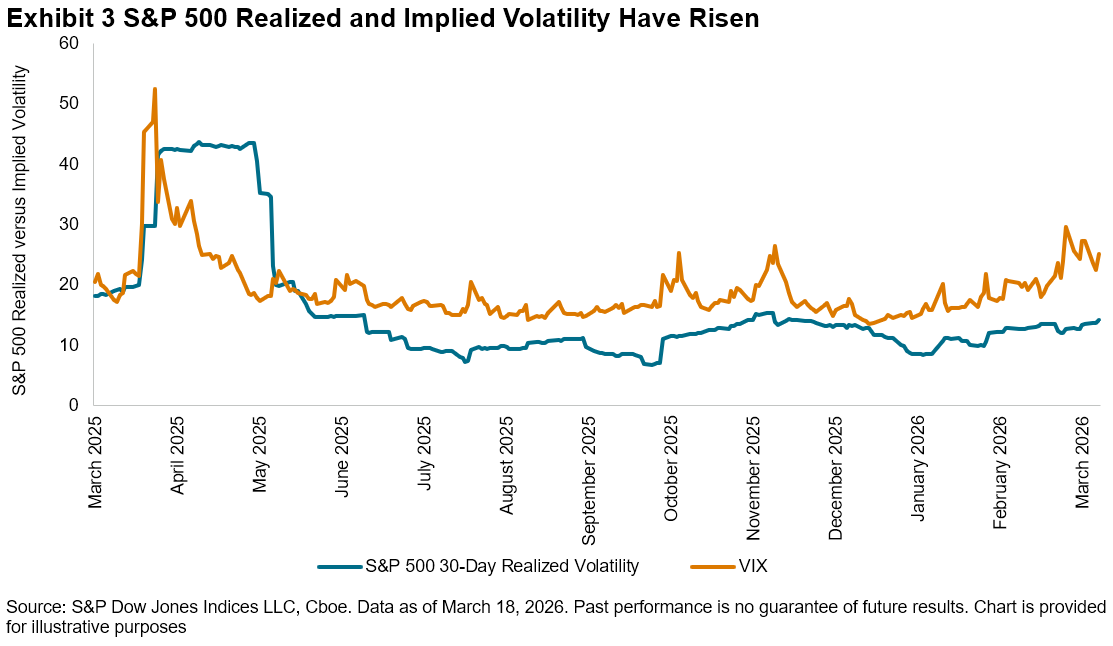
Dispersion and correlation are both components of market volatility, which we explore in Exhibit 3 to offer additional perspective. Despite the recent decline in dispersion, rising correlations2 have led to a slight rise in realized S&P 500 index volatility since the end of February. Implied volatility, as measured by the Cboe Volatility Index (VIX®), has also ticked up.

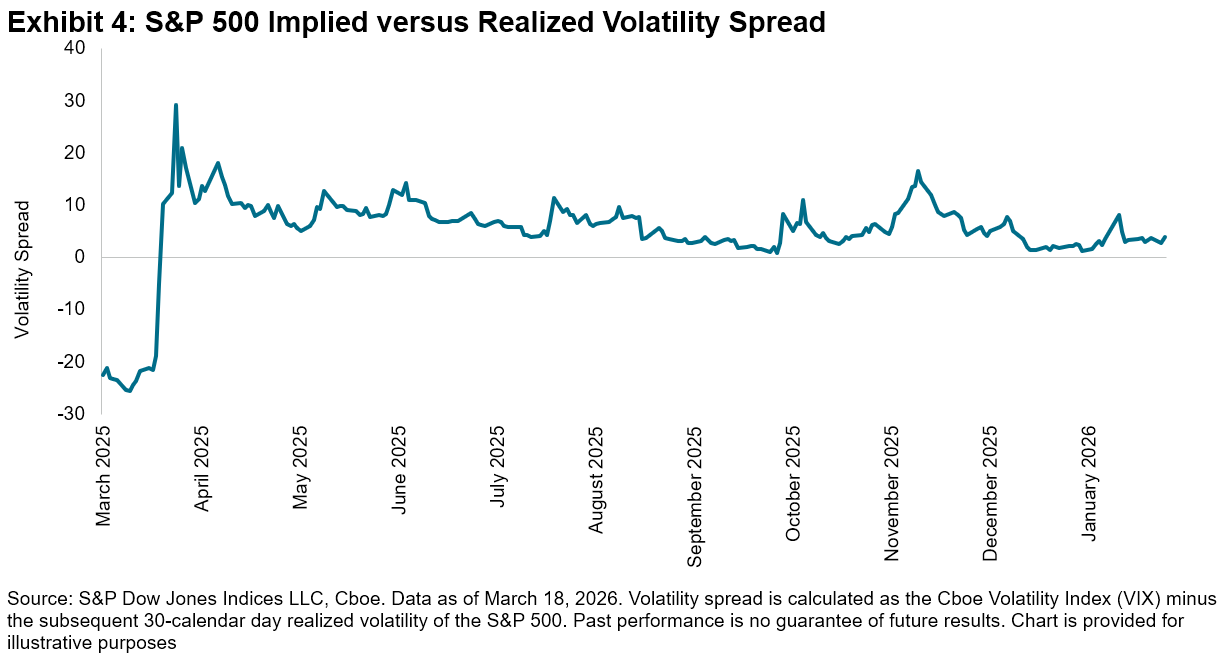
More notably, the spread between the two measures, or volatility premium, can be an indicator of the extent of continued geopolitical uncertainty. The current S&P 500 volatility premium of 3.9 volatility points as of Feb. 3, calculated as VIX minus the subsequent 30-calendar day realized volatility of the S&P 500, while still low compared to recent history, is slightly higher than the historical average of 3.3 observed over the past 20 years.3

As the market wrestles with worries about economic growth, a weakening job market and AI-related concerns, the evolving geopolitical backdrop looms in the background. Understanding the market’s shifting volatility landscape might help investors navigate these turbulent times.


1 Pitcher, Jack. “A Market Frenzy Is Lurking Beneath Those Calm Stock Indexes,” Wall Street Journal, March 3, 2026.

2 For details on the interaction of dispersion and correlation to create volatility, see: Edwards, Tim and Craig J. Lazzara. “At the Intersection of Diversification, Volatility and Correlation,” S&P Dow Jones Indices LLC, April 2014.

3 For more details on the volatility premium in options, see: Lee, Sue, Tim Edwards and Parth Shah. “Defining Paths with Options-Based Index Strategies,” S&P Dow Jones Indices LLC, Feb. 24, 2026.


The posts on this blog are opinions, not advice. Please read our Disclaimers.
Opening the Curtains on S&P/ASX Index Rebalances

Contributor Image
Sean Freer

Director, Global Exchange Indices

S&P Dow Jones Indices

For over 25 years, S&P Dow Jones Indices announced only which companies were added or removed from the S&P/ASX index hierarchy, without any further information. The March 2026 launch of the S&P/ASX Stock Selection Data Product allows market participants and index users to examine the underlying factors of the rebalances for these indices for the first time.

Although the S&P/ASX Index Series follows a transparent quantitative methodology, index users previously could not see the specific eligibility criteria a company met or failed to meet for index selection or non-selection.

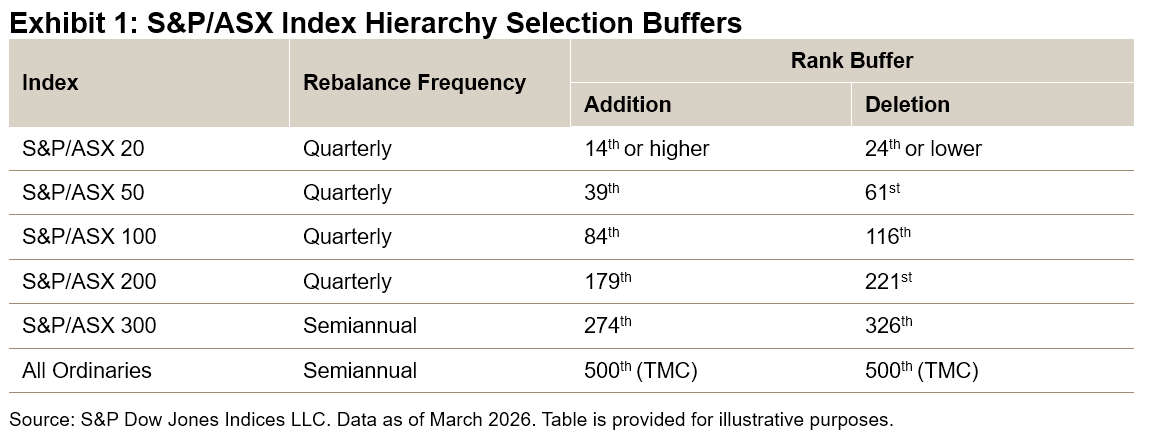
The eligibility criteria for the S&P/ASX Indices include size, determined by three-month average float-adjusted market capitalization (FMC), or total market capitalization (TMC) for the All Ordinaries; liquidity, measured by median daily value traded over three months relative to the broader market; minimum free float factor; and absence of trading suspension.

Selection buffers are detailed in the methodology for additions and deletions. Previously, market participants were unaware if a company was added due to meeting the selection buffer or in order to maintain the index constituent count after an existing member fell below a selection buffer.

S&P/ASX Stock Selection Data Add-on

The S&P/ASX Stock Selection Data Product, a new offering from S&P DJI, aims to provide deeper data and greater transparency for decisions and communications related to index rebalances for headline S&P/ASX Indices.

Starting March 2026, following market-wide index rebalance announcements, index subscribers can access key data points providing more insight into which companies are to be added to or dropped from S&P/ASX Indices.

The product will specifically provide all relevant data points referenced in the eligibility, selection and maintenance sections of the S&P/ASX Australian Indices Methodology for the headline equity size indices (S&P/ASX 20, S&P/ASX 50, S&P/ASX 100, S&P/ASX 200, S&P/ASX 300, and All Ordinaries) that are used to determine the indices’ new composition during rebalancing.

Intra‑rebalance events such as IPOs and spin‑offs are also accounted for in data files, ensuring comprehensive and up‑to‑date market coverage.

March 2026 Rebalance Sees Three New Additions to Flagship S&P/ASX 200

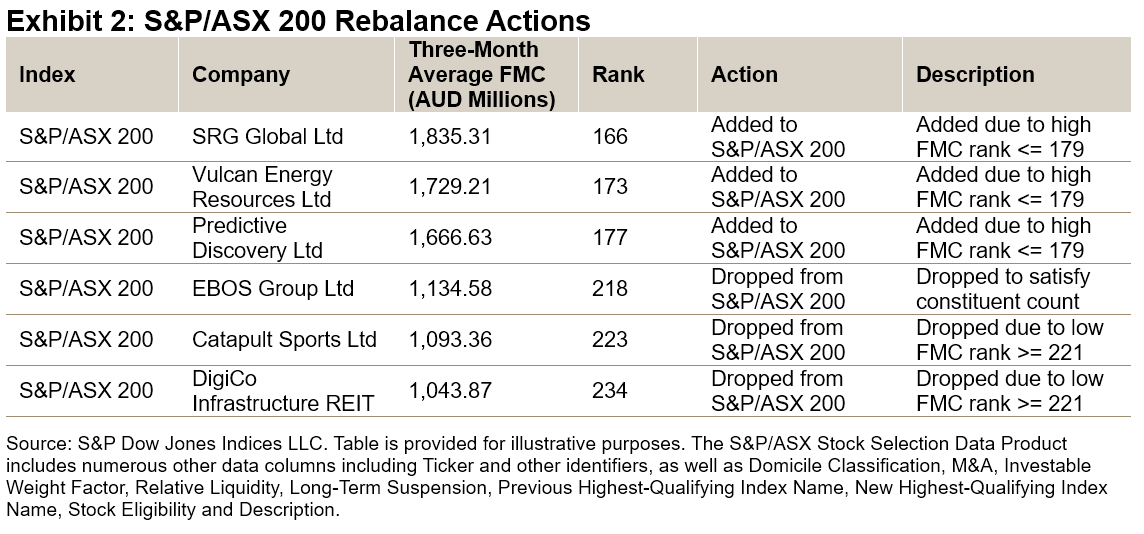
SRG Global, Vulcan Energy and Predictive Discovery will all be added to the S&P/ASX 200 after their three-month average FMC at the rebalance reference date exceeded the 179-rank buffer for selection. Conversely, security price depreciation resulted in Catapult Sports Ltd and DigiCo Infrastructure REIT falling below the 221-rank buffer. Meanwhile, EBOS Group was dropped despite not falling below the buffer, as three higher-ranked companies were added.

All newly added companies also met other eligibility criteria, which are also data points in the S&P/ASX Stock Selection Data Product, such as liquidity and a minimum free float factor, and were not suspended from trading or involved in corporate actions such as an acquisition.

First New Member to the S&P/ASX 20 since June 2025

The S&P/ASX 20 will see its first change in nine months at the March 2026 rebalance, with the addition of gold producer Northern Star Resources, as its three-month average FMC of AUD 38.6 billion exceeded the 14-rank buffer for selection. Meanwhile, Santos will exit the index.

Lithium producer PLS Group will be added to the S&P/ASX 50, due to its three-month average FMC exceeding the 39-rank buffer. Light & Wonder, Inc., which transitioned its full float to the ASX from Nasdaq last year, will also join the S&P/ASX 50. Its inclusion is due to Technology One and Seek Ltd’s three-month average FMC falling below the minimum rank buffer of 61.

The posts on this blog are opinions, not advice. Please read our Disclaimers.
The Takaichi Trade: How Dispersion Shaped Japanese Active Funds’ Fortunes

Contributor Image
Marco Zhang

Quantitative Analyst, Index Investment Strategy

S&P Dow Jones Indices

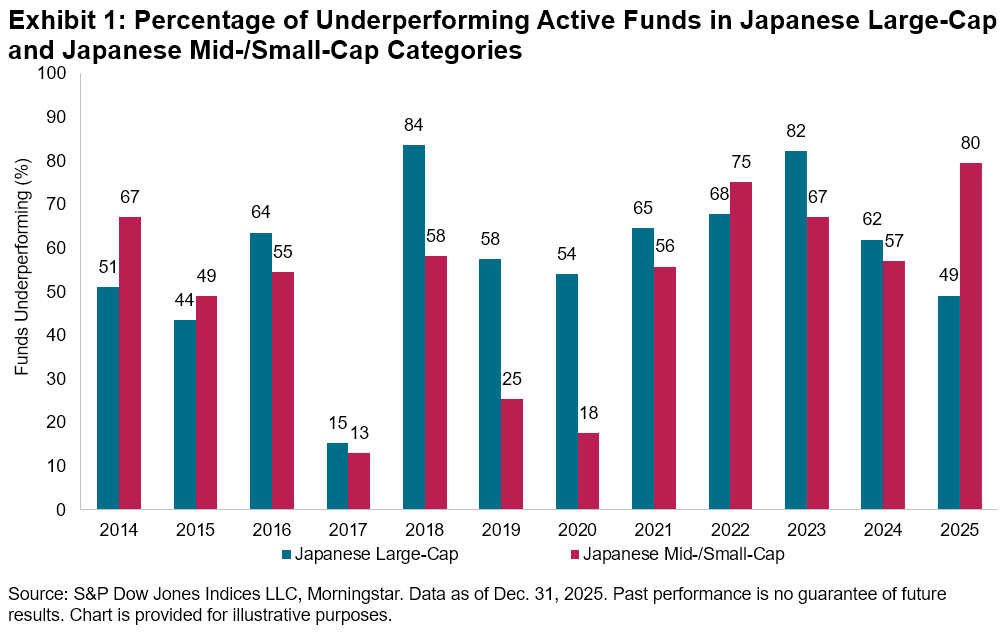
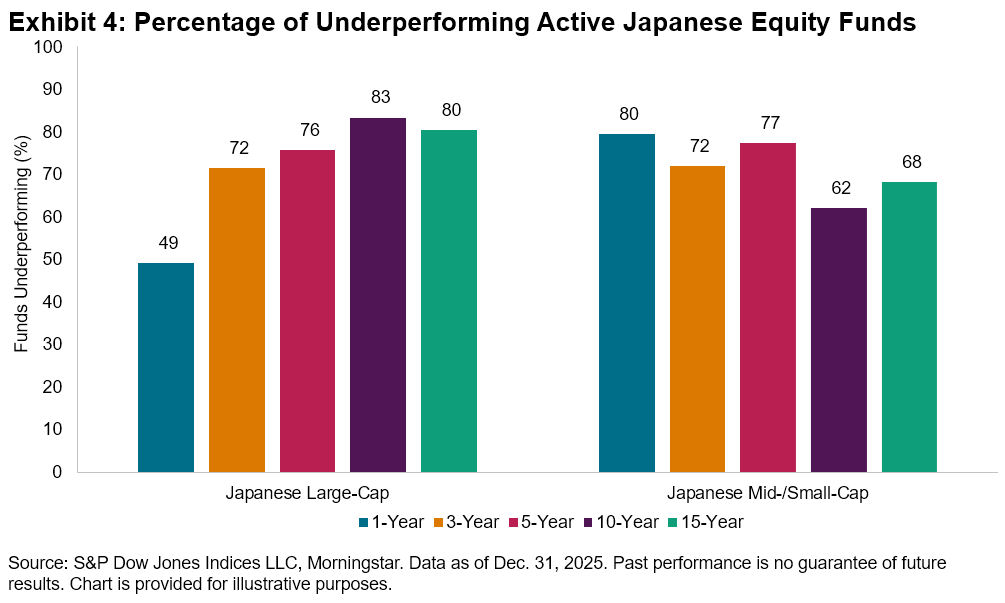
Amid a strong year for global equities in 2025, the latest SPIVA® Japan Scorecard showed that most active funds in Japan struggled to outperform their assigned benchmarks. An interesting finding in the report was the striking difference in relative performance between actively managed Japanese Large-Cap funds and Japanese Mid-/Small-Cap funds. Just 49% of Japanese Large-Cap funds underperformed their assigned benchmark, compared with 80% of Japanese Mid-/Small-Cap funds. This is quite unusual—Japanese Large-Cap funds have typically exhibited higher underperformance rates than Japanese Mid-/Small-Cap funds, as shown in Exhibit 1. The 2025 result represents the most pronounced reversal in the dataset since 2014.

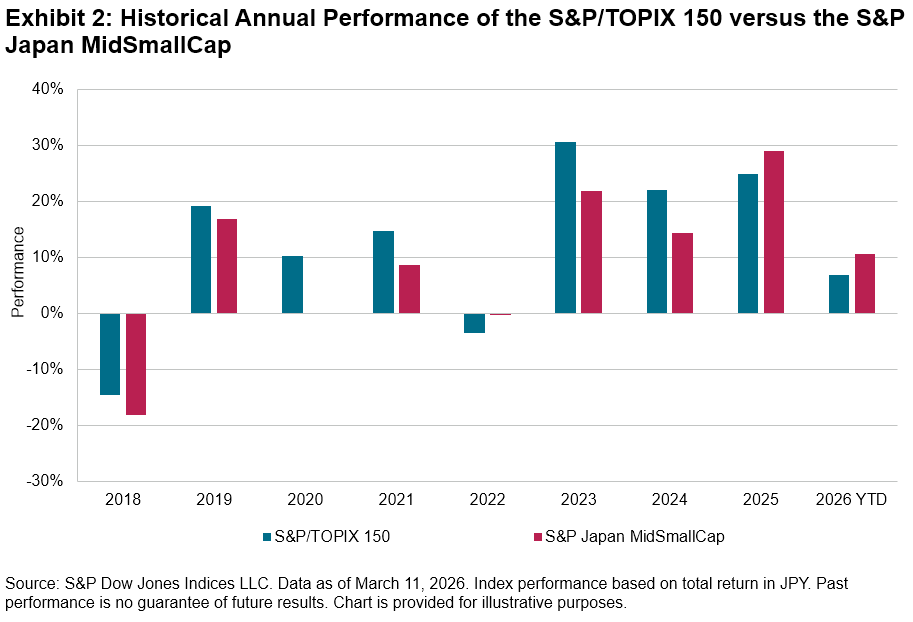
This unusual performance gap was likely driven by two key dynamics. First, the S&P Japan MidSmallCap outperformed the large-cap S&P/TOPIX 150 by 4.1% in 2025, marking a notable departure from the trend of large-cap dominance observed in previous years (see Exhibit 2). A broad-based rally in mid- and small-cap stocks raised the bar for fund managers in this segment, making it even more challenging for those with some large-cap exposure to keep up. Notably, mid- and small-cap stocks have continued to outpace their large-cap counterparts YTD as of March 11, 2026.

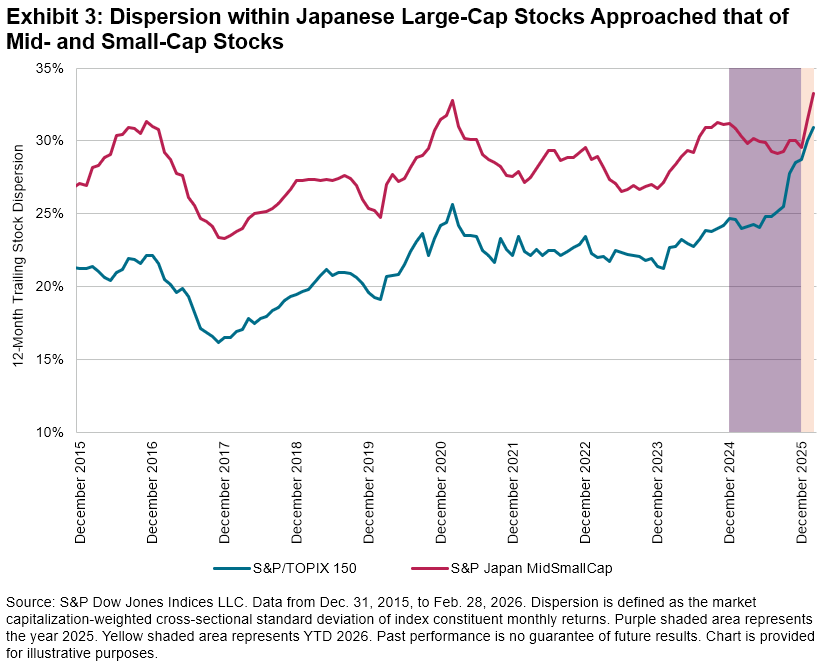
Second, stock dispersion1—the extent to which stocks move differently from one another—surged among Japanese large-cap stocks to a decade high in 2025, reaching levels typically seen in smaller stocks (see Exhibit 3). This surge in large-cap dispersion was likely driven by the unveiling of Prime Minister Sanae Takaichi’s fiscal stimulus package,2 which highlighted growth potential in sectors such as artificial intelligence, semiconductors and defense.3 The proposal triggered a repricing of large-cap stocks, depending on which companies were positioned to benefit from the policy priorities,4 thereby widening performance differentials within the S&P/TOPIX 150.

What does a high dispersion environment mean for active managers’ relative performance? Theoretically, higher dispersion creates greater opportunities for active fund managers to differentiate themselves through stock selection, offering a more favorable environment for skillful managers to deliver outperformance.5 The narrow majority outperformance of active large-cap managers in 2025 suggests that many were able to capitalize on the policy-driven repricing wave and rising dispersion among large-cap stocks. Interestingly, smaller companies also began to catch up in this trend of increasing dispersion during the first two months of 2026 (see Exhibit 3). This suggests that the “Takaichi Trade” repricing tide may be spreading among mid- and small-cap stocks, potentially providing a more supportive backdrop for skillful active managers in this segment.

While active managers’ fortunes fluctuated in the short term, driven by changes in market conditions, the longer‑term picture remained challenging. Over the 10- and 15-year horizons, a majority of active funds underperformed in both domestic equity categories, including over 80% of large-cap funds (see Exhibit 4).

1 Dispersion is defined as the market capitalization-weighted cross-sectional standard deviation of index constituent monthly returns.

2 Sanae Takaichi won the Liberal Democratic Party (LDP) leadership election on Oct. 4, 2025, and became Japan’s prime minister on Oct. 21, 2025.

3 Reuters. “Japan to pledge bold spending increase in stimulus package, draft shows.” Nov. 12, 2025.

4 For instance, semiconductor companies like Advantest (+58%) and Tokyo Electron (+30%), as well as heavy-engineering firms such as Mitsubishi Heavy (+20%) and IHI (+16%), saw strong monthly gains.

5 Edwards, Tim and Craig J. Lazzara. “Dispersion: Measuring Market Opportunity.” S&P Dow Jones Indices LLC. 2014.

The posts on this blog are opinions, not advice. Please read our Disclaimers.
Unicorns at the Gate: How Mega IPOs Could Reshape Global and Thematic Indices

Contributor Image
Diego Zurita

Analyst, Global Equities & Thematics

S&P Dow Jones Indices

Big unicorns are outside the door waiting to join the public markets party. Recently, it has been reported that SpaceX,1 OpenAI2 and Anthropic3 are preparing for their initial public offering (IPO) in the near future. This has drawn attention not just for the size of these firms but for the impact they would have on financial markets. The timing and inclusion of private companies as large as these in indices could be more relevant than ever, especially for market participants who use benchmarks in their investing strategies.

As my colleague Hamish Preston highlighted on a recent blog, adding any of these stocks to the S&P 500® would take at least 12 months after the IPO. However, S&P DJI offers a number of rules-based indices that have specific criteria to decide whether, how and when to include stocks that recently went public.

The Fast-Track IPO Treatment for Broad Benchmarks

S&P Dow Jones Indices’ flagship global equity index, the S&P Global BMI, has the objective of tracking the entire investable global stock market using float-adjusted market cap (FMC). Similarly, the region, country and GICS® sector sub-indices that are part of this family aim to represent specific markets.

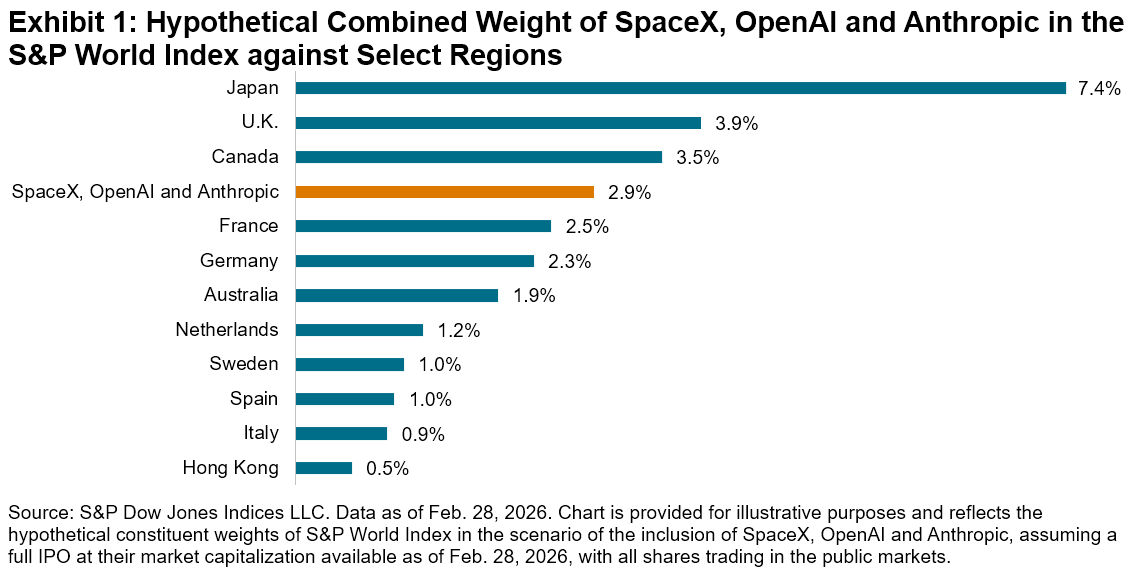
Based on constituent data from the S&P U.S. Private Stock Top 10 Index, as of the end of February 2025, SpaceX, OpenAI and Anthropic had a collective market cap of USD 1.4 trillion. If they all had a full IPO with all shares trading in the public market, they would represent together a weight of approximately 2.9% in the S&P World Index, a subindex of the S&P Global BMI. This is more than the entire weight of 19 regions in the index, including France, Germany, Australia and others (see Exhibit 1).

While the shares of such companies may not be fully issued to the public,4, 5 resulting in lower weights in broad-based benchmarks, the scenario above demonstrates that delaying additions until the next rebalance may distort the index’s representation of the broader opportunity set.

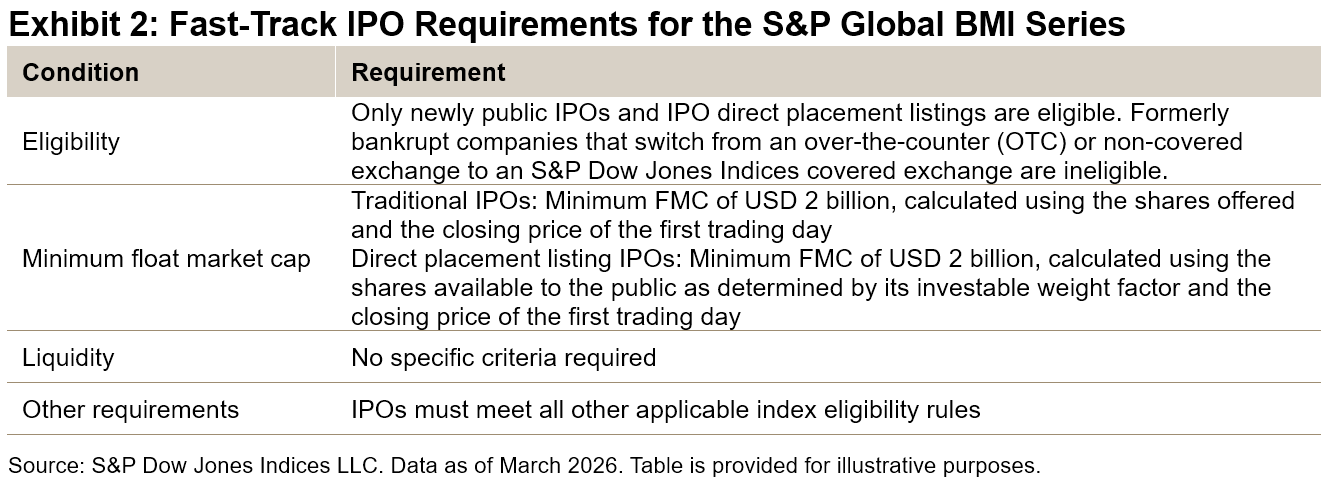
To ensure that benchmarks keep reflecting their target markets, if an IPO meets the criteria outlined in Exhibit 2, the methodology of the S&P Global BMI Series allows its inclusion within five business days; however, if circumstances warrant, the Index Committee may decide to postpone it until they consider it appropriate.6

The Variable Treatment of IPOs for Thematic Indices

Not all rules-based indices follow this treatment. Benchmarks that aim to provide a more targeted reflection of specific segments of the market generally don’t. Among those, we can find S&P DJI’s suite of thematic indices, which are designed to focus on emerging trends and structural shifts shaping the global economy and include the S&P Kensho Indices and the recently launched S&P Atlas Thematic Indices.7 These indices typically have fewer companies with tighter selection criteria. Adding stocks outside their rebalance could trigger unexpected turnover, causing elevated trading costs and risking a higher tracking error for investment products tracking these benchmarks.

When a mega-cap company goes public, indices with a more concentrated constituent base typically defer inclusion until the next scheduled rebalance, provided the IPO occurs before the reference date and the company satisfies all eligibility requirements. For example, if SpaceX were to go public in October, its position in the space economy could make it eligible to be added to the S&P Kensho Global Space Index.8 Assuming it meets all the requirements to be part of the index, the company would be added after the close on the third Friday of November, coinciding with the next rebalance. At that time, all constituents are equally weighted to mitigate concentration risk.

When those unicorns finally ring the bell to join the party, broad market indices may include them quickly to maintain market representation, while benchmarks with a targeted focus could wait until rebalance to prioritize stability. These different approaches are designed to balance market accuracy with practical replicability.


1 Wang, Echo and Joey Roulette. “Exclusive: Musk’s SpaceX in merger talks with xAI ahead of planned IPO, source says.” Reuters. Jan. 29, 2026.

2 Jin, Berber, Corrie Driebusch and Kate Clark. “OpenAI Plans Fourth-Quarter IPO in Race to Beat Anthropic to Market” Wall Street Journal. Jan. 29, 2026.

3 Butts, Dylan. “Anthropic reportedly preparing for massive IPO in race with OpenAI: FT.” CNBC. Dec. 2, 2025.

4 Wang, Echo, Manya Saini and Juby Babu. “Elon Musk’s SpaceX to raise over $25 billion in blockbuster 2026 IPO, source says.” Reuters. Dec. 10, 2025.

5 Wang, Echo et al. “Exclusive: OpenAI lays groundwork for juggernaut IPO at up to $1 trillion valuation” Reuters. Oct. 30, 2025.

6 For more information, please refer to the index methodology.

7 For more information, please see: Jalagani, Srineel. “S&P Atlas Thematics: The Compass for Evolving Markets.” S&P Dow Jones Indices. July 28, 2025.

8 For more information, please see: Zurita, Diego. “Houston, We Have an Index: Exploring the S&P Kensho Global Space Index.” S&P Dow Jones Indices. Jan. 20, 2026.

The posts on this blog are opinions, not advice. Please read our Disclaimers.