





The investment landscape is in a perpetual state of evolution, with market participants continually seeking innovative tools. In recent years, options-based strategies—particularly those delivered through an ETF wrapper—have surged in popularity. Once the domain of institutional investors or structured product users, options-based strategies like covered call and buffered strategies have been democratized. This growth represents a significant shift that could reshape how a wider range of investors approach portfolio construction and navigate market volatility.
The Engine of Growth: Accessibility and Market Needs
The proliferation of options-based ETFs has been a notable development, providing investors with a generally easier-to-own and more liquid vehicle for accessing these strategies. As shown in Exhibit 1, their asset growth has been exponential, particularly in the last five years. Beyond the regulatory changes, this reflects an environment where traditional cross-asset correlations have shifted, and investors are increasingly looking beyond the conventional 60/40 portfolio for diversification and risk mitigation.
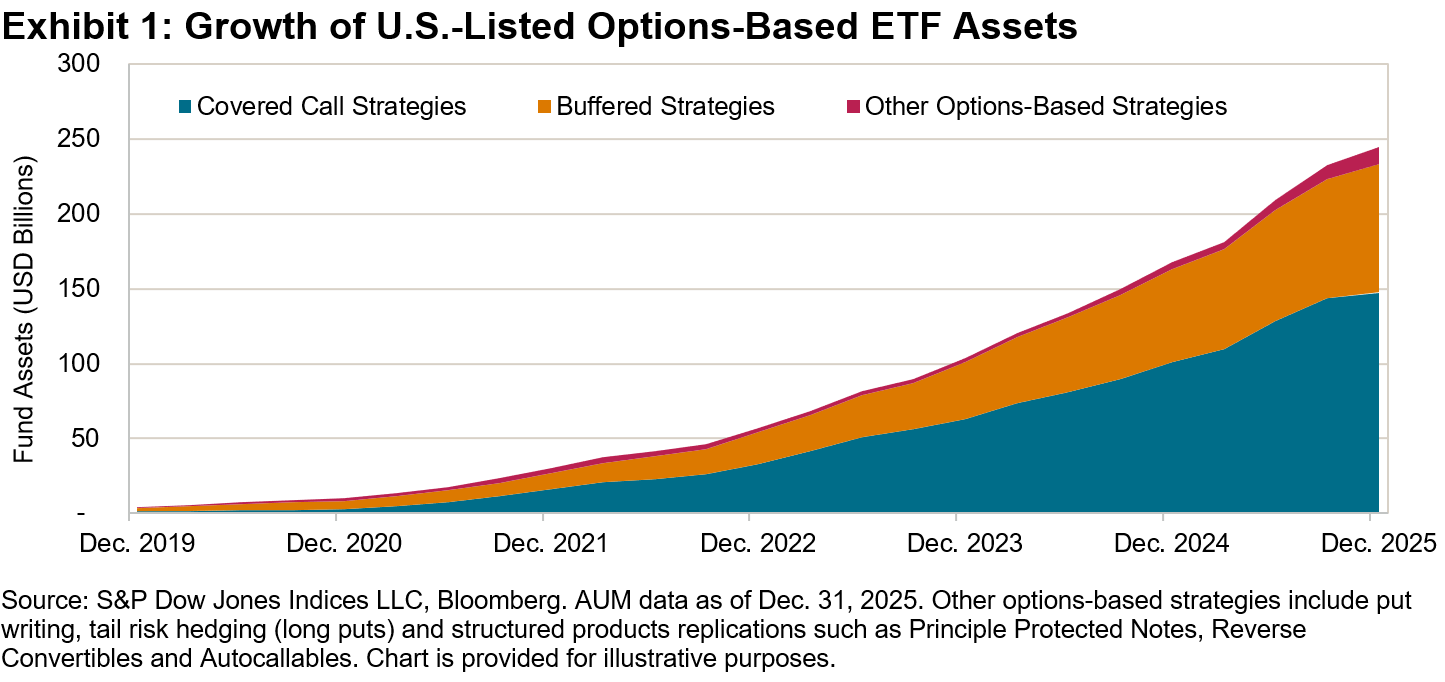
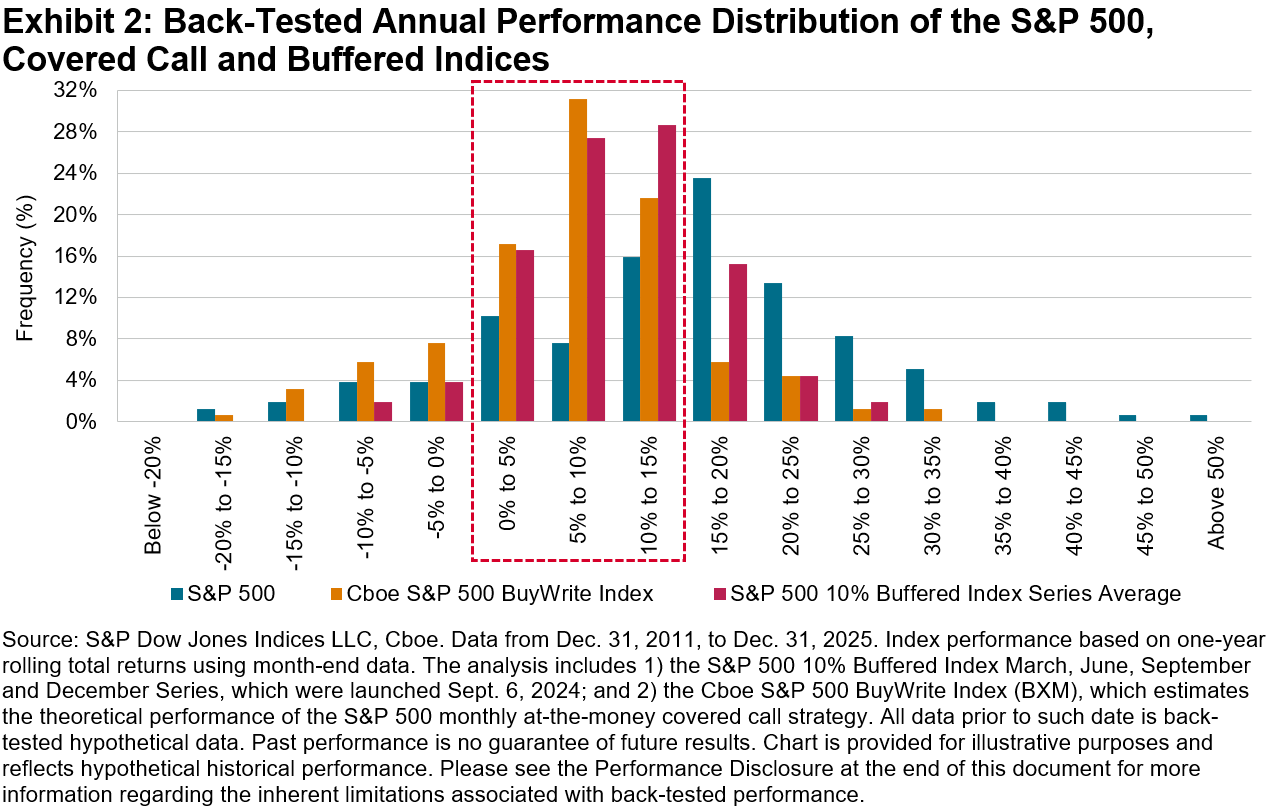
Two strategies have captured the lion’s share of this growth: covered call and buffered strategies. Covered call strategies focus on generating income by selling call options against invested assets, while buffered strategies aim to provide a specific level of downside protection in exchange for a cap on upside participation. By writing call options or buying put options, both strategies have historically made investment returns steadier and more predictable. A rolling one-year performance comparison of representative S&P 500® covered call and buffered indices versus the S&P 500 over the past 14 years shows that covered call and buffered indices delivered performance in the 0-15% range in more than two-thirds of the periods, compared to only one-third for the S&P 500.
The Foundational Role of Indices
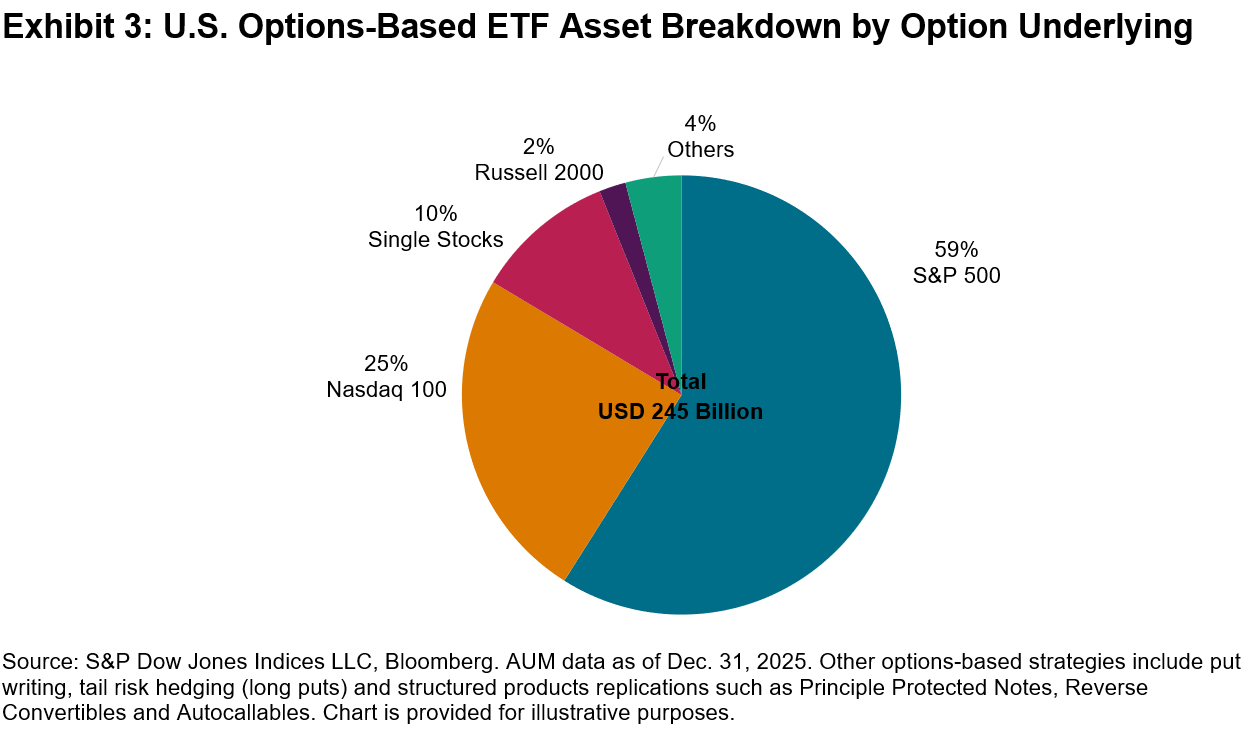
Indices play a multifaceted, critical role in this expanding landscape. First and foremost, liquid and well-established equity benchmarks serve as the core component of the majority of these strategies. The S&P 500 is the preeminent choice, with its robust trading ecosystem: the high liquidity and tight bid-ask spreads in S&P 500 options facilitate the effective implementation of various strategies, from daily covered calls to one-year buffered products, catering to a wide spectrum of investment objectives.
Indices also serve as essential benchmarks for both active and passive options-based strategies. In a market crowded with funds described as actively managed, the ability to compare performance against a transparent and rules-based benchmark is paramount. Indices allow investors to dissect performance, understand the drivers of return and make informed decisions about whether a particular strategy is delivering on its objectives, ultimately fostering greater accountability and trust.
As investors continue to seek solutions that enhance portfolio resilience and adopt a more balanced approach to navigating market volatility, the relevance of options-based strategy indices could be expected to grow further. For a deeper dive into this topic, please refer to our recently published paper, “Defining Paths with Options-Based Index Strategies.”
The posts on this blog are opinions, not advice. Please read our Disclaimers.