


Get Indexology® Blog updates via email.

In This List

A Grain of Wisdom: S&P DJI Launches S&P GSCI Minneapolis Wheat and S&P GSCI Composite Wheat

ESG Momentum without Compromising Performance: The S&P/BMV Total Mexico ESG Index

GICS' Silver Jubilee

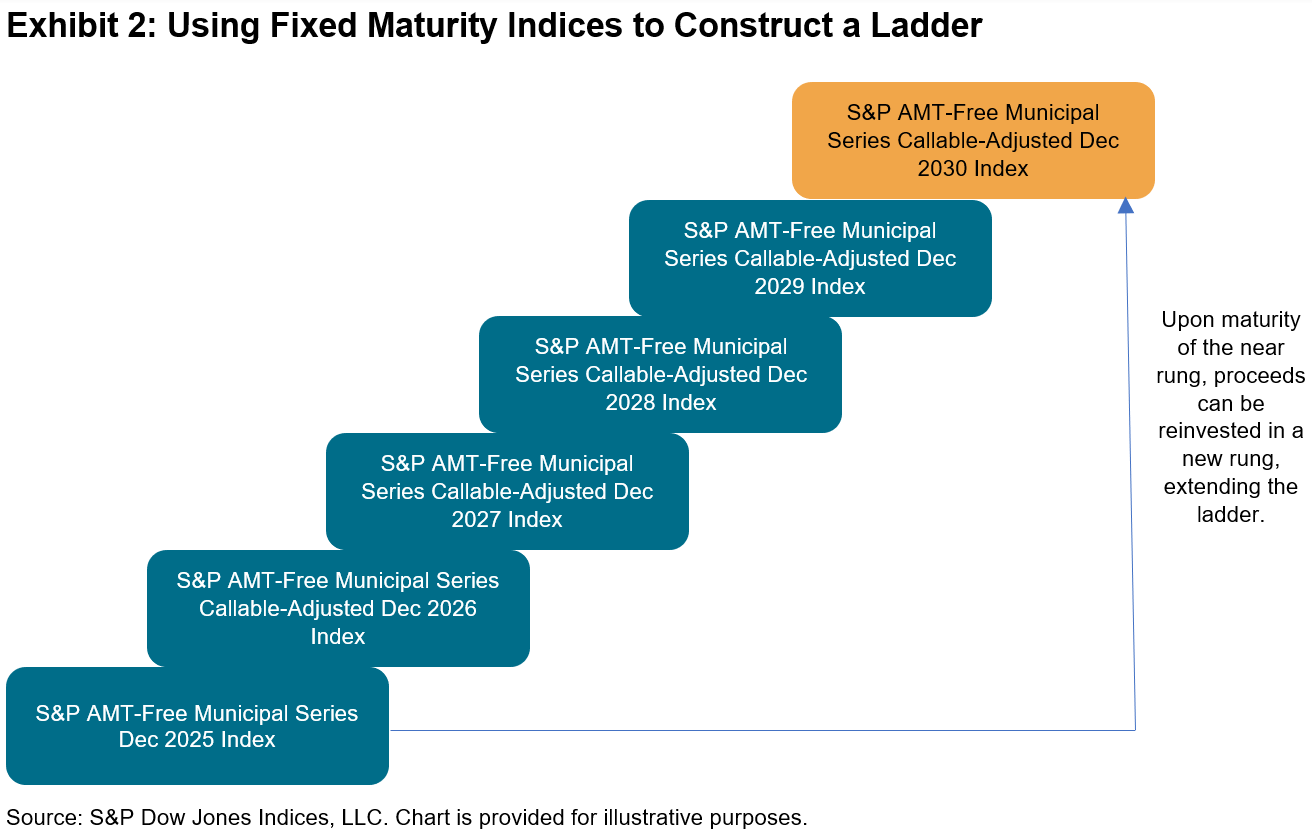
Back to Basics: Remembering the "Income" in Fixed Income

Beyond Diversification: U.S. Equity and Sector Relevance in Mexico

A Grain of Wisdom: S&P DJI Launches S&P GSCI Minneapolis Wheat and S&P GSCI Composite Wheat

Contributor Image
Rebecca Kaufman

Associate Director, Commodities and Fixed Income Tradables

S&P Dow Jones Indices

With Oktoberfest just around the corner, S&P DJI has announced the launch of the S&P GSCI Minneapolis Wheat and S&P GSCI Composite Wheat. S&P DJI recently acquired the rights to futures data from Minneapolis Grain Exchange (MGEX), on which Minneapolis Wheat futures contracts are traded.

Minneapolis Wheat is one of the three most actively traded wheat futures contracts in the U.S.; the other two being Chicago Wheat and Kansas City Wheat, both of which are current constituents of the broad-based benchmark, the S&P GSCI. The futures contracts are named after the primary exchange on which they are traded:  Minneapolis Grain Exchange (MGEX), Chicago Mercantile Exchange (CME) and the Kansas City Board of Trade (KCBT, now part of CME). The futures contracts have vastly different liquidity profiles, with Chicago Wheat being the most actively traded of the three.

The specific wheat classes underlying the contracts are differentiated by factors such as when and where they are planted, the protein content and uses. Minneapolis Wheat, or hard red spring wheat, is the second most produced wheat in the U.S., with 12.7 million metric tons (MMT) produced in 2023. It is planted in the Northern Great Plains region of the U.S. in the spring and harvested in the summer. Its high protein content of 14.2%, adjusted to a standard moisture basis of 12% (12% mb) in 2023, makes it ideal for making breads, rolls and pasta, which are staple components of many consumer diets. It is also frequently mixed into flour blends to enhance quality.

Exhibit 2 shows the production levels for the different wheat classes, and Exhibit 3 compares the protein content.

Minneapolis Wheat had the highest protein content and the second-highest production levels in the U.S. However, its futures contracts represented only 5.5% of the total quantity traded. The S&P GSCI Minneapolis Wheat offers investors greater insight into this under-utilized commodity and its performance.

In addition to the S&P GSCI Minneapolis Wheat, S&P DJI has also launched the S&P GSCI Composite Wheat. The S&P GSCI Composite Wheat includes all three wheat contracts and uses the same production-weighted methodology of the S&P GSCI by weighting each component based on the five-year world production average for wheat and the total quantity traded for each contract (see Exhibit 1). The index rebalances annually in January during the designated roll period.

On an annualized basis, the S&P GSCI Minneapolis Wheat’s back-tested performance has shown lower volatility than the S&P GSCI Wheat (which measures Chicago Wheat) and the S&P GSCI Kansas Wheat, resulting in lower annualized back-tested volatility for the S&P GSCI Composite Wheat, compared to the S&P GSCI All Wheat, which only includes Chicago Wheat and Kansas City Wheat contracts (see Exhibit 4).

Including the S&P GSCI Minneapolis Wheat in the S&P GSCI Composite Wheat increases exposure to a domestic wheat class that has differentiated returns, volatility and characteristics.

Recent wheat performance, based on back-tested data of the S&P GSCI Composite Wheat, was down 24% year-over-year as of Aug. 22, 2024. However, wheat pricing has faced several anomalous headwinds, including the beginning of the Russia-Ukraine conflict in February 2022, which shifted the purchasing behavior of key U.S. wheat importers, and historically high U.S. wheat production. The USDA forecasts the U.S. will produce 1,982 million bushels in the 2024-2025 marketing year, an eight-year high.

U.S. wheat prices can also be seen as a normalization of the high wheat prices in May 2022 (see Exhibit 5) due to the COVID-19 pandemic, the Russia-Ukraine conflict and adverse weather conditions. Meanwhile, wheat remains a staple grain in many diets and demand could stabilize or increase as populations grow, developing countries continue to diversify diets and weather conditions turn unfavorable. Wheat prices are also highly dependent on the performance of substitutable grains, such as soybeans and corn.

Minneapolis Wheat is not a current constituent of the S&P GSCI; however, the S&P GSCI Minneapolis Wheat and S&P GSCI Composite Wheat are both part of the S&P GSCI series of indices. The S&P GSCI is the first major investable commodity index and measures the most liquid commodity futures, which provides diversification with low correlation to other asset classes.

For more information about the S&P GSCI Series and its methodology, please visit https://www.spglobal.com/spdji/en/index-family/commodities/.


The posts on this blog are opinions, not advice. Please read our Disclaimers.

ESG Momentum without Compromising Performance: The S&P/BMV Total Mexico ESG Index

Contributor Image
Maya Beyhan

Global Head of Sustainability, Index Investment Strategy

S&P Dow Jones Indices

In recent years, the global financial landscape has witnessed a significant shift toward sustainability considerations as investment themes. As market participants seek to understand the relative performance of sustainability-focused indices, it is essential to explore the underlying drivers of ESG dynamics in both developed and emerging markets.

In a previous analysis, we focused on ESG momentum—measured at the company level simply as the year-over-year absolute change in the ESG score—and its impact on the performance of the S&P 500® ESG Index when compared to the S&P 500, representing the U.S. equities market. Similarly, the dynamics operating within the S&P/BMV Total Mexico ESG Index provide a case study for assessing the impact of ESG momentum on the index’s relative performance against its benchmark, the S&P/BMV Total Mexico Index.

During the time frame studied, from June 22, 2022, to Aug. 28, 2024, the S&P/BMV Total Mexico ESG Index outperformed its benchmark, the S&P/BMV Total Mexico Index, by 6.07%, cumulatively. To examine the effect of ESG momentum on this outperformance, we created hypothetical ESG momentum quintile compositions1 by ranking the S&P/BMV Total Mexico Index’s constituents by their ESG momentum score and assigning each of them to one of the five compositions, from the highest to the lowest ESG momentum-scoring. The hypothetical market-cap-weighted performance of these quintile compositions was then calculated and used to create an ESG momentum attribution analysis, underscoring the importance of ESG momentum exposure in the performance of the S&P/BMV Total Mexico ESG Index.

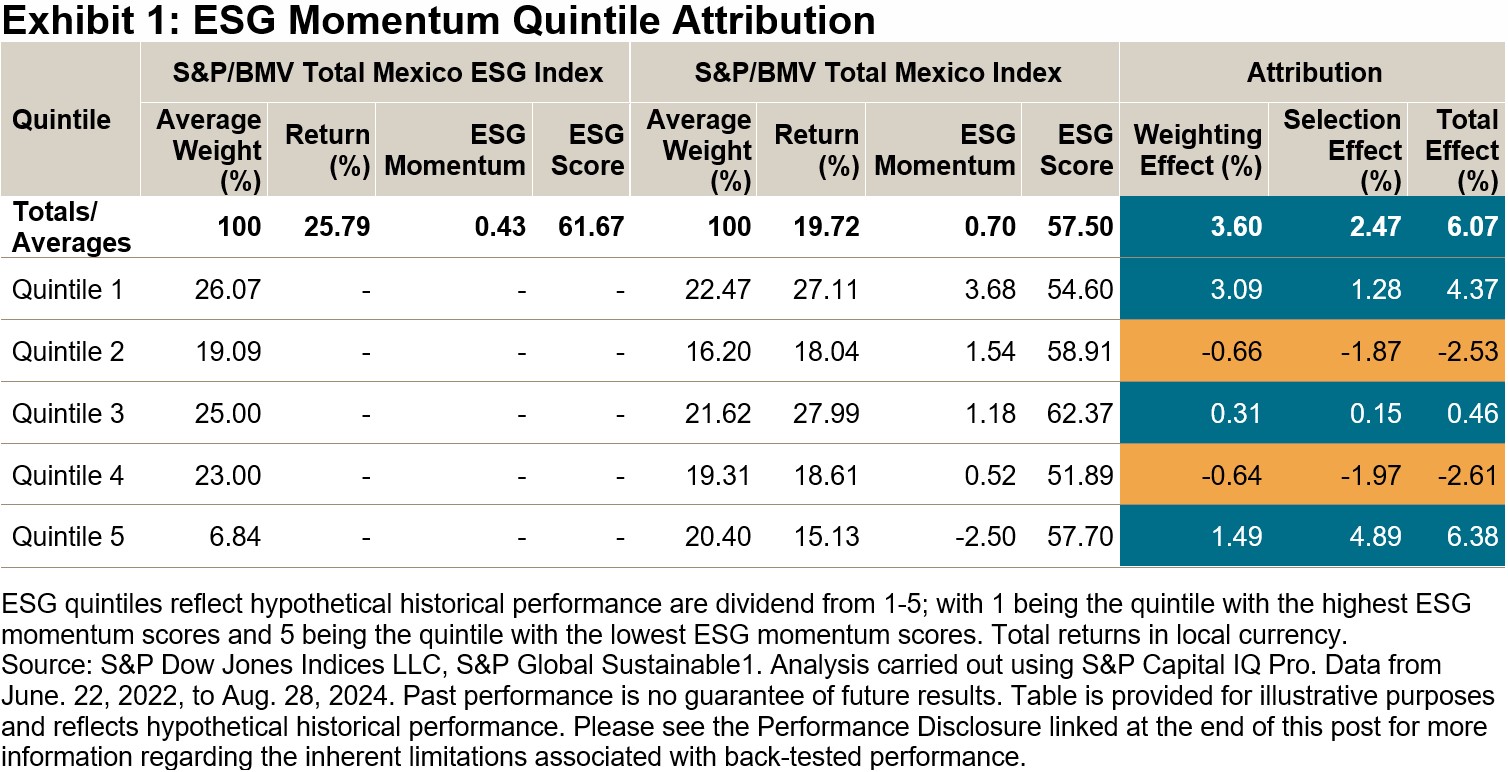
Exhibit 1 summarizes the results of this analysis, including the average weights of the S&P/BMV Total Mexico ESG Index and the S&P/BMV Total Mexico Index in each ESG momentum quintile (from high to low scoring), the corresponding quintile composition and index returns, as well as a summary of the corresponding weighting and selection effects over the full period.2

Like our observations in the U.S. market,1 the S&P/BMV Total Mexico ESG Index benefitted the most from an underweight in the worst ESG momentum-scoring constituents, i.e., Quintile 5. This quintile underperformed by 4.59% relative to the S&P/BMV Total Mexico Index. On average, the S&P/BMV Total Mexico ESG Index underweighted Quintile 5 by 13.56%, generating 1.49% in excess return from the weighting effect. Combined with a selection effect of 4.89%, it resulted in a 6.38% excess total return for the S&P/BMV Total Mexico ESG Index for this quintile.

However, the S&P/BMV Total Mexico ESG Index also benefitted from overweighting the best ESG momentum-scoring constituents, i.e., Quintile 1, which achieved a cumulative outperformance of 7.39% relative to the S&P/BMV Total Mexico Index, a trend that was not seen in the U.S. market analysis. On average, the S&P/BMV Total Mexico ESG Index overweighted this quintile by 3.60%, generating 3.09% in excess return from the weighting effect. Taken together with the selection effect, the total contribution was 4.37% in excess return for the S&P/BMV Total Mexico ESG Index for this quintile.

These findings highlight that the best ESG momentum-scoring constituents in the S&P/BMV Total Mexico ESG Index not only outperformed the S&P/BMV Total Mexico Index but also demonstrated significant improvements in their ESG scores without sacrificing performance.

1 For more details on this methodology, see Beyhan, Maya, “Charting New Frontiers: The S&P 500 ESG Index’s Outperformance of the S&P 500”, S&P Dow Jones Indices LLC, Sept. 6, 2024.

2 Analysis carried out using S&P Capital IQ Pro.

The posts on this blog are opinions, not advice. Please read our Disclaimers.
GICS' Silver Jubilee

Contributor Image
Sherifa Issifu

Associate Director, Global Exchanges

S&P Dow Jones Indices

The Global Industry Classification System (GICS®) celebrated its 25th birthday in August 2024. Jointly maintained by S&P Dow Jones Indices (S&P DJI) and MSCI, GICS offers a common way to talk about market segments and their respective performances.

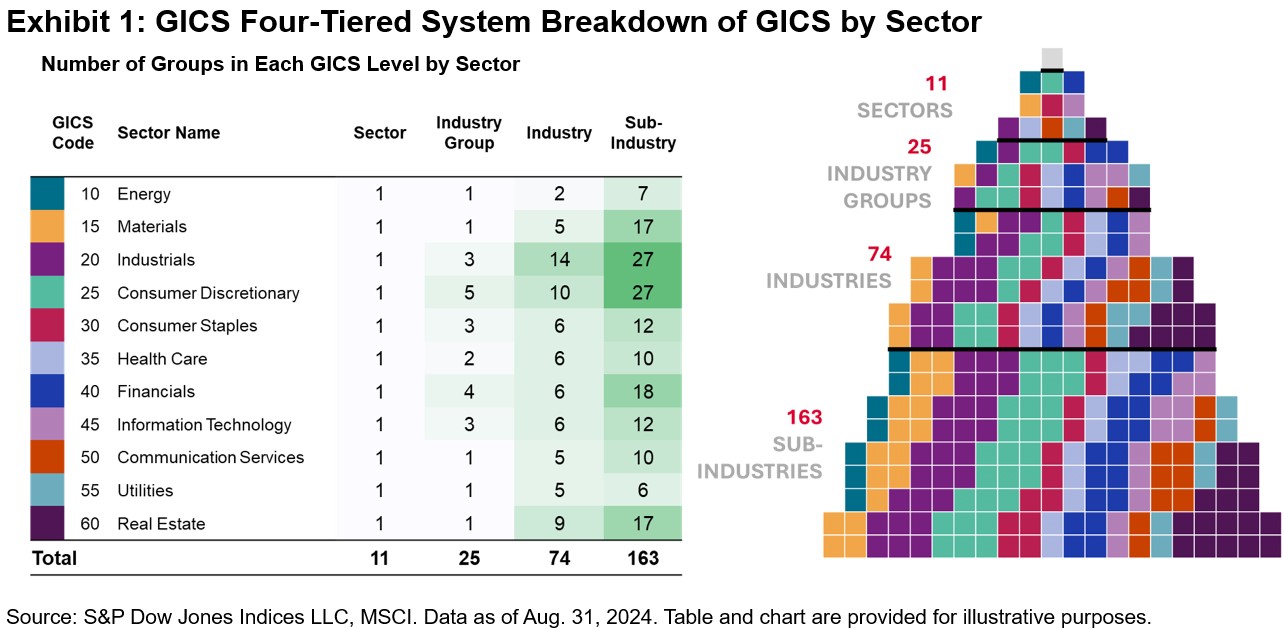
GICS primarily uses revenues to group companies according to their principal business activities, with earnings and market perception among other factors that are also considered. Each company is assigned to one of the more than 160 sub-industries, which then determines—in decreasing granularity—its industry, industry group and sector classifications. Exhibit 1 provides an overview of the latest GICS structure.

Grouping companies by their principal business activities means that companies in the same sector typically have shared sensitivities to common drivers of returns and macroeconomic variables. Crucially, though, these sensitivities may differ across sectors. Hence, sector-based perspectives may be relevant for market participants looking to implement sectors in either active or passive portfolio construction, or both.

Sectors and the detailed GICS framework allow for attribution analysis for broad-based benchmarks like the S&P 500® to determine which segments are leading or lagging and how they impact returns.

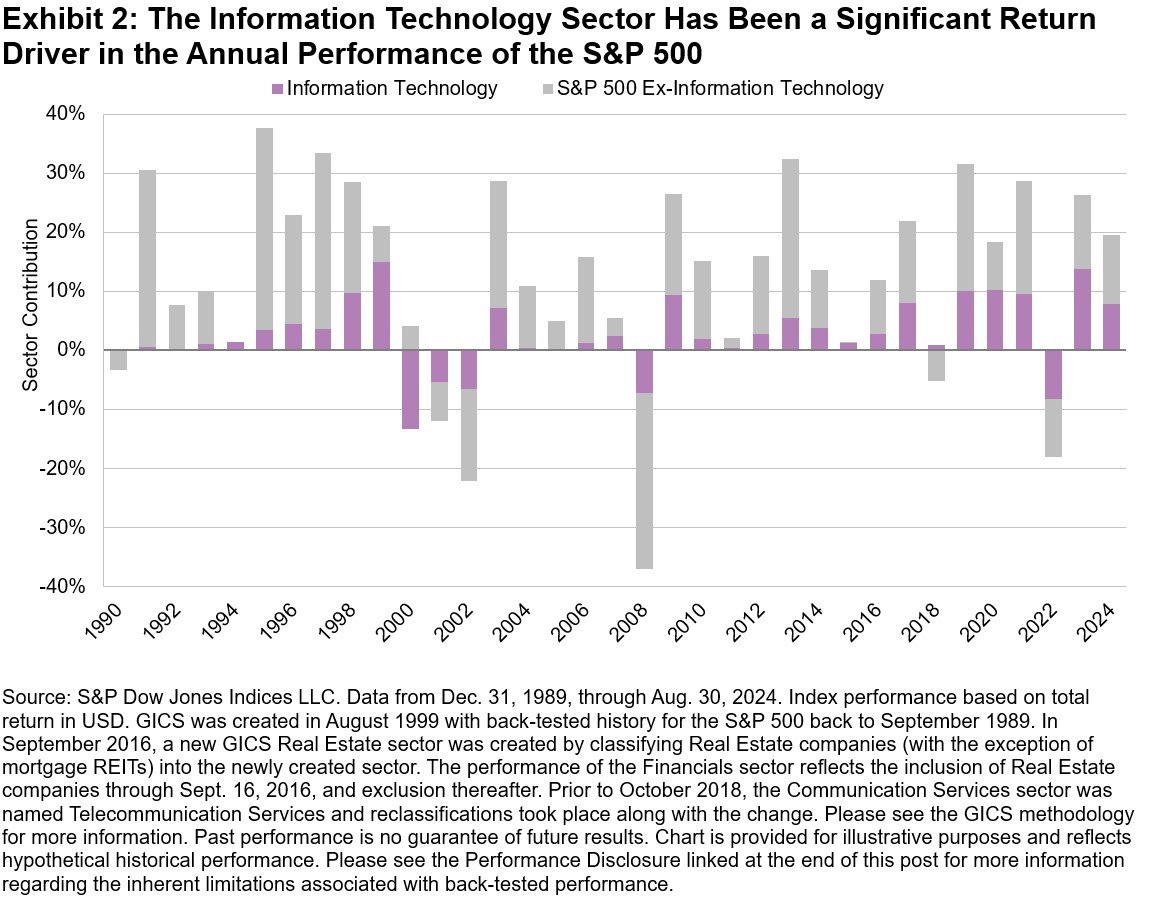
Exhibit 2 provides a full breakdown of the contribution of the IT sector to the S&P 500’s calendar year performance since the 1990s. Amid investors’ recent focus on the anticipated impact of artificial intelligence on IT companies’ growth prospects, IT has accounted for 40% of the S&P 500’s performance so far in 2024. In contrast, IT was a relatively nascent sector in the early 1990s, explaining why Technology had little to no impact on the S&P 500’s annual returns.

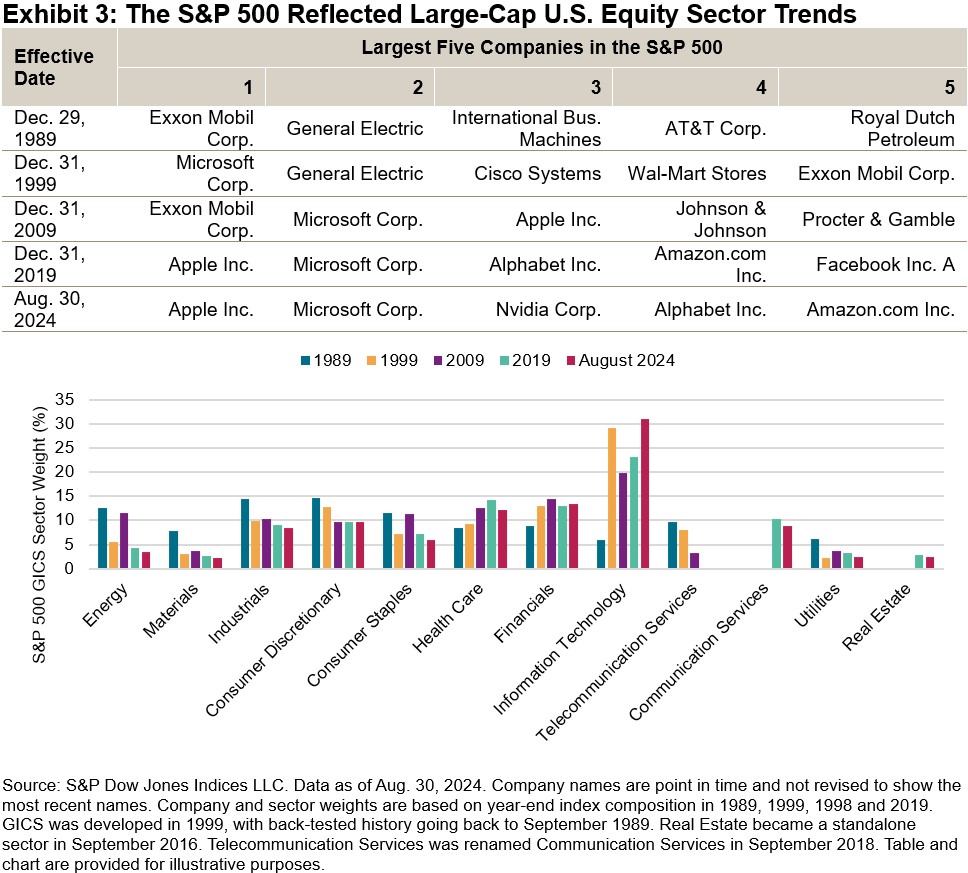
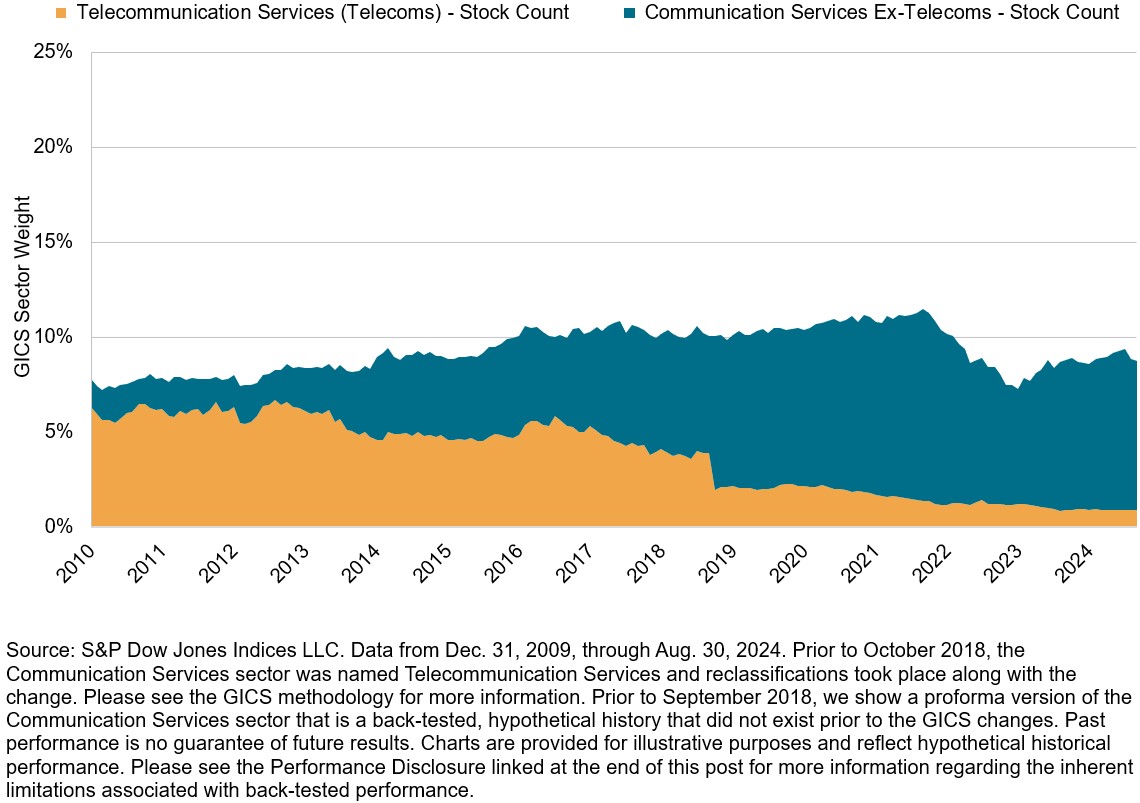
Exhibit 3 shows the evolution of the largest companies in the S&P 500, as well as the index’s GICS sector weights, which reflect the increased importance of Information Technology companies and the decline of traditional/old economy sectors such as Energy, Industrials and Telecommunication Services.

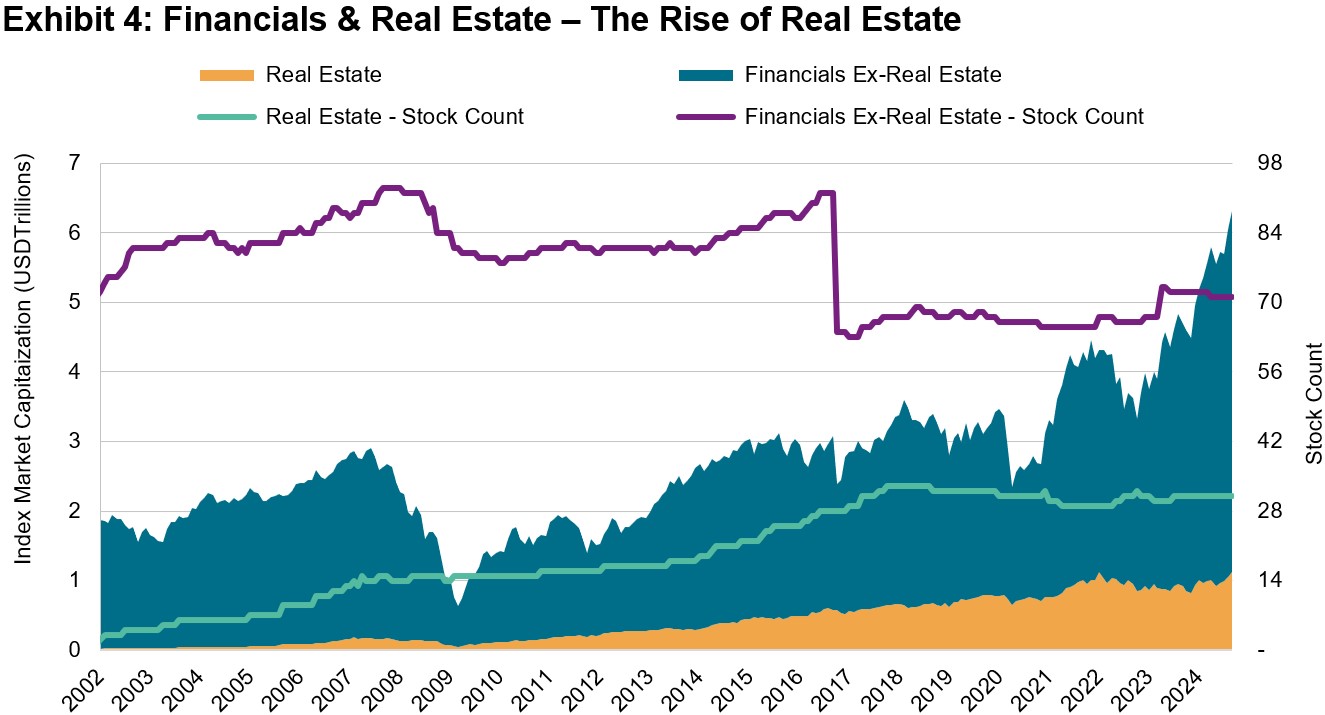
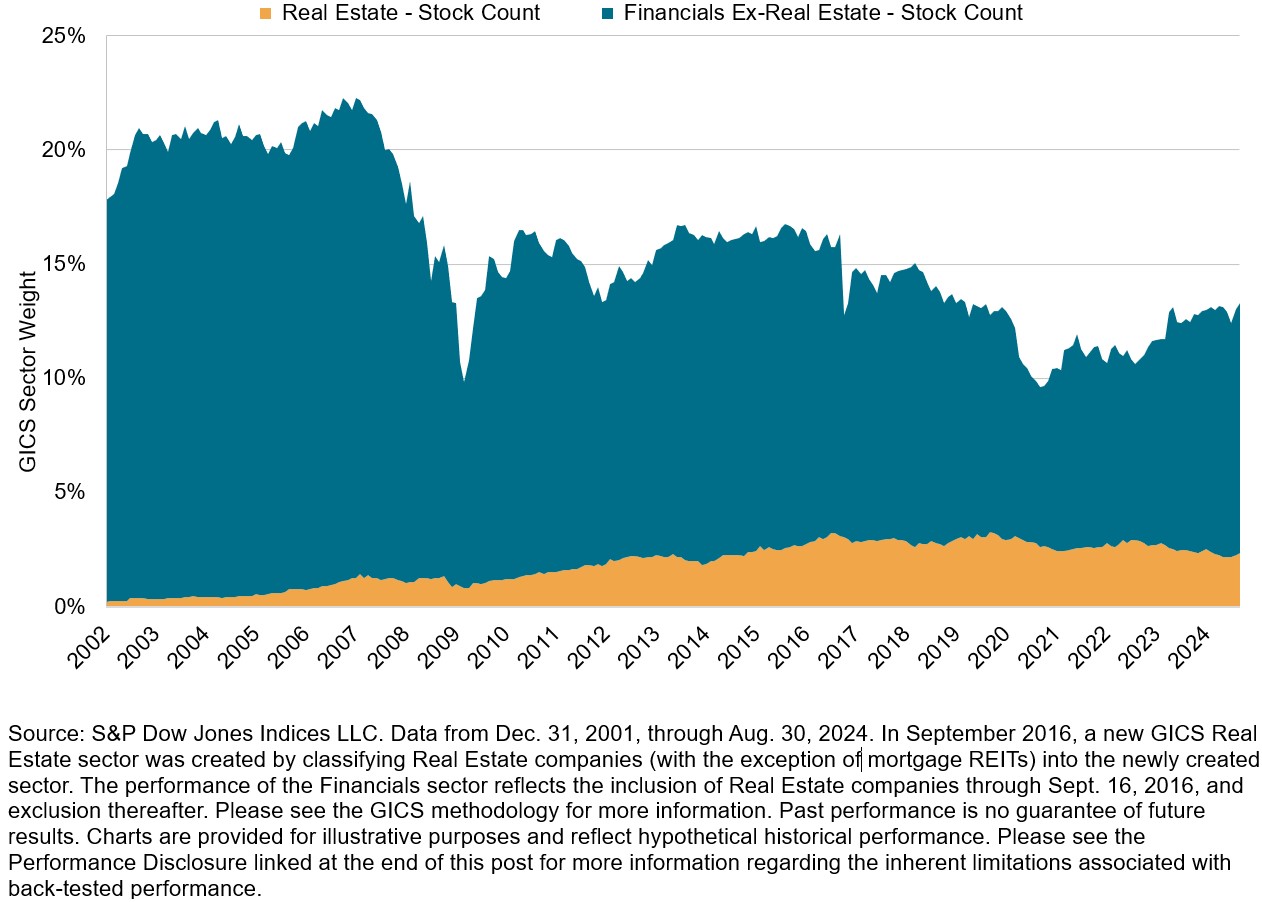
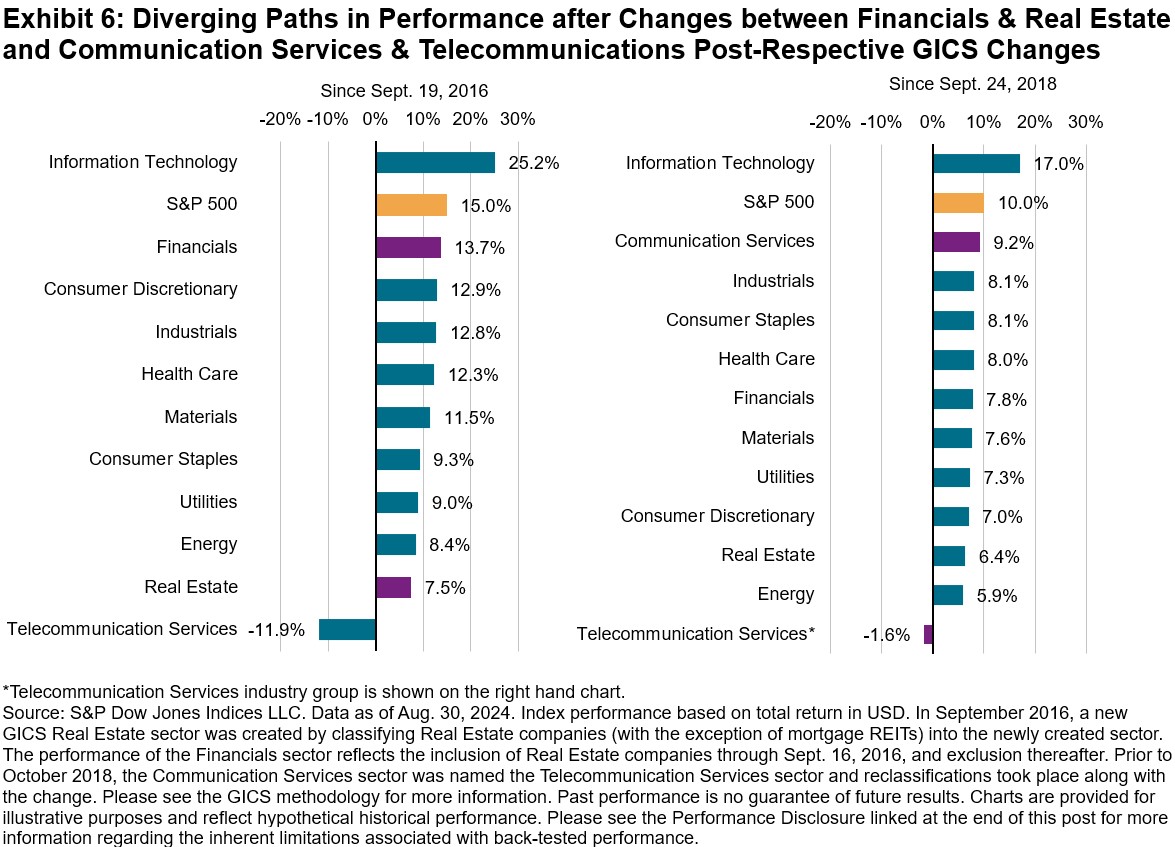
GICS is not a static structure: There have been several changes over time to reflect the market evolutions. One of the largest changes came in 2016 when Real Estate became a standalone sector; previously it was part of Financials. This change reflected growing representation of real estate investment trusts (REITs) and the distinct characteristics of Real Estate companies compared to the rest of the Financials sector.

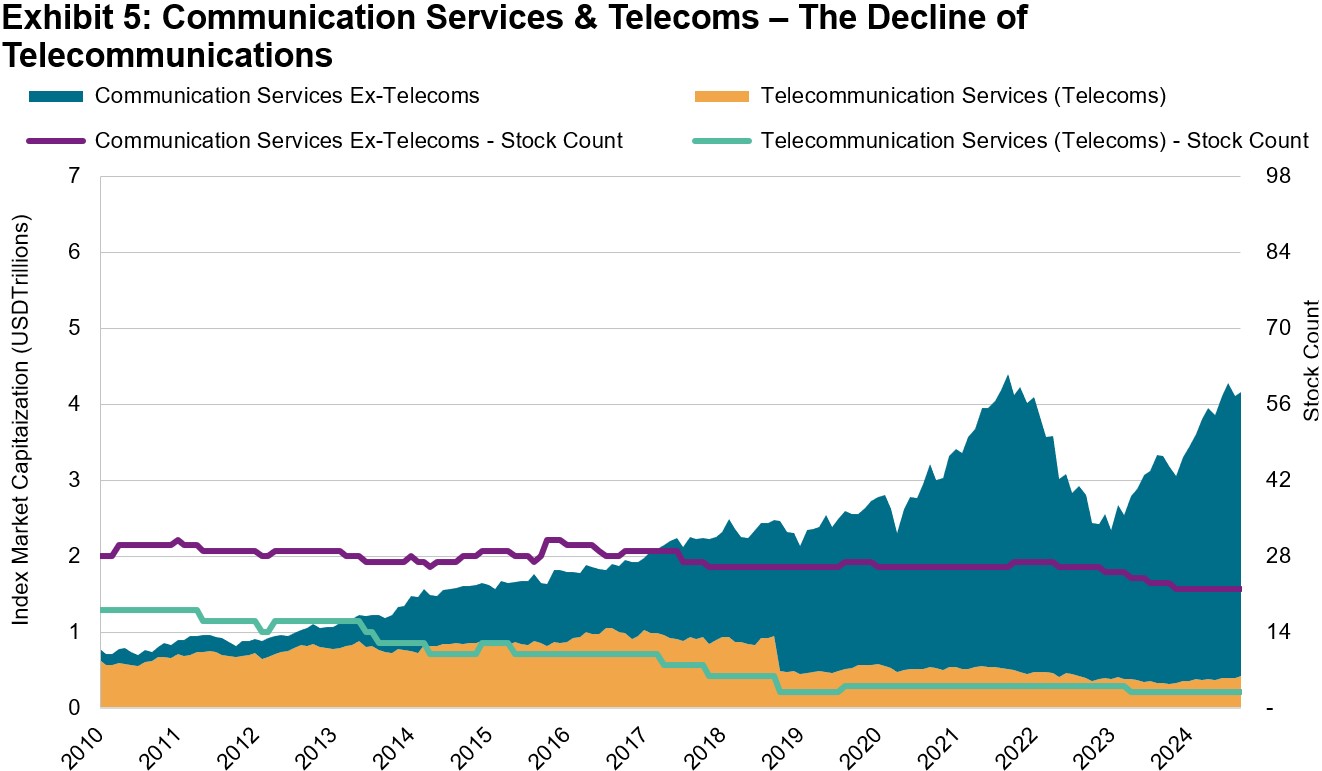
Another key change came in 2018, when the Telecommunication Services sector was renamed Communication Services and various companies were moved across the GICS structure. This was in response to changes in the ways people communicate: from telephone to email, text and social media.

When we look at the performance of these new and old sector segments, we can see clear distinctions in performance, between Financials and Real Estate as well as Communication Services and Telecommunications, as shown in Exhibit 6.

While we looked at the S&P 500 in this blog, the power of GICS is that similar analysis can be performed on any broad-based index across different markets. Looking at several emerging and frontier markets, we can see that “old economy” sectors such as Financials and Real Estate still dominate local indices, exhibiting potential opportunities for diversification with U.S. equity sectors.

GICS remains an effervescent tool for a range of market practitioners and reflects today’s trends. GICS also has the flexibility to adapt and change over time, as seen with the 2016 Real Estate and 2018 Communication Services transformations. Here’s to the next 25 years and beyond!

The posts on this blog are opinions, not advice. Please read our Disclaimers.

Back to Basics: Remembering the "Income" in Fixed Income

Contributor Image
Jennifer Schnabl

Former Head of Global Fixed Income Indices

S&P Dow Jones Indices

As we approach Q4, the fixed income markets are taking stock of where they’ve been and what is to come. Markets are expecting a highly anticipated shift in monetary policy to take place before the end of the year, which would mark a turning point in one of the most aggressive interest rate hiking cycles the U.S. has seen. Until now, most fixed income segments have weathered the volatility in the rate market, turning in varied performance on a YTD basis. Although “higher for longer” currently feels more like “higher for not much longer,” historically high yields across fixed income assets remain for the time being.

Finance textbooks remind us of the traditional role that fixed income plays in a typical portfolio. First, fixed income provides diversification from other asset classes, like equities. Second, fixed income provides a source of capital preservation, in that the principal amount is expected to be returned at a scheduled maturity date. And third, as implied in the name “fixed income,” there is an expectation of predictable income associated with bonds via a fixed coupon. This predictability or “fixed” nature can play an important role for investors as they plan their future income needs. As fixed income yields are forward-looking, it is important to highlight the historically high levels of yields across most areas of fixed income, particularly as we approach a potential pivot in rate policy.

A snapshot of the environment prior to the Fed’s rate hiking cycle, which commenced in 2022, shows that yields—as measured by our broad range of fixed income indices—were at some of their lowest levels in decades, a reminder of the potential income associated with a low-rate regime. Today’s picture not only offers some of the highest yields in decades, but a more convergent picture across fixed income, in which the differences between asset classes are smaller than those of the past.

While fixed income yields are heavily intertwined with the level of overnight rates, as determined by the U.S. Federal Reserve, it is notable to observe the timing and nature of this relationship over time. The broad-based U.S. Treasury yield, as measured by the iBoxx USD Treasuries Index, has historically moved closely in line with the daily Fed funds rate. It has also reacted along with, and often times prior to, an announcement of a change in the Fed funds rate. U.S. investment grade yields, as measured by the iBoxx USD Investment Grade Index, have behaved in a similar fashion; however given the credit component, there are additional factors that drive their movements.

Another aspect at play in the current environment is the shape of the interest rate curve, and how that has affected investor positioning. An inverted yield curve environment in U.S. rates emerged in 2022 and has persisted since, although there have been moments of flattening in 2024. As such, yields at the shorter end of the curve have been higher than the longer end of the curve. This, coupled with the interest rate volatility the market has weathered since Fed policy was put on hold in 2023, has made the front end a common place for portfolio allocation. However, this positioning may change as the yield profiles along the curve change, extending duration to track today’s yields. Based on historical occurrences, if the anticipated lowering of policy rates takes shape, and the curve normalizes, some positions may move from the front end to further out the curve.

The posts on this blog are opinions, not advice. Please read our Disclaimers.
Beyond Diversification: U.S. Equity and Sector Relevance in Mexico

Contributor Image
Cristopher Anguiano

Associate Director, U.S. Equity Indices

S&P Dow Jones Indices

Many investors tend to overweight domestic equities, a phenomenon known as home bias. Mexican investors may be inadvertently neglecting the breadth of global equity markets by focusing primarily on local options. The significant representation of the U.S. equity market means that some investors risk overlooking a significant portion of the global equity market and the potential diversification benefits from incorporating U.S. equity exposures.

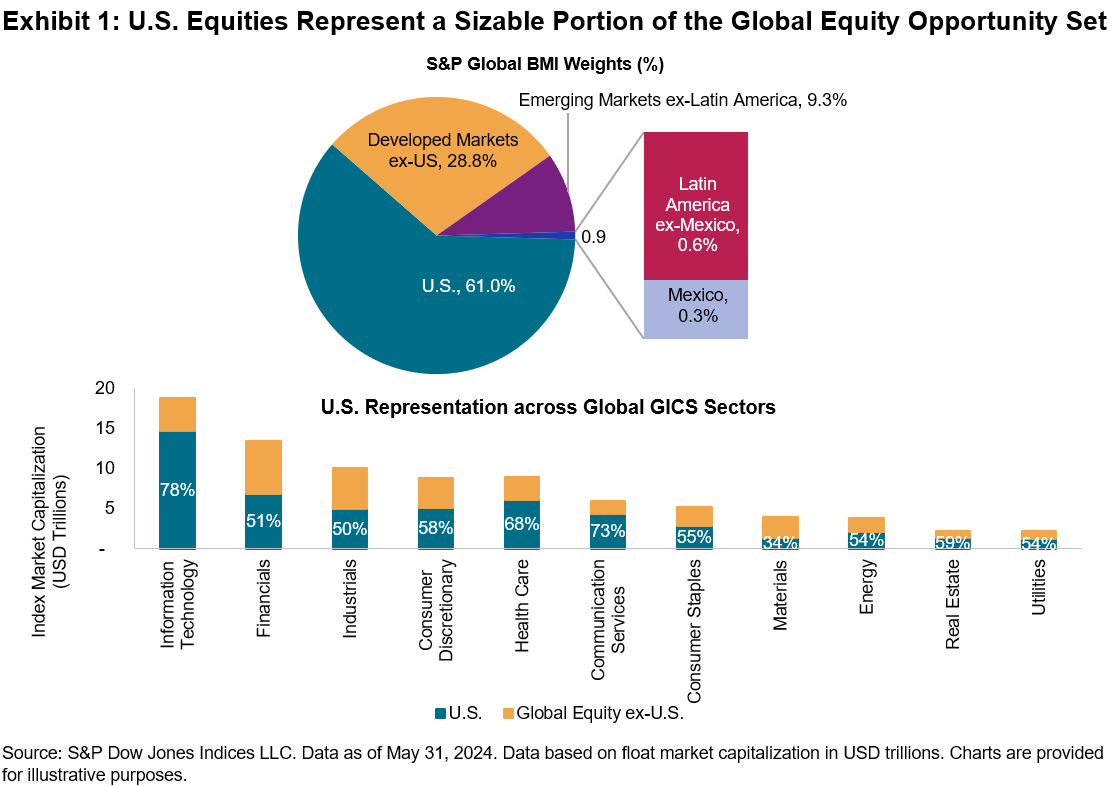
The global relevance of the U.S. equity market can be illustrated by its size: U.S.-domiciled companies represent around 60% of the global equity market capitalization, as represented by the S&P Global BMI. This representation is far higher than the weight of Latin America (0.9%) and Mexico (0.3%). As a result, the consideration of U.S. equities can help investors gain a clearer understanding of global equity performance and support the expression of strategic and tactical views. This is also relevant at a sector level: U.S. companies account for most of the global equity opportunity set in 10 out of 11 global GICS® sectors.

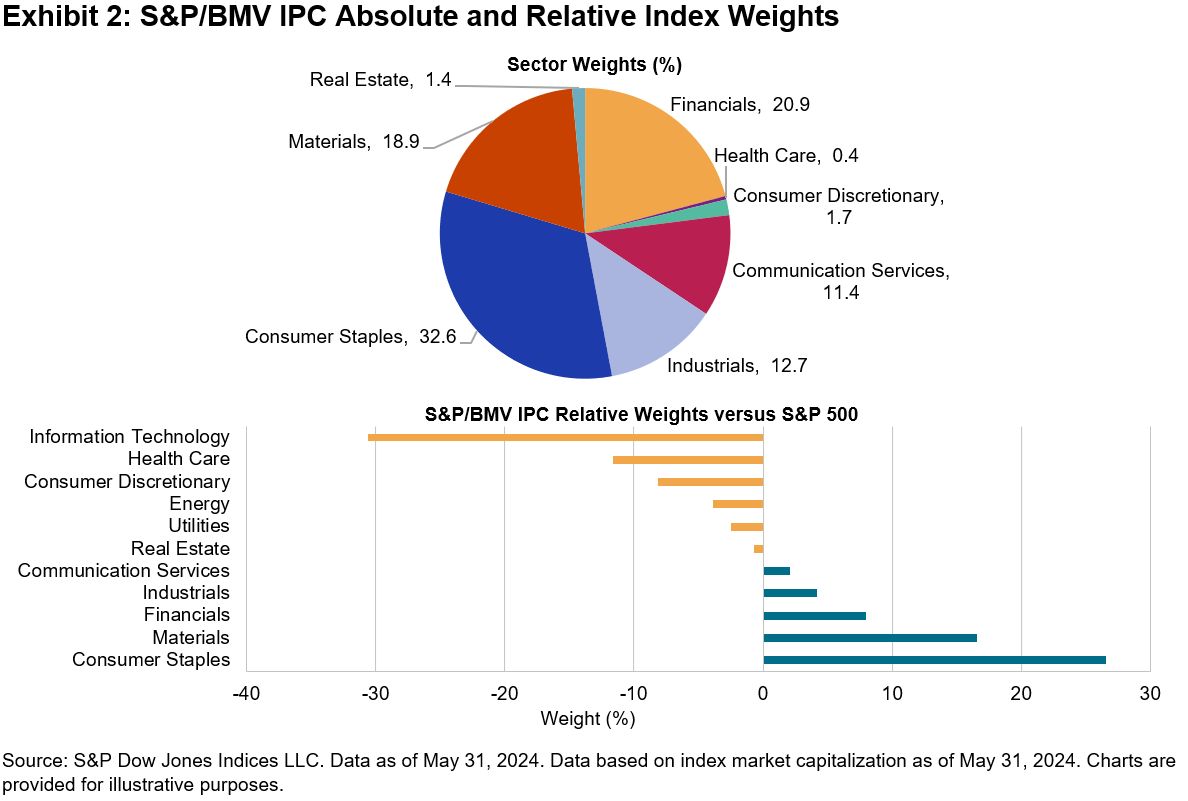
To further illustrate the relevance of U.S. equity exposure, we compare the distinct sectoral compositions of the S&P/BMV IPC and the S&P 500®. The S&P/BMV IPC tracks the performance of the largest and most liquid Mexican stocks. Exhibit 2 shows that, as of May 2024, the index had significant weightings in Consumer Staples, Financials and Materials. Conversely, the S&P 500 had higher exposure to Information Technology, Health Care, Consumer Discretionary, Energy and Utilities. Incorporating U.S. equities could therefore help Mexican investors to diversify domestic sector biases.

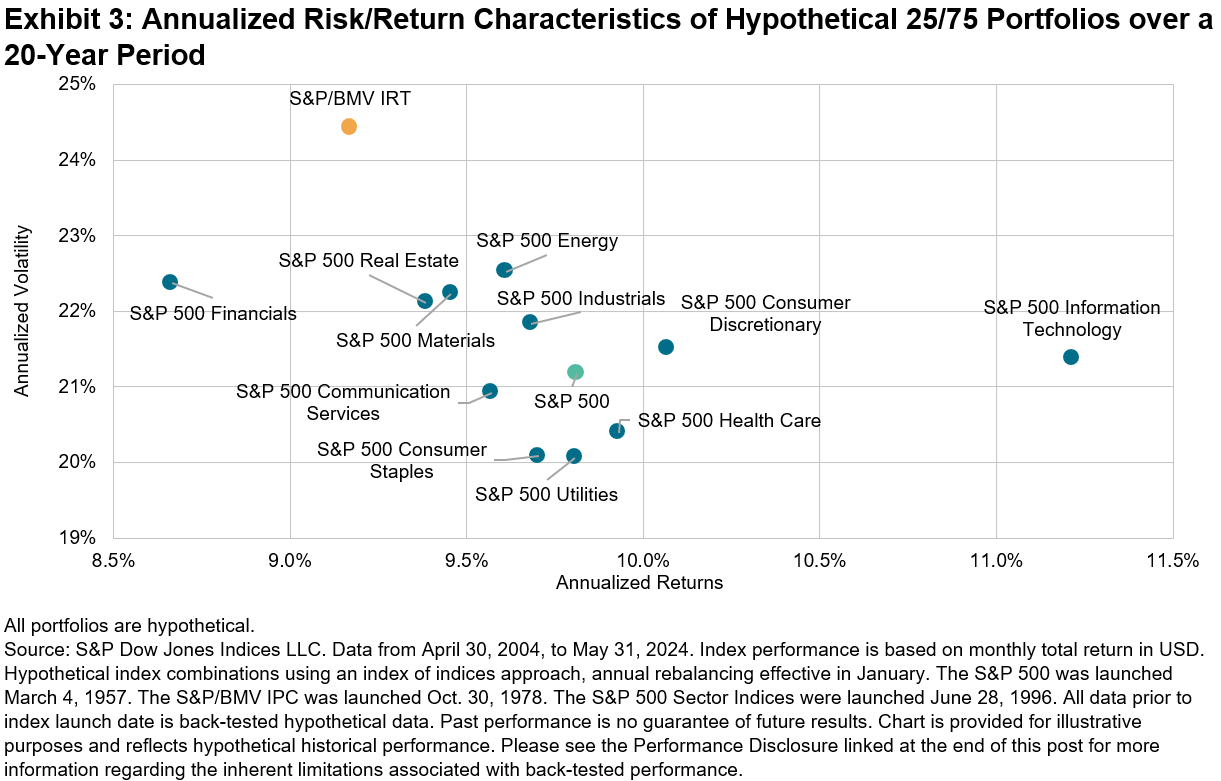
The performance of U.S. equities has historically presented potential diversification benefits to Mexican investors. We demonstrate this by building hypothetical portfolios that blend the S&P 500 and its GICS sector indices with the S&P/BMV IRT, allocating 25% to U.S. equities and 75% to local equities, rebalanced annually. Exhibit 3 indicates that this hypothetical approach yielded higher performance and lower volatility, historically, thereby improving the hypothetical portfolios’ long-term risk-adjusted returns.

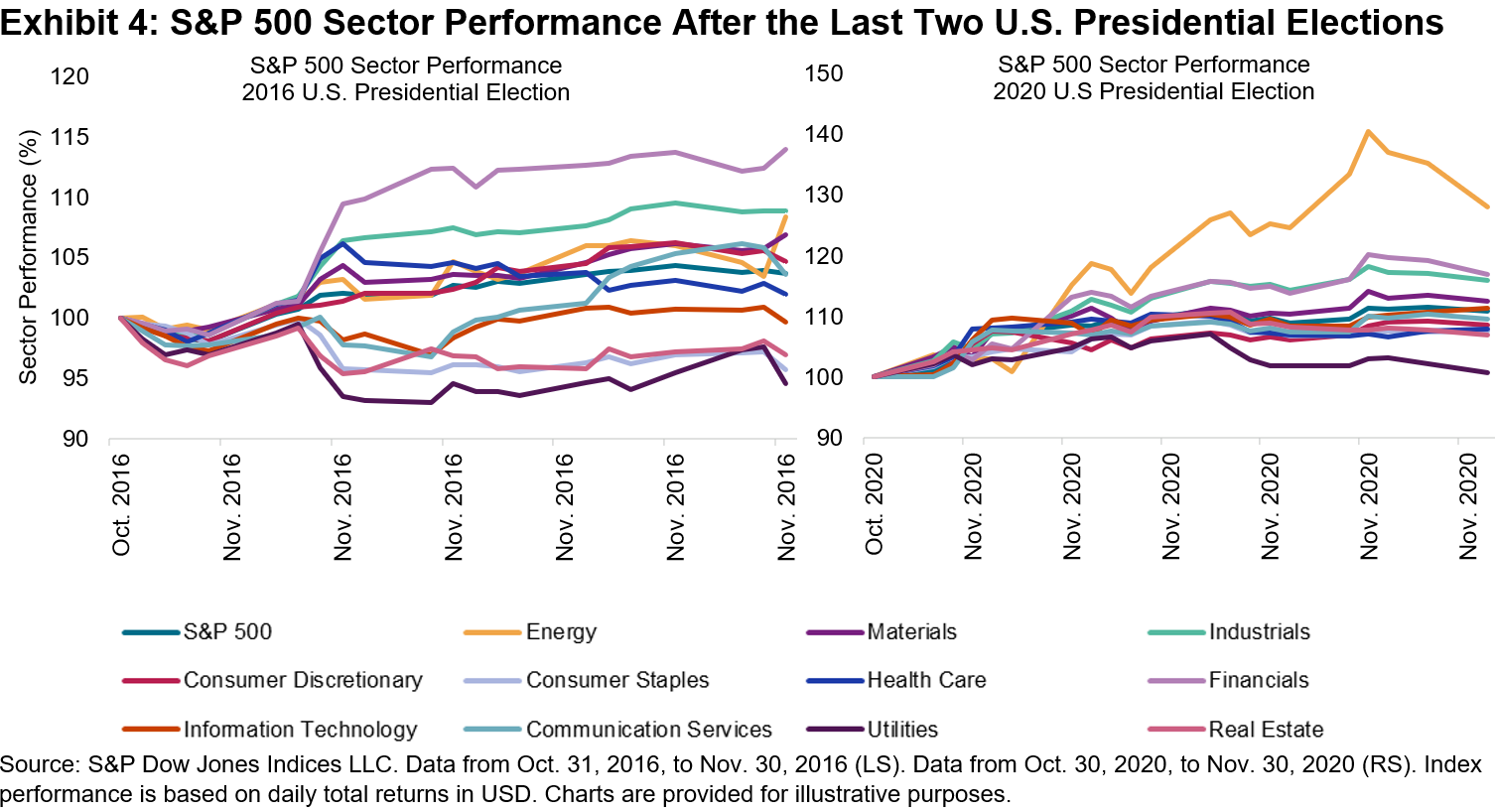
Beyond the strategic relevance of U.S. equities, the historical performance of U.S. sectors around U.S. Presidential elections has presented the idea of U.S. sectors having tactical relevance. Historically in election years, sector performance spreads have widened in November, as Exhibit 4 illustrates. While the S&P 500’s overall performance remained relatively stable in recent elections, sectoral fluctuations contributed to nearly half of the index’s monthly dispersion—a measure to determine the spread of stock returns within the index, highlighting the importance of sectors to express views.

The U.S. equity market represents a sizable portion of the global equity opportunity set. Incorporating U.S. equities not only potentially offers Mexican investors a way to alleviate domestic sectors biases, it has historically enhanced risk-adjusted returns. Additionally, U.S. sectors serve as the basis for market strategies and positioning, and our sector indices offer a measure for investors seeking to express both tactical and core portfolio views.

The posts on this blog are opinions, not advice. Please read our Disclaimers.